Strategic Analysis | Why Did Chabahar’s Maritime Control Tower Make the List of US Targets?
The maritime traffic control tower at Chabahar port was one of the centers for managing and monitoring vessel traffic along the Makran coast. Using radar, communications and surveillance systems, the center managed maritime traffic and …
Rozhn TV | Monday, July 20, 2026
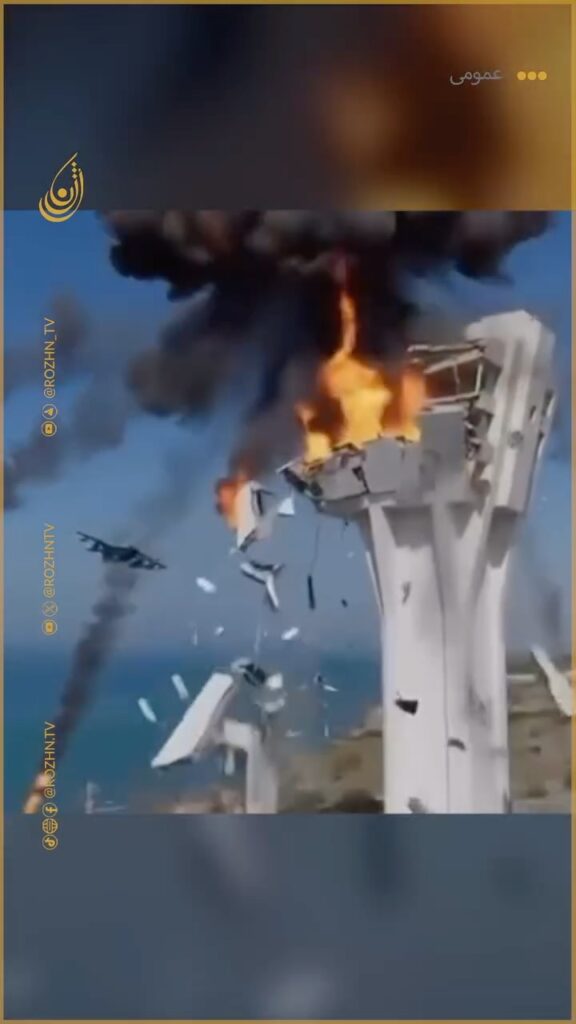
The maritime traffic control tower at Chabahar port was one of the centers for managing and monitoring vessel traffic along the Makran coast. Using radar, communications and surveillance systems, the center managed maritime traffic and port activity.
Building the tower posed significant engineering challenges because of the climate of the Makran coast and the structure’s particular design. High humidity, salty air and a corrosive marine environment made special materials and construction methods necessary, while the structure’s curved, tall design also made its construction more complex.
Chabahar has a strategic position because it lies on the coast of the Sea of Oman and close to international shipping lanes. In addition to managing maritime traffic, the center’s systems made it possible to monitor vessel movements, increase operational awareness and support communications networks; capabilities that, from a military perspective, can also be used in planning and coordinating military operations.
The tower was targeted in the US air strikes on Iran and was completely destroyed. Given its role in maritime surveillance and in supporting communications infrastructure, such facilities can be considered strategic targets in military assessments.
But was the goal only to destroy a maritime control center, or did the attack also carry a broader message? Did Washington want to show that it is capable of targeting strategic infrastructure in various parts of Iran? And after this attack, what will the next target be?