بلوچستان · ویدیو
چرا بلوچستان در صدر جدول آمار قتل در کشور است؟
عبدالستار دوشوکی ـ مرکز مطالعات بلوچستان (لندن)
گزارش تلویزیون رُژن | شنبه ۱ آذر ۱۴۰۴ / ۲۲ نوامبر ۲۰۲۵
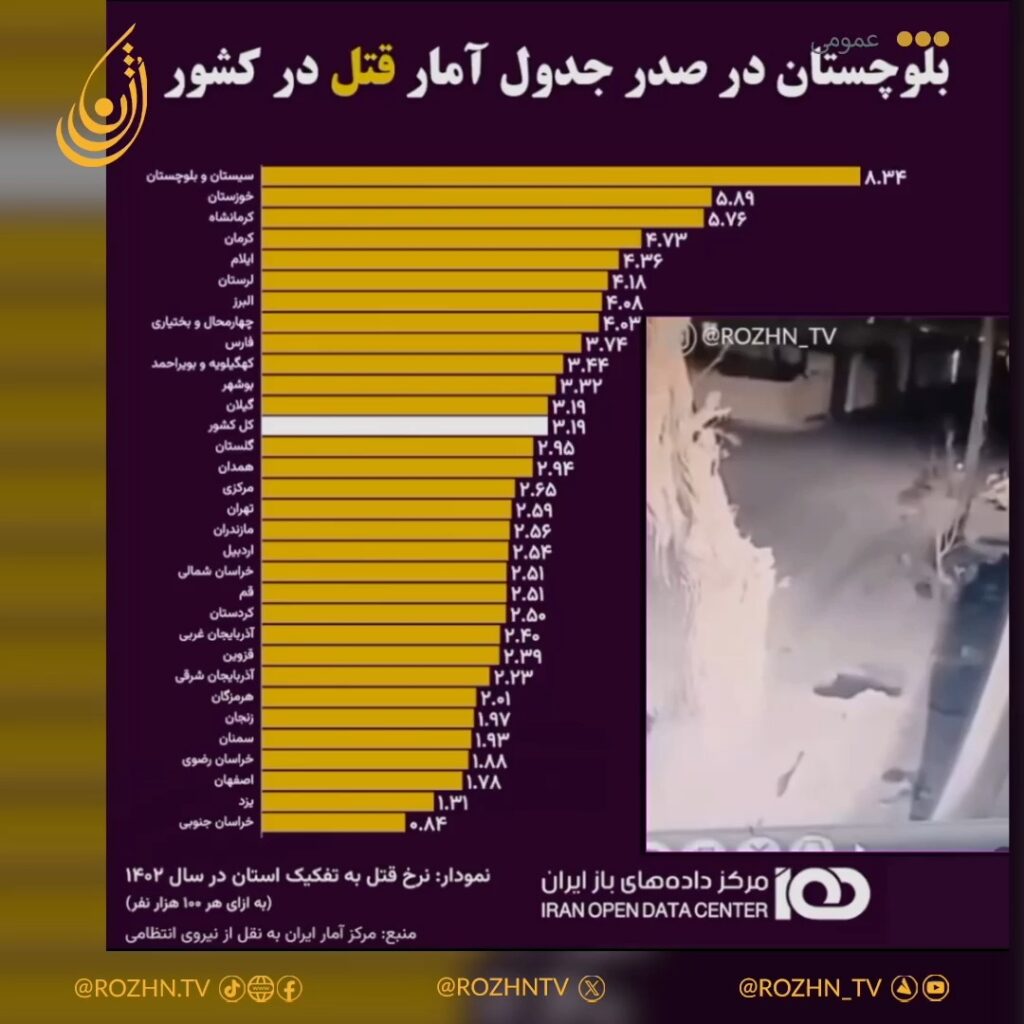
بر اساس نتایج منتشر شده از سوی «مرکز دادههای باز ایران»، آمارهای ثبتشده نشان میدهد که نرخ قتل در بلوچستان، نسبت به جمعیت، بالاتر از میانگین کشوری است و طبق دادههای رسمی، حدود سه برابر میانگین ملی برآورد میشود. با توجه به اظهارات برخی منابع محلی و کارشناسان، احتمال داده میشود که آمار واقعی از میزان اعلامشده بیشتر باشد، زیرا در بسیاری از موارد، روند قانونی ثبت قتل و مراحل بررسی، تحقیق، پیگیری پلیس و گزارشهای پزشکیقانونی طبق ضوابط کامل انجام نمیشود.
با توجه به محدودیتها، بررسی علمی و دقیق دلایل ناامنی، خشونت و قتل در استان دشوار است. بخشی از شهروندان و نیز مخالفان برخی سیاستهای حکومتی، عوامل دولتی را عامل اصلی وضعیت میدانند، در حالی که مقامهای حکومتی، ریشه برخی مشکلات را در ساختارهای اجتماعی و فرهنگی بلوچستان ارزیابی میکنند. با وجود حضور بیش از صدهزار دانشجو در دانشگاههای استان ــ از جمله دانشگاه سیستان و بلوچستان که از نظر تعداد دانشجویان (عمدتاً غیر بلوچ) دومین دانشگاه بزرگ کشور است ــ به گفته برخی تحلیلگران، امکان انجام پژوهشهای میدانی بیطرفانه درباره دلایل افزایش قتلها محدود گزارش شده است، زیرا نقش نهادهای امنیتی، اطلاعاتی و نظامی در این روند، از نگاه برخی ناظران، مؤثر ارزیابی میشود.
در حوزه اقتصادی نیز، بسیاری از کارشناسان چهار محور اصلی شامل دریا، کشاورزی، تجارت و فعالیتهای غیررسمی (مانند قاچاق) را عناصر تعیینکننده در اقتصاد بلوچستان میدانند. مدیریت صید و سوخت از طریق مجوزهای دولتی، خشکسالی و کاهش منابع آب، و نیز تمرکز بخشی از تجارت در اختیار گروههای غیربومی یا وابسته به مراکز قدرت، از جمله عواملی هستند که به باور برخی تحلیلگران، بر وضعیت معیشتی مردم تأثیر گذاشتهاند. در نتیجه، بخشی از شهروندان بهناچار به فعالیتهای غیررسمی مانند قاچاق سوخت یا مواد مخدر روی میآورند که این روند بهگفته برخی گزارشها، میتواند به افزایش خشونت و قتل در منطقه منجر شود. همچنین برخی منابع، توزیع سلاح میان گروههای وابسته به نهادهای محلی را یکی از دلایل قتلهای مسلحانه عنوان میکنند.
حدود پانزده سال پیش، نرخ قتل در استان حدود ده مورد در هر صدهزار نفر گزارش شده بود. دادههای منتشرشده از مرکز دادههای باز ایران، که مربوط به دو سال پیش است، نرخ حدود هشت قتل در هر صدهزار نفر را نشان میدهد. با استناد به گزارشهای منتشرشده درباره حوادث خشونتآمیز اخیر، برخی ناظران بر این باورند که نرخ سال ۱۴۰۴ احتمالاً بیش از ده قتل در هر صدهزار نفر خواهد بود؛ رقمی که فاصله قابل توجهی با میانگین کشوری دارد.
در جمعبندی، برخی تحلیلگران معتقدند که تا زمان تداوم ساختار کنونی حکمرانی و سیاستهای امنیتی در سطح کشور و بهویژه در بلوچستان، پیشبینی کاهش معضل قتل و خشونت دشوار است. علاوه بر عوامل اقتصادی، اجتماعی، فرهنگی و ساختاری که مورد اشاره قرار گرفت، نقش نهادهای امنیتی و نظامی در شکلدهی فضای امنیتی استان، از دید برخی کارشناسان برجسته ارزیابی میشود. همچنین برخی پیشبینیها حاکی از آن است که در صورت تغییرات بزرگ سیاسی و ایجاد خلأ قدرت، بلوچستان ممکن است برای مدتی با ناآرامی و خشونتهای غیرقابل کنترل مواجه شود.
ENWhy Is Balochistan at the Top of the Country’s Murder Statistics?Read in English
Abdul Sattar Doshouki – Balochistan Studies Center (London)
Rozhn TV | Saturday, November 22, 2025
According to results published by the “Iran Open Data Center,” recorded statistics show that the murder rate in Balochistan, relative to its population, is higher than the national average and, according to official data, is estimated at about three times the national average. Based on statements by some local sources and experts, it is considered possible that the real figure is higher than the one announced, because in many cases the legal process of registering a murder and the stages of review, investigation, police follow-up and forensic medicine reports are not carried out fully in accordance with the rules.
Given the restrictions, a rigorous scientific study of the causes of insecurity, violence and murder in the province is difficult. Some citizens, as well as opponents of certain government policies, regard government agents as the main cause of the situation, while government officials see the roots of some problems in Balochistan’s social and cultural structures. Despite the presence of more than a hundred thousand students at the province’s universities, including the University of Sistan and Baluchestan, which in terms of student numbers (mostly non-Baloch) is the second-largest university in the country, some analysts say that the possibility of carrying out impartial field research on the reasons for the rise in killings has been reported to be limited, because, in the view of some observers, the role of security, intelligence and military bodies in this process is considered influential.
On the economic side, many experts regard four main pillars, namely the sea, agriculture, trade and informal activities (such as smuggling), as the decisive elements of Balochistan’s economy. The management of fishing and fuel through government permits, drought and the decline of water resources, and the concentration of part of trade in the hands of non-native groups or groups linked to centers of power are among the factors that, in the belief of some analysts, have affected people’s livelihoods. As a result, some citizens are forced to turn to informal activities such as fuel or drug smuggling, which, according to some reports, can lead to an increase in violence and murder in the region. Some sources also cite the distribution of weapons among groups affiliated with local institutions as one of the causes of armed killings.
About fifteen years ago, the province’s murder rate was reported at about ten per hundred thousand people. Data published by the Iran Open Data Center, relating to two years ago, show a rate of about eight murders per hundred thousand people. Citing published reports on recent violent incidents, some observers believe that the rate for 1404 (2025–26) will probably be more than ten murders per hundred thousand people, a figure that is significantly different from the national average.
In conclusion, some analysts believe that as long as the current structure of governance and security policies continues across the country and especially in Balochistan, it is difficult to predict a decline in the problem of murder and violence. In addition to the economic, social, cultural and structural factors mentioned, the role of security and military bodies in shaping the province’s security environment is, in the view of some prominent experts, considered significant. Some forecasts also suggest that, in the event of major political change and the creation of a power vacuum, Balochistan may for a time face unrest and uncontrollable violence.