شبهای بیخوابی در پنجاب؛ تجربهای تازه، رنجی کهنه
ENSleepless Nights in Punjab: A New Experience, an Old SufferingRead in English
Punjab and Balochistan – Ordibehesht 1404 (April–May 2025)
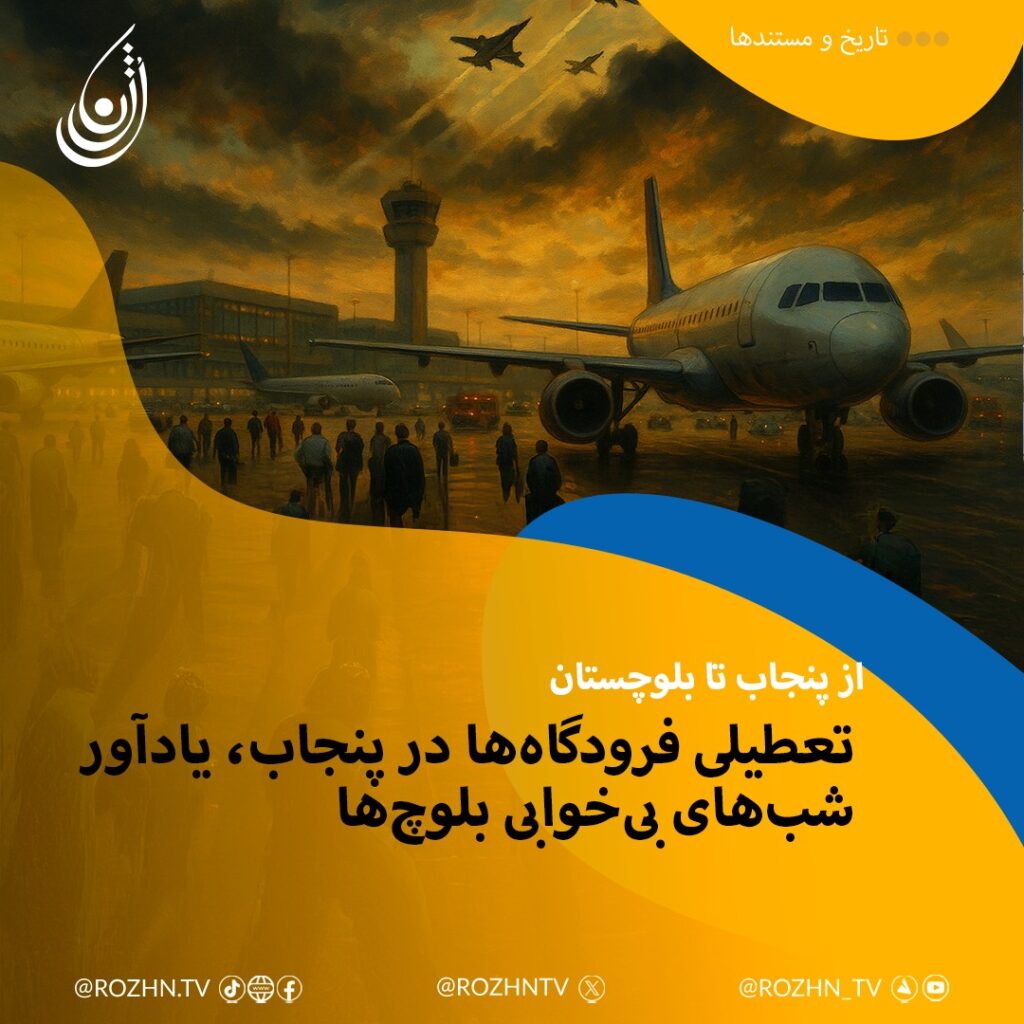
The closure of airports and the cancellation of hundreds of flights in Pakistan’s Punjab province, following India’s military operation, confronted many of the region’s citizens for the first time with the reality of unrest and instability. For the residents of Balochistan, it is a reality that has been not a temporary event but part of daily life for decades.
In recent days, 18 airports were closed and more than 200 flights were canceled. Local media have reported a heavy security atmosphere and an unprecedented sense of fear in urban areas. Yet for many Baloch families, this kind of anxiety is constant.
Balochistan: The Normalization of Fear and Disappearance
In Balochistan, the presence of military forces in homes and streets, night raids, detentions without notice and the disappearance of people have become a chronic and painful phenomenon. There are accounts of mothers who have waited for years for the return of their disappeared children, without any news of their fate in the media or in official records.
This note does not seek to belittle anyone’s suffering. The lives of civilians, the safety of families and the peace of citizens are precious anywhere in the world and need to be protected. But perhaps what is happening in Punjab these days could be an opportunity for national empathy to take shape.
An Opportunity for Shared Understanding
For the first time, areas of Pakistan that have always been considered safer have faced the kind of instability that Baloch citizens have long lived with. Understanding this shared experience of fear and anxiety could provide a basis for dialogue, empathy and a rethinking of how human crises within the country’s borders are handled.
The Baloch do not need pity; they want to be heard and to enjoy equal dignity. Perhaps now that more parts of the country have tasted instability, the time has come for the voice of Balochistan also to be heard with respect, not merely as a minority but as a deeply rooted part of the body of Pakistan.