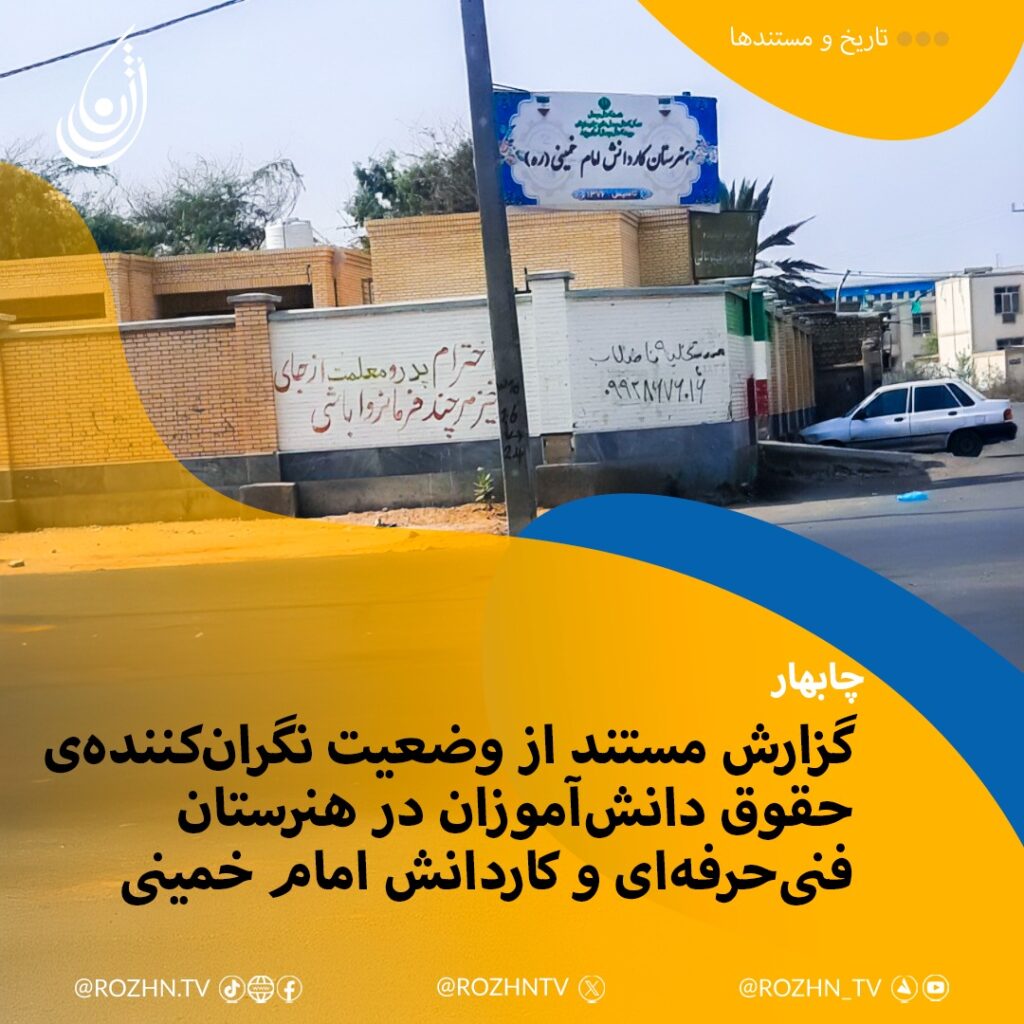
تبعیض، تهدید و فشار مالی؛ گزارشی مستند از نقض حقوق دانشآموزان در یک هنرستان
ENDiscrimination, Threats and Financial Pressure: Documented Report on Violations of Students’ Rights at a Vocational SchoolRead in English
Chabahar – Autumn and Winter 1403 (Iranian calendar)
A group of students at the Imam Khomeini Technical and Vocational (Kardanesh) School in Chabahar have exposed what they call “structural discrimination, threats and illegal financial pressure” in their educational environment, in a report sent to the media.
The report, prepared by the “Baloch Rights-Seeking Student Movement,” focuses on cases including exclusion from exams for lacking suitable shoes, financial coercion to obtain exam cards, threats of failing students in return for extortion, and the suspicious assets of one of the teachers.
Excluded Over Shoes
One section of the report states that several students were barred from sitting exams because they did not have standard shoes. According to the authors of the report, this violates the principle of equal access to education and provisions of international human rights instruments. The students claim that others in a similar situation, who were affiliated with certain institutions, were nevertheless allowed to sit the exams.
Fees for Free Education
Another criticized practice was the collection of 500,000 tomans from students as a condition for issuing exam cards. According to the compilers of the report, this requirement conflicts with the principles of free education and with Article 13 of the UN International Covenant on Economic, Social and Cultural Rights.
Allegation of Extortion by a Teacher
Based on the testimony of several students, a person named “Morad Balida,” one of the school’s teachers, threatened to fail some students in various subjects if they did not pay 5 million tomans. This allegation, if true, could be considered “psychological pressure, organized intimidation and extortion.”
Suspicious Assets and Weak Oversight
The students also pointed to the influence, personal assets and numerous properties of this teacher, which they say go beyond the income level of an education employee. They have asked oversight bodies to investigate the sources of his wealth and his possible connections.
Although it has not been independently verified, the report is considered a reflection of growing concern about the state of educational justice in Iran’s deprived regions, particularly in Sistan and Baluchestan.