Bullets, the State and the Crisis of Trust in Balochistan
Eastern Balochistan has once again come out into the streets. This time, on the Wadh road, it is not only traffic that has stopped; the question being raised is why the lights have gone out …
Show photo (≈ 126 KB)
Opinion | Aziz Sanghur
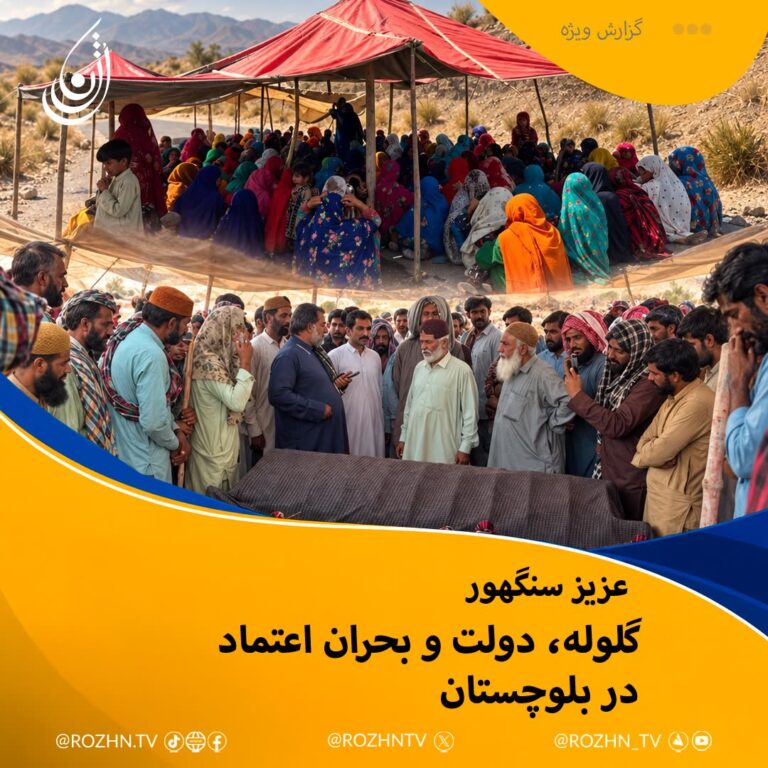
Eastern Balochistan has once again come out into the streets. This time, on the Wadh road, it is not only traffic that has stopped; the question being raised is why the lights have gone out in four homes. The bodies have been laid on the road, people have protested, and the Quetta-Karachi highway has been blocked. The main question is not how many hours this highway will remain closed; the fundamental question is why conditions have arisen in which people are forced to lay the bodies of their dead on the road and cry out for justice.
On the night of September 10, in the Sonaro area, Killi Yar Mohammad Gorgnari, part of Wadh in Khuzdar District, during a wedding ceremony, according to published reports and the accounts of local residents, four people were killed and a woman and a number of others were wounded in shooting during an operation attributed to the security forces. Residents of the area have said the shooting was carried out without any clear target and that the victims were ordinary, hardworking citizens. The full details of this incident and the exact circumstances leading up to the shooting require independent investigation.
But the problem of Balochistan is not just one incident.
It is the product of years of accumulated reports about enforced disappearances, raids, arrests, killings, protests, and the growing distrust of part of the population toward government institutions. When a wedding is being held in a home and death suddenly enters that home, this is no longer merely a family tragedy; the wider community may also regard it as an act against itself.
States are not run by power alone; states endure through trust.
A bullet can force a region into silence, but it cannot drive fear, anger and the sense of deprivation out of people’s hearts.
When, after an operation attributed to a state institution, bodies are laid on the road, people block the highway and the families of the victims cry out for justice, this moment should be a very serious warning to the government. Instead of relying more on force, the state must reconsider its manner of governance.
Baloch youth are already asking where justice is for them. Where are their resources, their land, their identity, their political voice, and the safety of their lives and property? If these questions are not answered through negotiation, law and justice, the ground will be laid for the spread of extremist views and the widening of social divides.
Here the state must understand the difference between “security” and “silence.”
Silence can also be produced at gunpoint, but lasting peace comes only through justice.
If in Balochistan every protest is treated as hostility, every question as rebellion and every political disagreement as a security issue, the distances will grow ever wider. A young person who questions the state today, if he feels he is met only with pressure and force in response, may tomorrow choose distrust and distance from the state instead of dialogue with it.
This is the point that the government of Pakistan must think about seriously.
Does it want to keep Balochistan at its side within a framework of a relationship based on trust, or to rule it solely through administrative authority and power?
For no region can be governed by force alone forever. The state must assure the people that it is responsible for protecting their lives, not a source of their anxiety.
The bodies laid on the Wadh road are, for this very reason, not merely the bodies of four human beings. They are questions about government policies. They are the question of families whose loved ones have not returned. They are the question of mothers still waiting for their children. They are the question of young people anxious about their future.
If the government, at this juncture too, regards only the reopening of the highway as the problem, and does not see the pain, anger and deprivation behind this protest, it may remain incapable of seeing the real problem.
Independence movements do not become powerful through slogans alone. They gain strength when, among part of the society, the feeling takes shape that within the existing system there is no way to attain justice.
Translated from the Persian original
Follow Rozhn TV for reports, interviews and programmes on Balochistan
Telegram: https://t.me/rozhn_tv
YouTube: https://youtube.com/@rozhn_tv
Instagram: https://www.instagram.com/rozhn_tv
#Balochistan, Pakistan #Justice #Khuzdar #Quetta #Security Forces #Shooting #Wadh