Balochistan’s Land Routes Take Over as Pressure Mounts on Sea Routes
Pakistan has activated six new land routes for moving goods to Iran, at a time when regional tensions and disruption to the Gulf’s sea routes have increased pressure on trade and energy in the region. …
Rozhn TV | Thursday, May 7, 2026
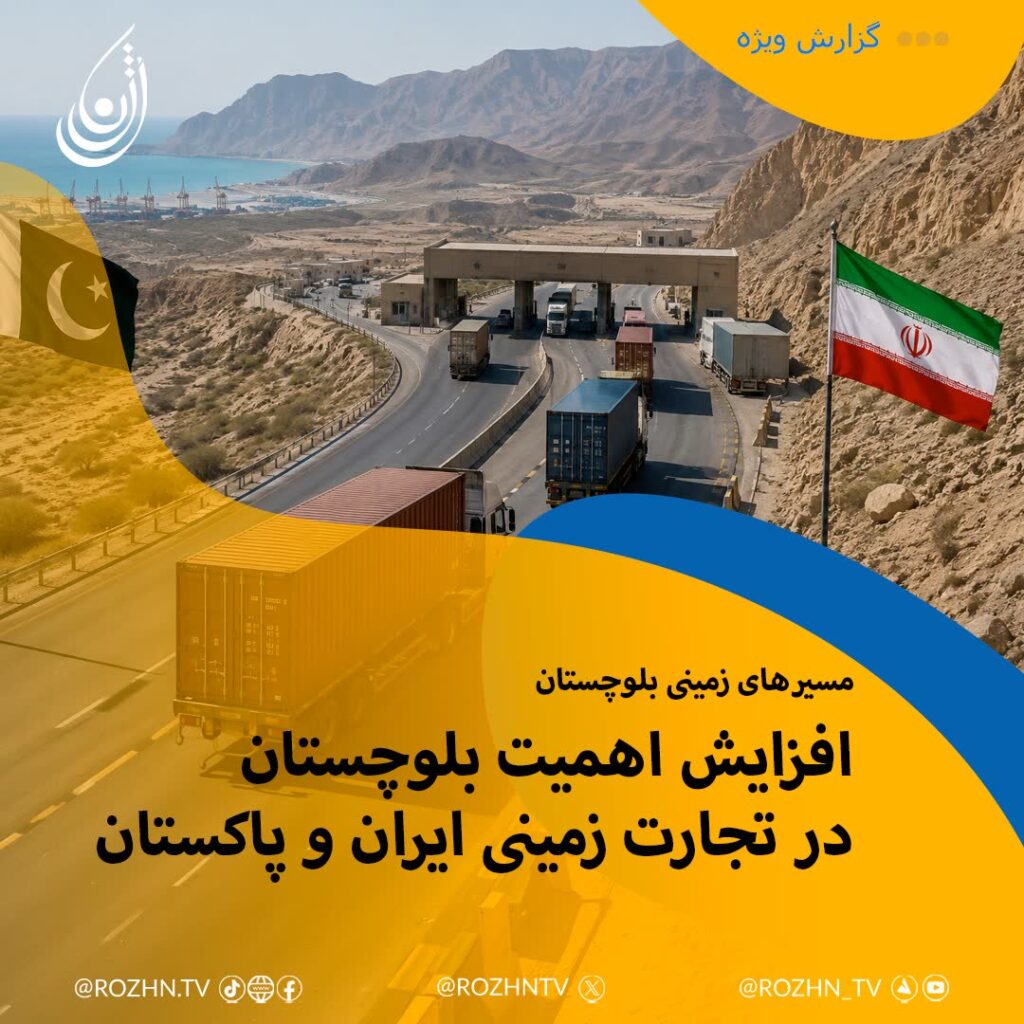
Pakistan has activated six new land routes for moving goods to Iran, at a time when regional tensions and disruption to the Gulf’s sea routes have increased pressure on trade and energy in the region.
These routes run from the ports of Karachi and Gwadar to the Gabd and Taftan border crossings, and a large part of them pass through Balochistan. Pakistani officials have said the aim of the plan is to reduce congestion from thousands of stranded containers and to ease the movement of goods between Iran and Pakistan.
The Gwadar-to-Gabd route is now being presented as the shortest land route between the port of Gwadar and the Iranian border, significantly cutting the transit time for goods. At the same time, Balochistan’s coastal roads have become more active for commercial transport.
Rising global oil prices and restrictions on sea routes have put Pakistan under greater economic pressure. Pakistani business media have reported that the cost of fuel imports has risen sharply in recent months and that the government is seeking alternative routes for trade and energy.
Meanwhile, Iraq is also pursuing new land projects and pipelines to reduce its dependence on the Gulf’s sea routes. The latest developments show that Balochistan has become one of the region’s most important transit corridors and that its geographic position has taken on an important role in regional trade and communications.
Rozhn Balochistan TV reports that as transit routes expand in the region, the issues of sustainable development, respect for the rights of local residents and the preservation of social stability are also receiving attention.