How Long Will Baloch Girls Keep Disappearing?
Reports of enforced disappearances in Balochistan are no longer limited to statistics, press releases and a few lines of news. The issue has become a wound that deepens with each passing day. The most alarming …
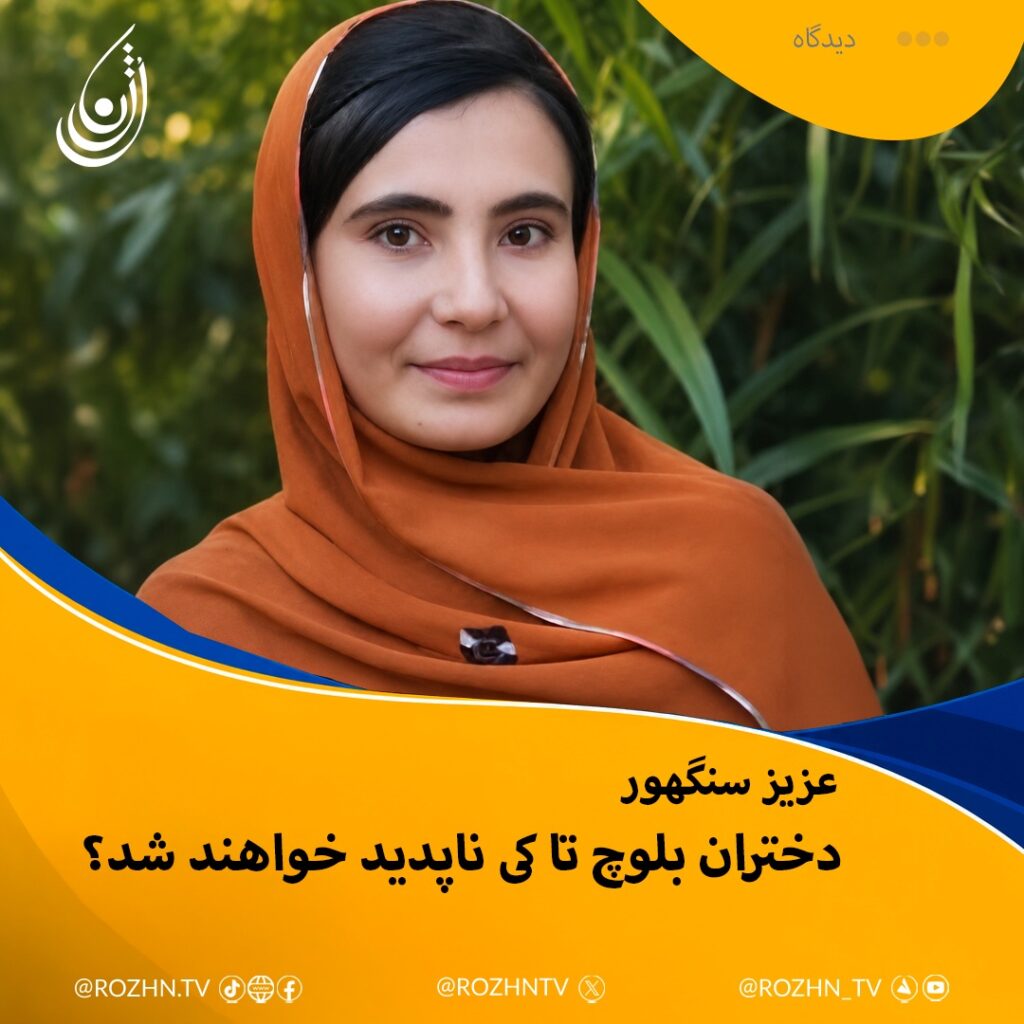
Aziz Sanghur
Reports of enforced disappearances in Balochistan are no longer limited to statistics, press releases and a few lines of news. The issue has become a wound that deepens with each passing day. The most alarming part of the story is that women and young children are now also exposed to this situation. The question is: how long will the state remain silent?
The news of the possible disappearance of Safia Baloch, a 20-year-old Baloch student from Basima in the Washuk area, is a new link in this chain of horrifying incidents. According to her family, Safia Baloch, daughter of Abdul Khaliq, was detained in Quetta at around 1 a.m. on the night of August 23 and then disappeared. Her family claims that officers of the Counter-Terrorism Department (CTD) were involved.
This claim is not a simple or minor matter. If a citizen has been detained by a state institution, where is the legal record of her detention? Why has she not been brought before a court? Why does her family have no information about her condition? And if the state has no connection to the detention of Safia Baloch, why is it not taking urgent steps to find her and establish the truth?
The same questions apply to a family reported to have disappeared on August 19 from the Gishkori Town area of Quetta. The family and human rights activists claim that Amira, daughter of Abdul Rasool, her sister Najma, 8-year-old Parisa and 1.5-year-old Zakir were detained during an operation attributed to security forces, including the CTD and the Frontier Corps (FC).
That an 8-year-old girl and a 1.5-year-old child could have been caught up in any state or security action is, if these reports are accurate, an extremely serious matter in both human and legal terms.
Governments exist to protect their citizens, not to instill fear among them. The authority of law enforcement institutions derives from the law, and these same institutions must be accountable to the law. If taking a citizen away, moving him to an unknown location and leaving his family without information becomes a routine practice, then courts, judicial cases, arrest warrants and the fundamental rights of citizens will become nothing more than words in law books.
The case of Mahjabeen Baloch is also a reminder of this bitter reality. Mahjabeen, a student at the University of Balochistan who is said to be from Basima in Washuk, has been missing since May 2025, according to her family and human rights activists. According to the same reports, she was detained on May 29, 2025, from the nursing hostel of Civil Hospital Quetta.
Mahjabeen has a physical disability due to polio, and because the university hostel lacked suitable facilities, she was staying in the Civil Hospital hostel.
Just five days before Mahjabeen’s reported detention, her brother Younis Baloch had also disappeared. He later returned home in October 2025, but according to published reports there is still no news of Mahjabeen.
That a sister should be missing for more than a year, and that her family should wake up every morning hoping that today might bring news of her, is enough to rouse the conscience of any society.
The possible disappearances of women in Balochistan raise a fundamental question: has the law’s protection of Baloch women diminished? Do the cries of their families matter at all? When a mother, sister, daughter or student disappears, will the state apparatus continue to treat it with the same indifference?
If Safia Baloch is wanted on criminal charges, she must be brought before a court. If there is a case against Mahjabeen, it must go through the legal process. If those who disappeared from Gishkori Town have committed a crime, they must have the right to defend themselves before a court. But if there is no case against them, what is the reason for their disappearance?
The policy of viewing the Balochistan issue solely through a security lens has already caused heavy damage. The disappearance of women and children has now deepened this crisis.
The state must understand that silence does not make the problem go away; it inscribes it in the memory of generations.