
Where Are the Mother and Daughter?
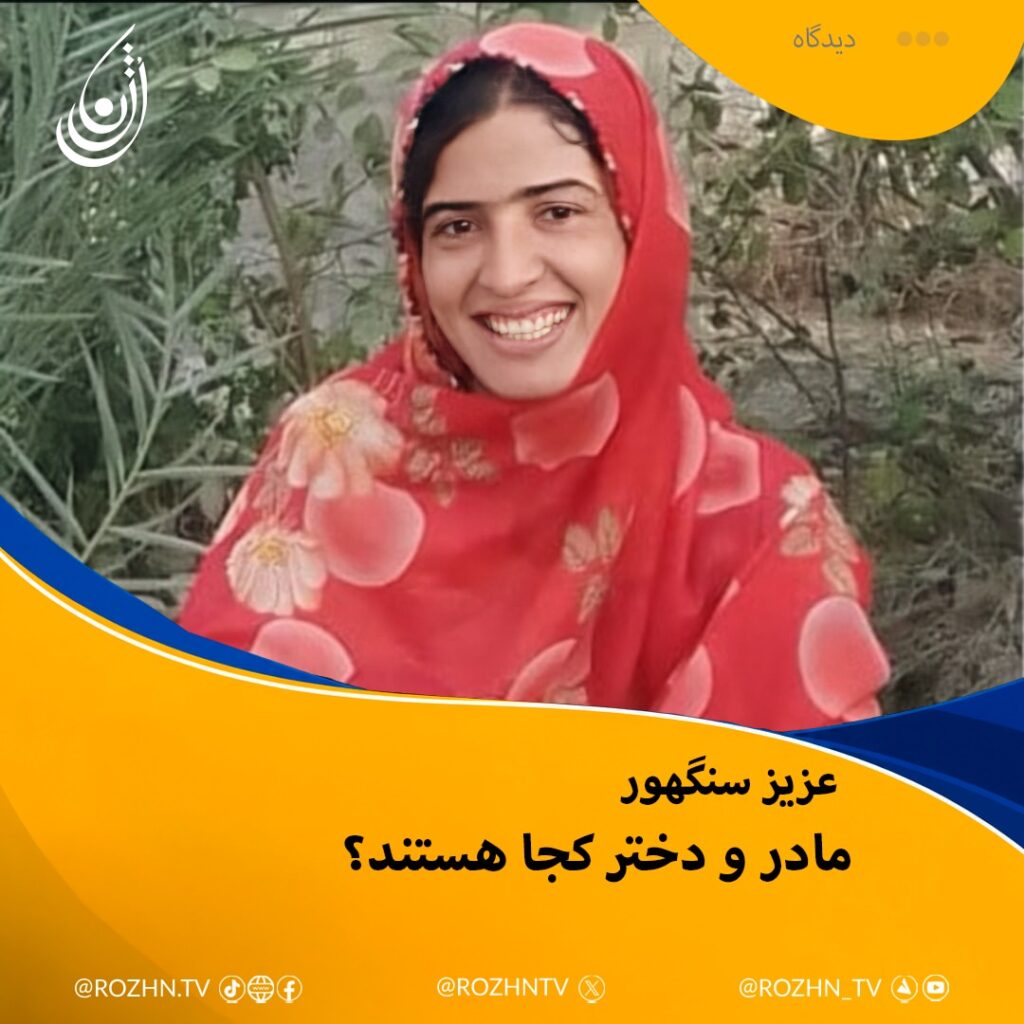
The disappearance of Hani Baloch, 25, and her young daughter Ayesha Baloch is another image of the tragedy unfolding in Balochistan, one in which it is no longer only young men who face the threat …
Rozhn TV | Tuesday, September 29, 2026
Aziz Sanghur
The disappearance of Hani Baloch, 25, and her young daughter Ayesha Baloch is another image of the tragedy unfolding in Balochistan, one in which it is no longer only young men who face the threat of fear, detention and disappearance, but women and children as well. Reports have been published according to which Hani Baloch and her young daughter Ayesha Baloch were allegedly abducted and taken away from their home in the Sami area of Kech on Monday evening. According to family members, security forces and local armed elements took them away. This information has not so far been independently verified. The disappearance of a mother and her young daughter from their home means leaving the entire family in uncertainty, fear and waiting. Where is the mother? How is the child? Where are they being held? Has a case been opened against them? If so, why has no clear information been published about their legal status? Human rights organizations have repeatedly expressed concern about the enforced disappearance of women in Balochistan. A report by the Baloch Yakjehti Committee (BYC) claims that at least 12 Baloch women and girls were forcibly disappeared in 2025. Other documents and reports also record numerous cases of the disappearance of women and young children in 2026.
But the question is: why have Baloch women been pushed into such a situation?
In societies around the world, a woman is usually associated with home, family and the protection of children. A mother wants peace for her child. She wants her home to be safe. She does not want her children to grow up in fear. But when, in a society, a woman herself has no security, her home is not safe, and there is not even any certainty that her children will still be at home the next morning, the psychology of that society gradually changes. In Balochistan, this very question is now tied to the political and resistance role of Baloch women.
In recent years, reports have been published about the participation of some Baloch women in Baloch armed organizations. In the past, women’s role in the Baloch resistance movement was most prominent in political, social and protest arenas, but in recent years it has been reported that some women have joined armed organizations and taken part in military operations. The real strength of any state is not measured only by how many people it can detain. Real strength is revealed in how far a state can assure its citizens that the law protects them. Baloch women have a long history. They have been seen at protests, in front of courts, outside press clubs and in the streets, holding pictures of their disappeared loved ones. But if these same women come to feel that even protest, turning to the courts and peaceful political struggle cannot guarantee their security, then the possibility of harder paths emerging in society cannot be ignored. In the case of Hani Baloch and Ayesha Baloch, the most important demand at present, before any political slogan, is a humane one.
Where are the mother and daughter?
If they are in detention, their legal status and place of detention must be made clear. If a case exists against them, its legal process must be specified. If any charge is directed at them, it must be examined through due legal and judicial process, and if there is no legal basis for continuing their detention, they must be released. For when citizens disappear without the family being clearly told where they are held or what their legal status is, the matter is no longer one for a single family; the whole society begins to ask questions. Today, Balochistan’s greatest crisis is not only a crisis of weapons; it is a crisis of trust. The answer to weapons can be given with weapons, but the only answer to a crisis of trust is justice.



