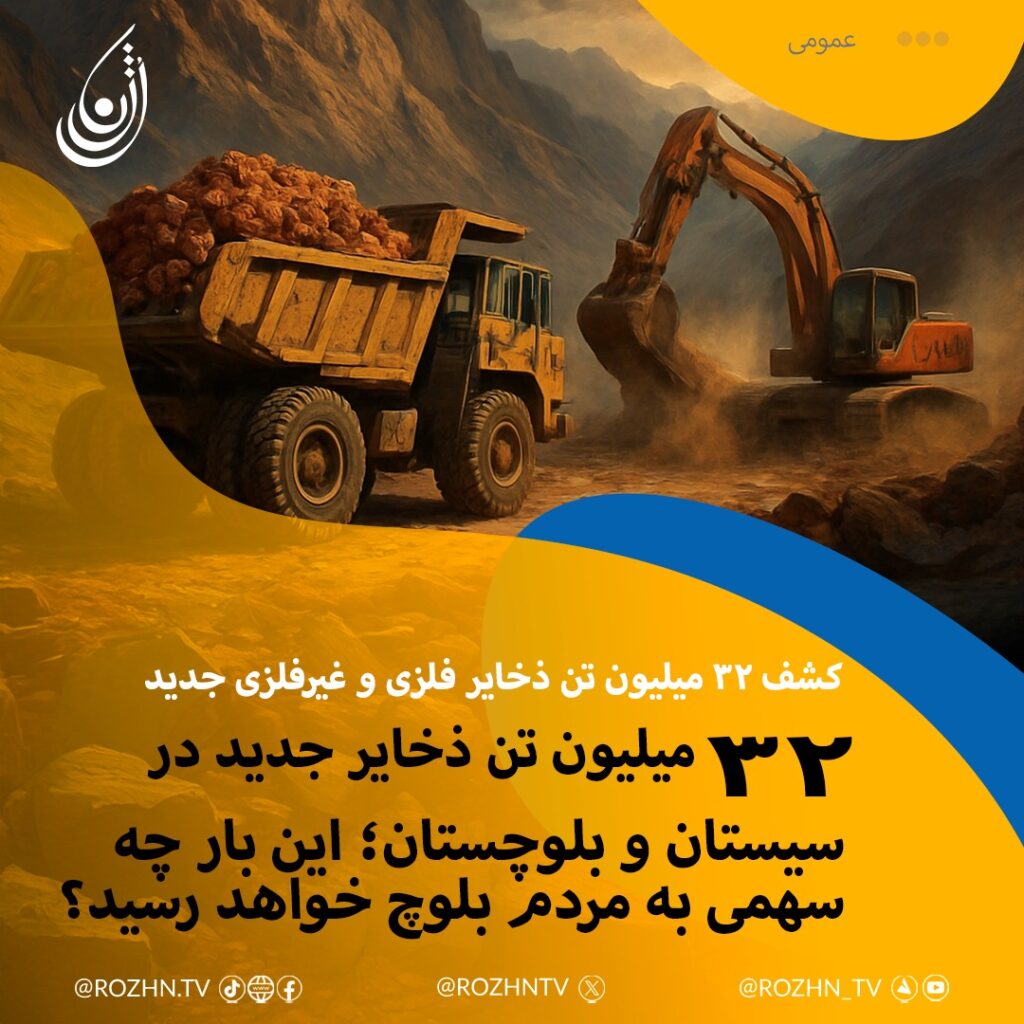
۳۲ میلیون تن ذخایر جدید در سیستان و بلوچستان؛ این بار چه سهمی به مردم بلوچ خواهد رسید؟
EN32 Million Tons of New Reserves in Sistan and Baluchestan; What Share Will the Baloch People Get This Time?Read in English
Rozhn TV | Sunday, May 11, 2025 – Sistan and Baluchestan
32 Million Tons of New Reserves in Sistan and Baluchestan; What Share Will the Baloch People Get This Time?
As officials of Sistan and Baluchestan province announce the discovery of 32 million tons of new metallic and non-metallic reserves, one fundamental question remains unanswered: which of this province’s natural resources have actually been used to benefit the indigenous people, especially the Baloch, to date?
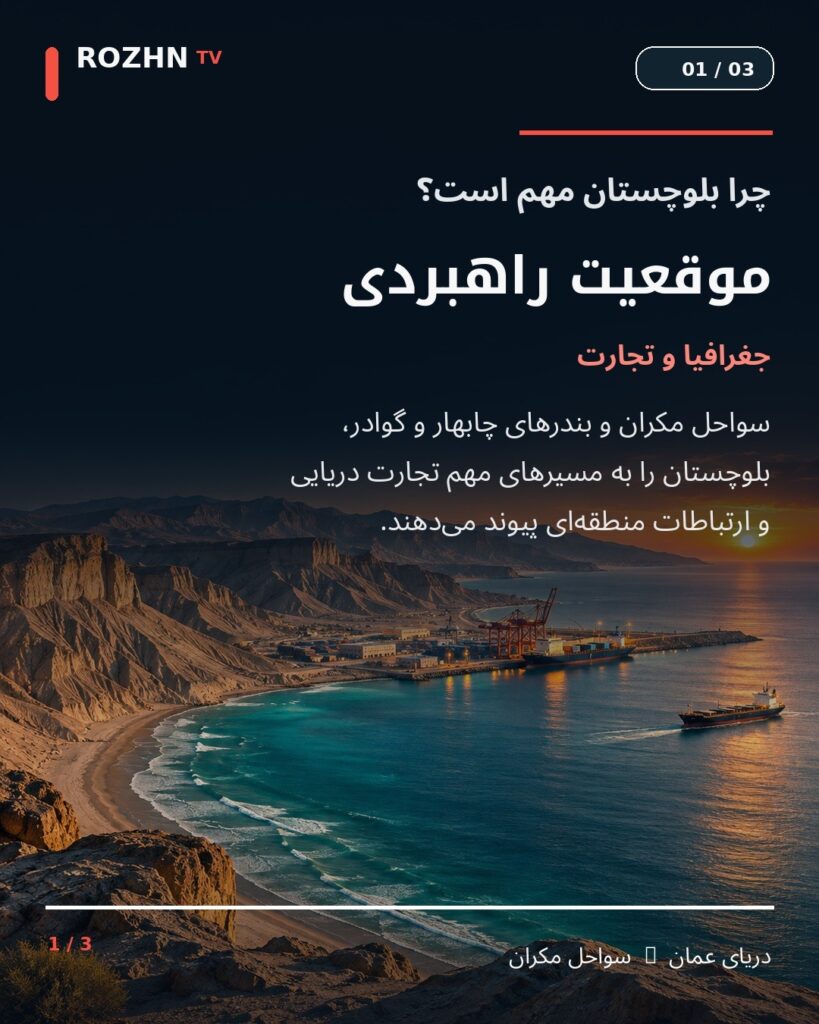
Despite having rich mines, strategic ports, great solar energy potential and extensive natural resources, Sistan and Baluchestan is still counted among the country’s most deprived provinces. Why?
This time, has the mechanism for exploiting these resources been designed so that the profits from the mines, employment, technical training and investment return to Baloch communities? Or will we once again witness the raw export of resources and the arrival of doubled poverty?
In the absence of real participation by local people in decision-making and a lack of transparency in mining contracts, hope for balanced development remains no more than a slogan.
The question is:
How much of the profit from previous projects has returned to the people of the province?
Which Baloch village or town has been improved by mining revenue?
How many young Baloch have been hired in mining or infrastructure projects?
Why are many Baloch still forced to migrate or work in high-risk and marginal jobs?
If these questions have no answers, the discovery of new resources will be not a source of hope but a sign of the continuation of an unequal pattern of development, the result of which will be damage to the environment.