
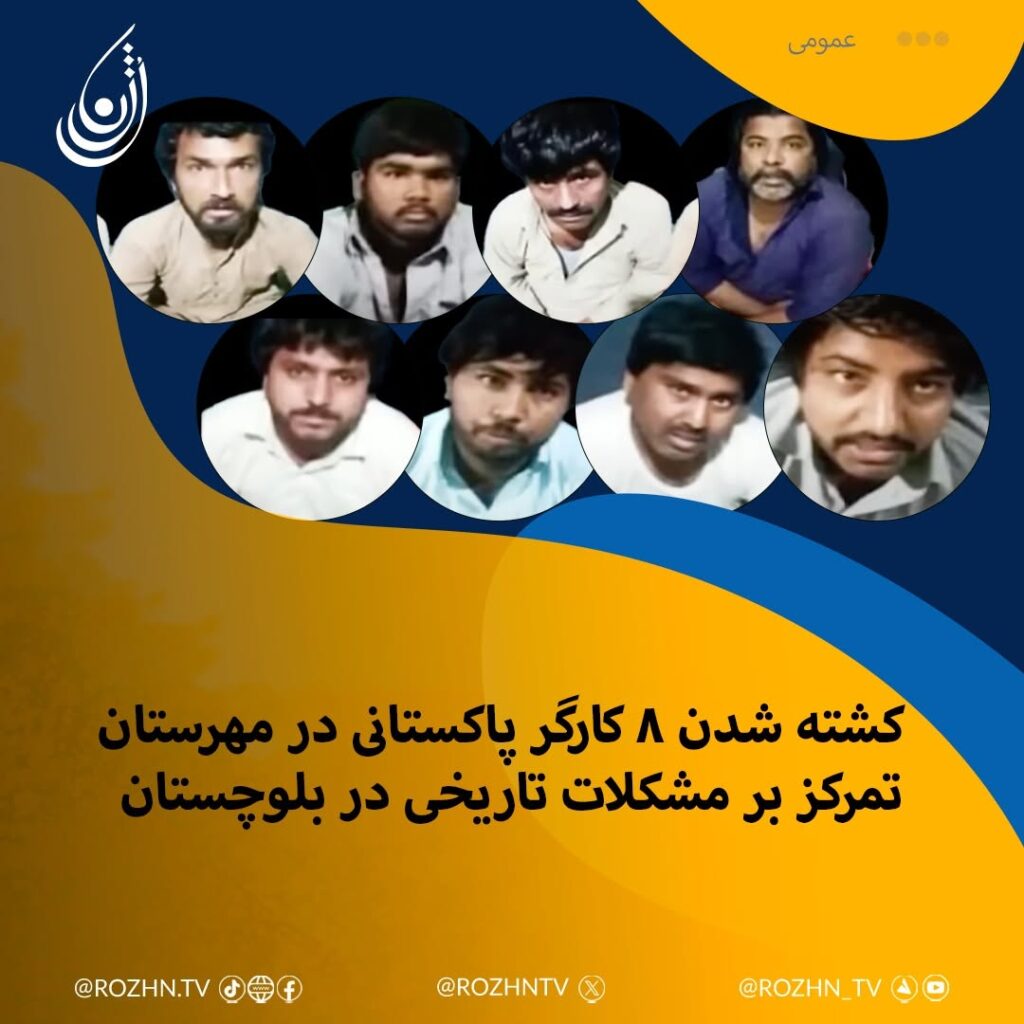
کشته شدن ۸ تبعه پاکستانی در مهرستان؛ بازتاب بحرانی دیرینه در بلوچستان
ENKilling of 8 Pakistani Nationals in Mehrestan: Reflection of a Long-Standing Crisis in BalochistanRead in English
Rozhn TV | Tuesday, April 15, 2025
In one of the most serious recent developments in southeastern Iran, eight Pakistani nationals from Punjab province were killed in Mehrestan county. A group calling itself the “Balochistan National Army” issued a statement claiming responsibility for the attack, describing it as part of “armed resistance” against “structural repression of the Baloch nation.”
While some official sources have described these individuals as defenseless workers, local witnesses and some independent sources claim that the victims, under cover of employment, were present in the region in intelligence and security activities.
Balochistan’s Historical Crisis: Rooted in Structural Discrimination
For years the Baloch people, both in Iranian Balochistan and in Pakistani Balochistan, have faced a series of deprivations, structural discrimination and security repression. In Pakistan, these pressures have taken the form of extrajudicial detentions, enforced disappearances, torture, and targeted killings.
Baloch activists have repeatedly warned that the conduct of Pakistan’s central government in Balochistan resembles not a national government but an occupying force; an outlook that not only fails to respect human rights but in practice deprives the Baloch nation of the most basic citizenship rights.
The Cycle of Violence: Product of Chronic Injustice
The killing of these eight Pakistani nationals, though bitter, did not occur in a vacuum. What happened in Mehrestan is the result of years of accumulated pain, anger and disregard for the voice of the Baloch people. Repressive policies, ethnic discrimination, economic exploitation and political injustice have provided the ground for radical reactions to take shape.
According to a Baloch activist:
“Nobody wants violence. But when peaceful avenues are closed, society is pushed toward explosion.”
The Only Way: Dialogue, Recognition, Justice
In response to the incident, the Pakistani government has called for an immediate investigation, but international observers say the crisis will continue until governments respond honestly to the demands of the Baloch people.
Human rights activists believe that the path to peace runs through accepting ethnic diversity, sustainable development, and ending policies that securitize Baloch society.
This incident is a serious wake-up call for the Pakistani government and its regional backers; peace cannot be imposed by force, but must be built on respect for human dignity and historical justice.



