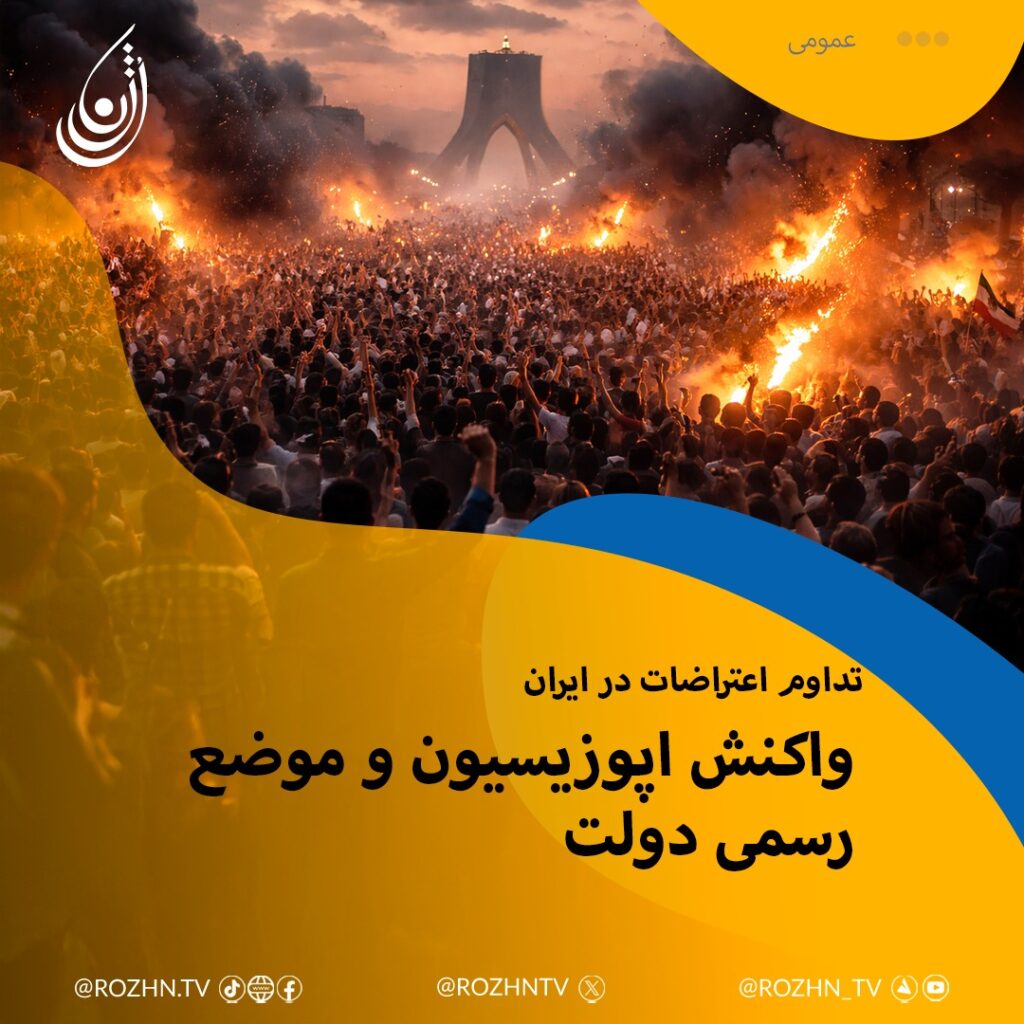
واکنش جریانهای اپوزیسیون و موضع رسمی دولت نسبت به اعتراضات و اعتصابات اخیر در ایران
تلویزیون رُژن | پنجشنبه ۱۱ دی ۱۴۰۴ / ۱ ژانویه ۲۰۲۶
همزمان با ادامه اعتراضات و اعتصابات اخیر در ایران، جبهه مبارزین مردمی و حزب مردم بلوچستان با انتشار بیانیههایی جداگانه اعلام کردهاند که مطالبات معیشتی و اقتصادی مطرحشده از سوی معترضان را مشروع میدانند. در این بیانیهها، ریشه اعتراضات به عواملی از جمله فشارهای اقتصادی، افزایش هزینههای زندگی، سوءمدیریت و نابرابریهای ساختاری نسبت داده شده است.
بر اساس گزارشهای بیبیسی فارسی، همزمان با تداوم اعتراضات، برخی جریانها و چهرههای مخالف حکومت در خارج از کشور نیز مواضعی در ارتباط با مطالبات مطرحشده از سوی معترضان ابراز کردهاند. در این گزارشها تأکید شده است که این مواضع عمدتاً در قالب بیانیهها، پیامها و اظهارنظرهای جداگانه منتشر شده و نشانهای از هماهنگی یا رهبری واحد در میان گروههای اپوزیسیون ارائه نشده است. بیبیسی فارسی همچنین با اشاره به محدودیتهای شدید اطلاعرسانی در داخل ایران یادآور شده است که ارزیابی دقیق نقش یا تأثیر این جریانها بر روند اعتراضات امکانپذیر نیست و اعتراضات عمدتاً ریشه در نارضایتیهای اقتصادی و اجتماعی داخلی دارند.
در همین چارچوب، بیبیسی فارسی و دیگر رسانههای بینالمللی به مواضع رضا پهلوی نیز اشاره کردهاند که در اظهارات عمومی خود بر لزوم توجه به مطالبات اقتصادی و اجتماعی شهروندان و نقش فشارهای داخلی در تحولات ایران تأکید کرده است.
همزمان، رویترز گزارش داده است که اعتراضات اخیر در ایران عمدتاً بهصورت تجمعات پراکنده و محلی بوده و محور اصلی آنها مشکلات اقتصادی، افزایش هزینههای زندگی و نارضایتیهای اجتماعی عنوان شده است. رویترز تأکید میکند که اگرچه برخی شبکهها و گروههای مستقر در خارج از کشور از طریق پیامها و بیانیههای خود مواضعی در ارتباط با اعتراضات مطرح کردهاند، اما این اظهارات بهصورت خودانتشاریافته بوده و نشانهای از وجود رهبری هماهنگ یا نقش سازمانیافته اپوزیسیون در این اعتراضات شناسایی نشده است. این خبرگزاری همچنین یادآور میشود که محدودیتهای دسترسی به اطلاعات در داخل ایران، ارزیابی دقیق دامنه اعتراضات را دشوار کرده و مقامات نیز همواره بهصورت علنی درباره جزئیات این رویدادها اظهار نظر نمیکنند.
بهطور جداگانه، کنگره ملیتهای ایران فدرال با انتشار بیانیهای در تاریخ ۹ دی ۱۴۰۴، مواضع خود را در ارتباط با تجمعات اعتراضی و اعتصابات اخیر اعلام کرده است. در این بیانیه، این تشکل افزایش قیمتها و شرایط اقتصادی را از عوامل اصلی نارضایتیهای اجتماعی عنوان کرده و اعتراضات و اعتصابات را واکنشی به وضعیت معیشتی موجود توصیف کرده است. این مواضع از سوی این تشکل بهصورت مستقل و از طریق کانالهای رسمی خود منتشر شده است.
در ارتباط با مناطق کردنشین، رسانه منطقهای روداو گزارش داده است که حزب دموکرات کردستان ایران در موضعگیریهایی از موج جدید اعتراضات حمایت کرده و بر ضرورت همبستگی گسترده اجتماعی برای دستیابی به تغییرات واقعی تأکید کرده است. این مواضع از سوی این حزب بهصورت مستقل منتشر شده و بازتاب آنها از سوی رسانههای بینالمللی الزاماً گزارش نشده است.
همزمان، بر اساس گزارشها و مستندات منتشرشده توسط سازمان حقوق بشری هنگاو، در جریان اعتراضات اخیر، شمار قابل توجهی از بازداشتشدگان و کشتهشدگان از میان شهروندان کُرد بودهاند. این سازمان حقوق بشری این دادهها را بهعنوان مشاهدات میدانی و مستندسازی موارد نقض حقوق بشر منتشر کرده است.
در واکنش به این تحولات، مسعود پزشکیان، رئیس دولت جمهوری اسلامی ایران، در اظهاراتی که از رسانههای رسمی منتشر شده، گفته است:
«ما آماده هرگونه فداکاری برای انقلاب و کشورمان هستیم و از تهدیدها هراسی نداریم.»
او همچنین تأکید کرده است که دولت از مسئولان خود دفاع خواهد کرد و تلاشهای خود را ادامه میدهد.
در پایان، جبهه مبارزین مردمی و حزب مردم بلوچستان در بیانیههای خود بار دیگر تأکید کردهاند که اعتراضات و اعتصابات اخیر بازتاب مشکلات معیشتی و اقتصادی بخشهایی از جامعه ایران است. گزارشهای رسانههای بینالمللی نیز نشان میدهد که با وجود پراکندگی در میان جریانهای سیاسی، نارضایتیهای اقتصادی و اجتماعی داخلی همچنان عامل اصلی شکلگیری این اعتراضات محسوب میشود.
ENOpposition Groups React and Government Takes Official Position on Recent Protests and Strikes in IranRead in English
Rozhn TV | Thursday, January 1, 2026
As the recent protests and strikes in Iran continue, the Popular Fighters Front (Jebhe-ye Mobarezin-e Mardomi) and the Balochistan People’s Party have announced, in separate statements, that they consider the livelihood and economic demands raised by the protesters legitimate. In these statements, the roots of the protests are attributed to factors including economic pressure, rising living costs, mismanagement and structural inequalities.
According to BBC Persian reports, as the protests continue, some anti-government groups and figures abroad have also expressed positions on the demands raised by the protesters. The reports stress that these positions have mainly been published in the form of separate statements, messages and comments, and that no sign of coordination or a single leadership among opposition groups has been presented. BBC Persian, noting the severe restrictions on information inside Iran, also pointed out that an accurate assessment of the role or influence of these groups on the course of the protests is not possible, and that the protests are rooted mainly in domestic economic and social discontent.
In this context, BBC Persian and other international media have also referred to the positions of Reza Pahlavi, who in his public remarks has stressed the need to pay attention to citizens’ economic and social demands and the role of internal pressures in developments in Iran.
At the same time, Reuters has reported that the recent protests in Iran have mainly taken the form of scattered, local gatherings, and that their main focus has been described as economic problems, rising living costs and social discontent. Reuters stresses that although some networks and groups based abroad have expressed positions on the protests through their messages and statements, these remarks were self-published, and no sign of a coordinated leadership or an organized role for the opposition in these protests has been identified. The news agency also noted that restrictions on access to information inside Iran have made it difficult to accurately assess the scale of the protests, and that officials do not always comment publicly on the details of these events.
Separately, the Congress of Nationalities for a Federal Iran, in a statement issued on December 30, 2025, announced its positions on the protest gatherings and recent strikes. In the statement, this organization described price increases and economic conditions as among the main causes of social discontent and described the protests and strikes as a reaction to the existing livelihood situation. These positions were published by the organization independently and through its own official channels.
Regarding Kurdish-populated regions, the regional outlet Rudaw has reported that the Kurdistan Democratic Party of Iran, in its positions, has supported the new wave of protests and stressed the need for broad social solidarity in order to achieve real change. These positions were published by the party independently, and their coverage by international media has not necessarily been reported.
At the same time, according to reports and documentation published by the Hengaw human rights organization, a considerable number of those detained and killed during the recent protests have been Kurdish citizens. This human rights organization has published this data as field observations and documentation of human rights violations.
In response to these developments, Masoud Pezeshkian, president of the Islamic Republic of Iran, in remarks published by official media, said:
“We are ready for any sacrifice for the revolution and our country, and we are not afraid of threats.”
He also stressed that the government will defend its officials and will continue its efforts.
In conclusion, the Popular Fighters Front and the Balochistan People’s Party, in their statements, again stressed that the recent protests and strikes reflect the livelihood and economic problems of sections of Iranian society. Reports by international media also indicate that, despite the fragmentation among political currents, domestic economic and social discontent remains the main factor behind these protests.