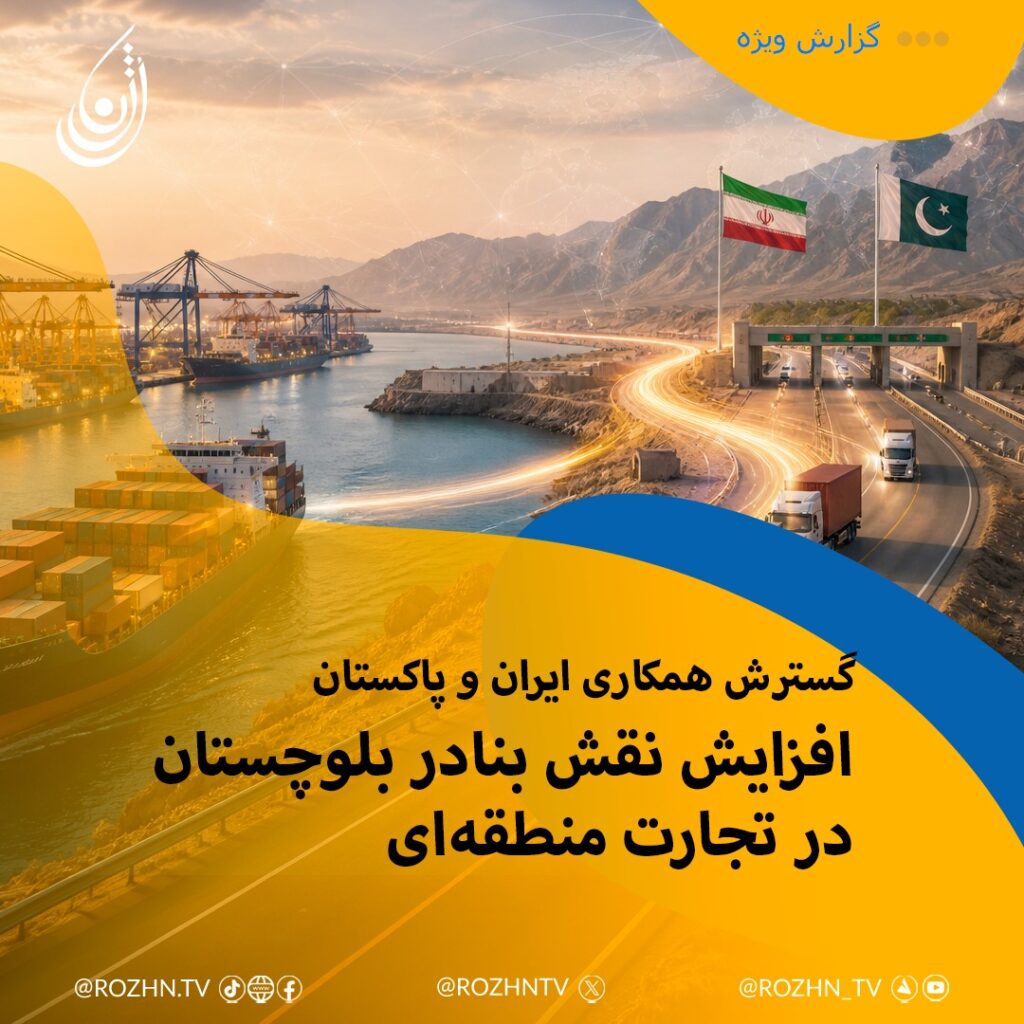
نقش بنادر بلوچستان در طرحهای تجاری منطقهای
تلویزیون رُژن | یکشنبه ۱۳ اردیبهشت ۱۴۰۵ / ۳ مه ۲۰۲۶
گزارشها نشان میدهد پاکستان مسیرهای ترانزیتی تازهای را برای انتقال کالا به مقصد ایران فعال کرده است که از طریق بنادر گوادر، کراچی و قاسم انجام میشود
این روند در چارچوب همکاریهای تجاری میان پاکستان و ایران مطرح شده و شامل انتقال کالاهای کشورهای ثالث از مسیرهای زمینی به مرزهای ایران است
اطلاعات موجود نشان میدهد این مسیرها میتوانند بهعنوان گزینهای مکمل در کنار مسیرهای سنتی از جمله امارات مورد استفاده قرار گیرند اما درباره میزان اجرا و حجم واقعی آن جزئیات رسمی کامل منتشر نشده است
این کریدور همچنین امکان دسترسی پاکستان به بازارهای آسیای میانه از مسیر ایران را تقویت میکند و در صورت گسترش میتواند نقش مناطق مرزی از جمله بلوچستان را در مبادلات منطقهای افزایش دهد
مقامهای دو کشور پیشتر هدف افزایش سطح تجارت تا حدود ۱۰ میلیارد دلار را مطرح کردهاند اما تحقق این هدف به توسعه زیرساختها و تداوم همکاریهای اجرایی وابسته است
ENThe Role of Balochistan’s Ports in Regional Trade PlansRead in English
Rozhn TV | Sunday, May 3, 2026
Reports indicate that Pakistan has activated new transit routes for moving goods to Iran, running through the ports of Gwadar, Karachi and Qasim.
This development has been presented within the framework of trade cooperation between Pakistan and Iran and involves transporting third-country goods by land routes to Iran’s borders.
Available information indicates that these routes could be used as a complementary option alongside traditional routes, including the UAE, but full official details about the extent of implementation and the actual volume have not been published.
This corridor also strengthens Pakistan’s access to Central Asian markets via Iran and, if expanded, could increase the role of border regions, including Balochistan, in regional exchanges.
Officials of the two countries have previously raised the goal of increasing trade to about $10 billion, but achieving this goal depends on infrastructure development and continued implementation cooperation.