نخستین نشانههای دریانوردی بشر در سواحل بلوچستان کشف شد
ENFirst Signs of Human Seafaring Discovered on the Coast of BalochistanRead in English
Saturday, May 31, 2025 | Kopal, Dashtiari, Balochistan
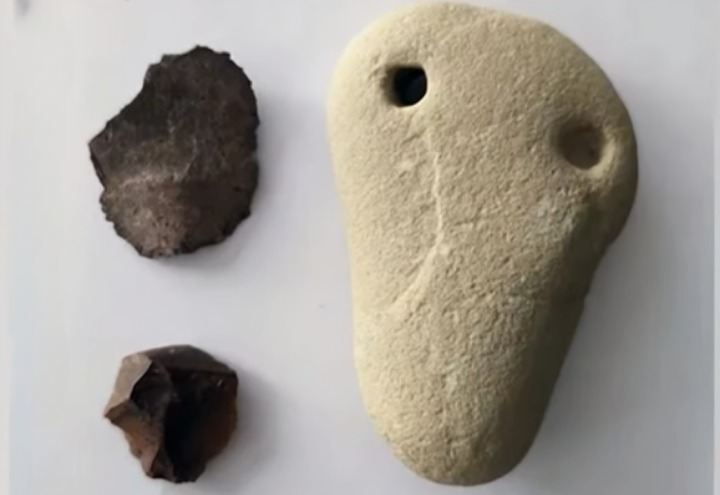
During new excavations in the Kopal area of Dashtiari County in Balochistan, archaeologists have discovered ancient Paleolithic tools that were probably used for fishing and early human seafaring. Among the objects are a perforated pebble and two other stone tools, which indicate that humans began exploiting the sea thousands of years ago.
Alongside these tools, pottery dating to the fourth millennium BC has also been found, pointing to a lasting civilizational presence and to cultural links between this area and other ancient civilizations of the Iranian plateau, the Indian subcontinent and the Persian Gulf rim.
Confirming Balochistan’s Role in Civilization
Researchers believe the new finds at Kopal, together with earlier evidence from Shahr-e Sukhteh (Burnt City), Jiroft, Mehrgarh and Makran, offer a clear picture of Balochistan as one of the cradles of human civilization. These remains show that the Baloch were not only among the first city-builders and seafarers in history but also played a key role in the formation of early human civilizations.
Refuting Distorted Narratives
Baloch cultural activists say these discoveries are “a scientific answer to the distorted narratives of the Pahlavi era,” which sought to confine Iran’s history to the Aryan and Achaemenid civilizations and ignore the role of peoples outside the center, especially the Baloch. They stress that the history of Balochistan is independent and thousands of years older than the official narrative.
“This evidence does not rewrite Baloch history; it restores it to its true place on the map of the world’s civilizations.”
Demand for World Heritage Listing
Given the importance of these discoveries, many researchers and cultural heritage activists have called for the Kopal area and other ancient sites in Balochistan to be inscribed on UNESCO’s World Heritage List.