فریاد مدفونشدگان: از جیرفت تا مهرگَره – تاریخ فراموششده ملت بلوچ در نبرد تمدنها
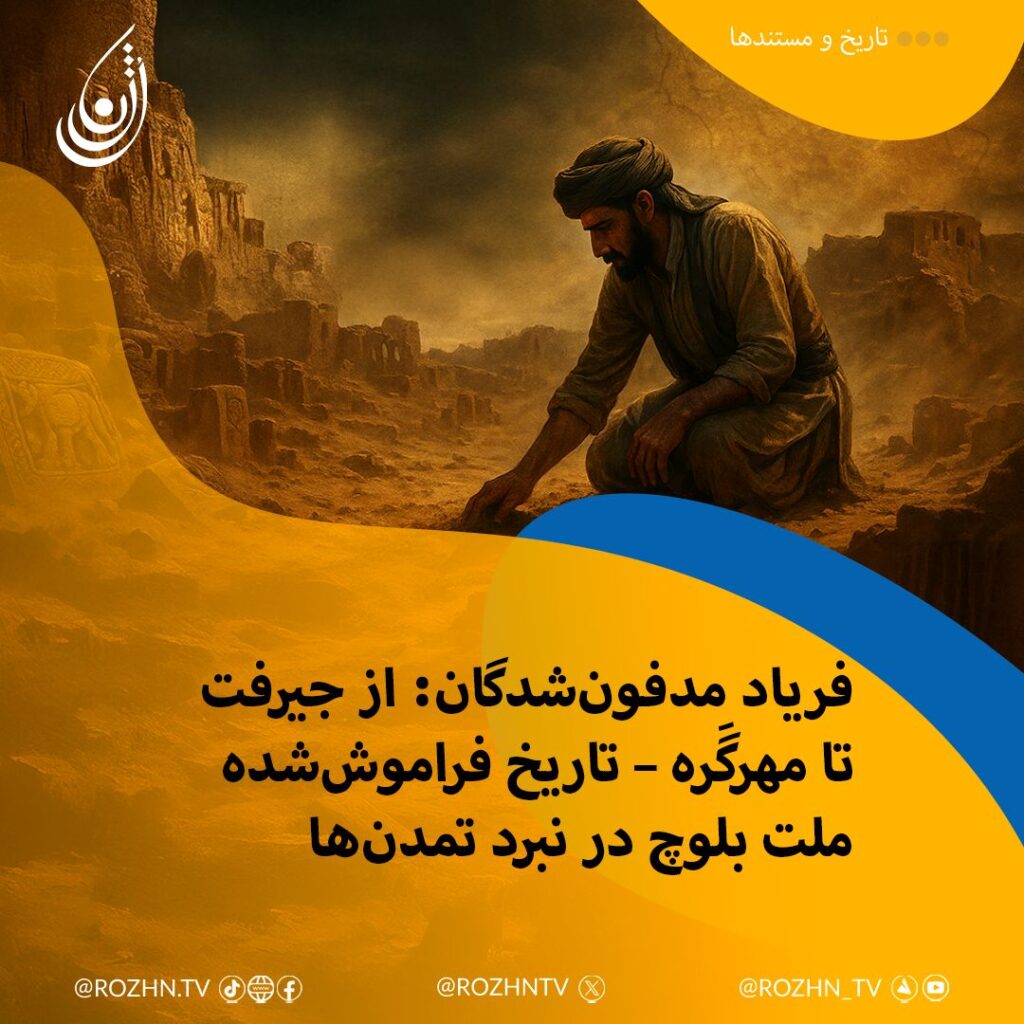
در دل کوههای سوختهی جنوبشرق ایران، جایی میان جیرفت و هلیلرود، رازهایی دفن شدهاند که از مرزهای تاریخ رسمی فراتر میروند. اینجا سرزمینی است که تمدن از دل خاک برخاسته و بیصدا فریاد میزند. اما این فریاد، فریاد یک تمدن نیست – فریاد یک ملت است؛ ملتی که قرنها در این پهنه زیسته، جنگیده و به فراموشی سپرده شده: ملت بلوچ
جیرفت، مهرگَره و سبّی؛ حلقههای زنجیرهی تمدنی فراموششده
جیرفت، تمدنی هزاران ساله با نشانههایی از هنر، خط و معماری مستقل، تنها قطعهای از پازلی بزرگتر است. اگر به شرق بنگریم، به فلات بلوچستان پا میگذاریم؛ جایی که مهرگَره در منطقهی سبّی – در بلوچستان پاکستان امروزی – آرمیده است. باستانشناسان، آن را یکی از کهنترین سکونتگاههای بشری میدانند
مهرگَره آثاری با قدمتی تا دههزار سال در دل خود دارد؛ استخوانها، ظروف، خانههای سنگی و اجساد دفنشده با آداب مذهبی. تنها صدها کیلومتر آنسوتر، موئنجو دارو – شاهکار تمدن دره سند – ایستاده؛ یکی از نخستین شهرهای برنامهریزیشدهی جهان. اینها تصادفی نیستند. همگی در قلب سرزمین تاریخی بلوچستان قرار دارند
شواهد زبانشناختی، فرهنگی و استخوانشناسی بسیاری از این تمدنها را به مردمان دراویدی نسبت میدهند – مردمانی که بعدها در جنوب آسیا پراکنده شدند و ردپای آنان هنوز در زبانها و آیینهای جنوب هند دیده میشود
اما در همین سرزمینهای مهرگَره و سبّی، ملت بلوچ قرنهاست که زیسته. بسیاری از سنتهای زبانی، آیینی، موسیقی و هنرهای دستی بلوچها، ادامهی مستقیم همان میراث تمدنی است
بلوچستان؛ میدان نبرد تمدنها و امپراتوریها
این منطقه، از جیرفت گرفته تا سبّی و موئنجو دارو، تنها زیستگاه مردمان بومی نبوده، بلکه همواره میدان تقابل ملت بلوچ با امپراتوریهای خارجی نیز بوده است
از عیلامیان و هخامنشیان تا ساسانیان و اعراب؛ هر قدرتی که خواست بر جنوبشرق ایران و فلات بلوچستان سلطه یابد، ناگزیر با بلوچها مواجه شد – مردمانی کوهنشین، مقاوم، مستقل و سرسخت. بلوچها، گاه ایستادگی کردند، گاه همزیستی؛ اما هویتشان را هرگز وا ننهادند
امروز، جیرفت به استان کرمان الصاق شده، مهرگَره در مرزهای پاکستان قرار گرفته و موئنجو دارو بخشی از ایالت سند به شمار میرود. اما پیش از آنکه مرزهای استعماری ترسیم شوند، اینها پیکرهی واحد تمدنی شرقی و بومی را شکل میدادند – تمدنی که ریشه در فرهنگ بلوچ دارد
پایان، یا آغاز؟
آنچه امروز به نام تاریخ رسمی تدریس میشود، نسخهای تکهتکه از روایتی بزرگتر است. اما ملت بلوچ، حافظ حافظهی تاریخی این سرزمینهاست – حافظ فریادهایی که در خاک مدفون ماندهاند
جیرفت، مهرگَره، موئنجو دارو – اینها صرفاً نقاط باستانشناسی نیستند. اینها ستونهای هویتیاند. اگر قرار باشد روزی تاریخ را دوباره نوشت، باید از جنوبشرق آغاز کرد؛ از جایی که خاکش هنوز گرم است و صدای مردمانش، از لابهلای سنگهای خاموش شنیده میشود
ENThe Cry of the Buried: From Jiroft to Mehrgarh – The Forgotten History of the Baloch Nation in the Clash of CivilizationsRead in English
In the heart of the scorched mountains of southeastern Iran, somewhere between Jiroft and the Halil River, secrets lie buried that go beyond the borders of official history. This is a land where civilization rose from the earth and cries out in silence. But this cry is not the cry of a civilization; it is the cry of a nation, a nation that has lived and fought in this expanse for centuries and been consigned to oblivion: the Baloch nation.
Jiroft, Mehrgarh and Sibi: Links in a Forgotten Chain of Civilization
Jiroft, a civilization thousands of years old with signs of independent art, writing and architecture, is only one piece of a larger puzzle. If we look east, we step onto the Balochistan plateau, where Mehrgarh rests in the Sibi region, in present-day Pakistani Balochistan. Archaeologists regard it as one of the oldest human settlements.
Mehrgarh holds remains up to ten thousand years old: bones, vessels, stone houses and bodies buried with religious rites. Only a few hundred kilometers farther away stands Mohenjo-daro, the masterpiece of the Indus Valley civilization and one of the world’s first planned cities. These are not coincidences. All of them lie in the heart of the historical land of Balochistan.
Linguistic, cultural and osteological evidence attributes many of these civilizations to the Dravidian peoples, who later spread across South Asia and whose traces can still be seen in the languages and rituals of southern India.
But in these same lands of Mehrgarh and Sibi, the Baloch nation has lived for centuries. Many of the Baloch linguistic, ritual and musical traditions and handicrafts are a direct continuation of that same civilizational heritage.
Balochistan: Battleground of Civilizations and Empires
This region, from Jiroft to Sibi and Mohenjo-daro, has not only been the home of indigenous peoples but has always been the arena of the Baloch nation’s confrontation with foreign empires.
From the Elamites and Achaemenids to the Sasanians and the Arabs, every power that wanted to dominate southeastern Iran and the Balochistan plateau inevitably faced the Baloch, a mountain-dwelling, resilient, independent and stubborn people. The Baloch sometimes resisted and sometimes coexisted, but never abandoned their identity.
Today, Jiroft has been attached to Kerman province, Mehrgarh lies within Pakistan’s borders, and Mohenjo-daro is considered part of Sindh province. But before colonial borders were drawn, these formed a single eastern, indigenous civilizational body, a civilization rooted in Baloch culture.
The End, or a Beginning?
What is taught today as official history is a fragmentary version of a larger narrative. But the Baloch nation is the keeper of the historical memory of these lands, the keeper of cries that remain buried in the earth.
Jiroft, Mehrgarh, Mohenjo-daro: these are not merely archaeological sites. They are pillars of identity. If history is ever to be rewritten, it must begin in the southeast, from a place whose soil is still warm and where the voices of its people can be heard among the silent stones.