
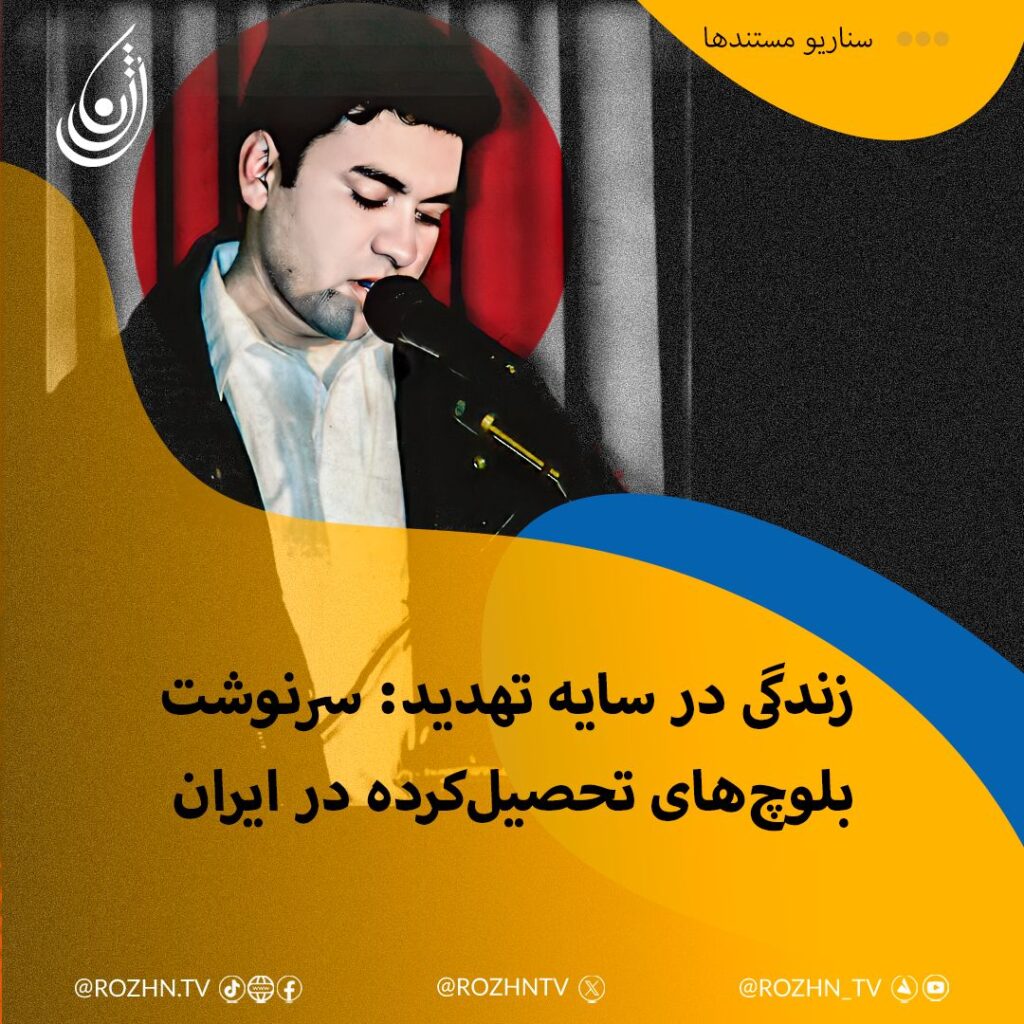
زندگی در سایه تهدید: سرنوشت بلوچهای تحصیلکرده در ایران
ENLiving Under Threat: The Fate of Educated Baloch in IranRead in English
In southeastern Iran, where Sistan and Baluchestan province is located, live people who in the country’s contemporary history have repeatedly faced systematic discrimination, structural poverty and security crackdowns. Among these people are Baloch who, despite all the obstacles, have managed to make their way through education and reach university. But for some of them, particularly those who take up the pen or become the voice of their people, education is not the end of discrimination—it is the start of a countdown to the silencing of their voices.
Reports and documentation from human rights bodies, including Amnesty International and Human Rights Watch, show that in recent years several Baloch civil activists, journalists and graduates have been arrested, tortured and, in some cases, executed on charges such as “propaganda against the system,” “acting against national security” and even “corruption on earth.”
In recent days alone, more than 20 people have been executed in Iran, a number of them from ethnic and religious minorities, including Baloch. This new wave of executions is a serious alarm bell for activists and their families, particularly in regions that have always been deprived of the justice-oriented policies of the center.
A local source who did not want to be named told Rozhn TV: “If you are Baloch and educated, and you want to speak or criticize, they call you a separatist or a terrorist. For us, a university degree is more like a death sentence than a chance at a better life.”
This situation is not only a blatant violation of human rights but has also caused intellectual emigration and brain drain from regions such as Balochistan. In many cases, families forbid their children from social and civic activity, fearing that a fate similar to that of people such as Yaqub Mehrnahad or Nasir Baloch awaits them.
From the standpoint of international law, Iran is obliged, under the international covenants it has signed, including the “International Covenant on Civil and Political Rights,” to protect freedom of expression, freedom of education and the right to life. But the lived experience of many young Baloch shows that these rights are respected only on paper.
While government officials sometimes speak of development in Balochistan in their statements, the bitter reality is that every independent, educated voice that wants to speak of its people’s pain is met not with appreciation but with repression.
For a people who have lived with discrimination for centuries, education can be a lifeline—but not when schooling becomes a pretext for further repression. As long as the judicial system is not transparent, accountable and independent, and as long as ethnicity and religion are grounds for deprivation of basic rights, one cannot speak of sustainable and just development in Sistan and Baluchestan.



