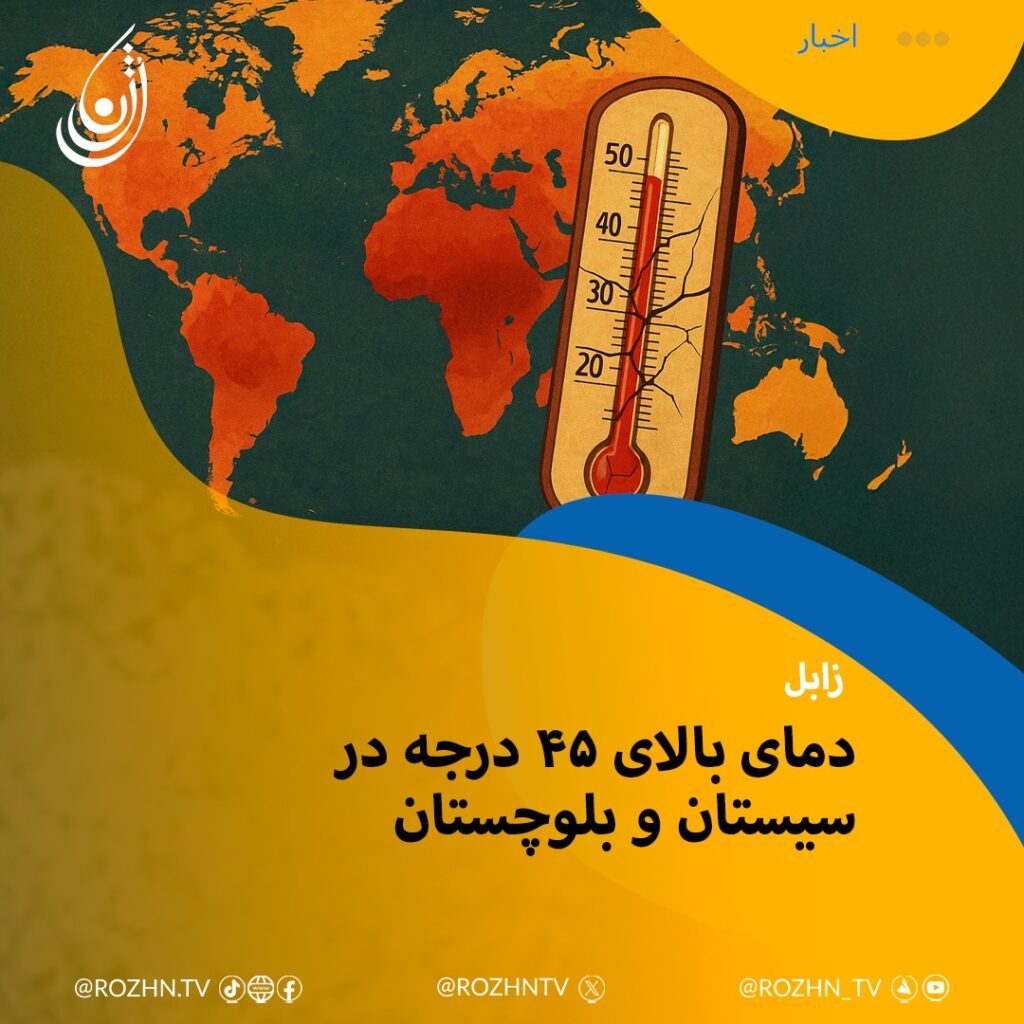
دمای بالای ۴۵ درجه در سیستان و بلوچستان
ENTemperatures Above 45 Degrees in Sistan and BaluchestanRead in English
Zabol Among the World’s 15 Hottest Cities
Friday, May 16, 2025
In a new heat wave in the region, the city of Zabol in Sistan and Baluchestan province, with a recorded temperature of 45.2 degrees Celsius on Wednesday, May 14, was named the 13th hottest city in the world.
The data is based on global meteorological reports and indicates the severity of the rise in air temperature in Iran’s border regions. The city of “Ain Guezzam” in Algeria, with a recorded temperature of 47.1 degrees, topped the list of the hottest places on Earth.
In recent days, several cities in Khuzestan province have also appeared among the world’s 15 hottest cities, a sign of the spread of the heat wave across southern Iran.
The rising temperatures in Zabol, accompanied by drought, dust storms and shrinking water resources, have posed serious challenges to the livelihoods and health of the region’s residents. Experts have warned that the continuation of such conditions will intensify environmental and human risks in the region.