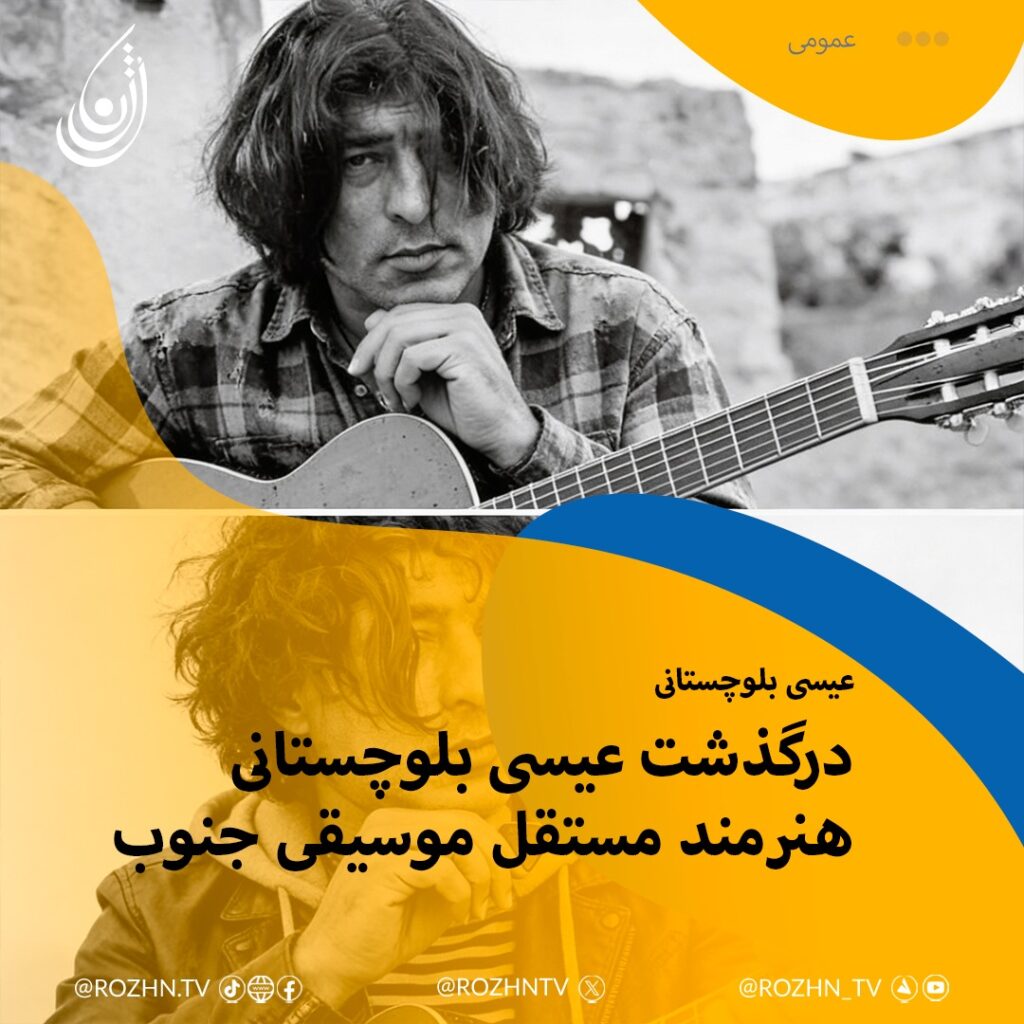
درگذشت عیسی بلوچستانی هنرمند مستقل موسیقی جنوب
تلویزیون رُژن | یکشنبه ۱۲ بهمنماه ۱۴۰۴ / ۱ فوریه ۲۰۲۶
عیسی بلوچستانی، خواننده، نوازنده گیتار، آهنگساز و ترانهسرای شناختهشده موسیقی جنوب ایران، متولد سال ۱۳۴۹، در دیماه ۱۴۰۴ و در سن ۵۵ سالگی درگذشت.
او از خانوادهای کوچنشین بود که از استان سیستان و بلوچستان به استان هرمزگان مهاجرت کرده بودند. این پیشینه فرهنگی و زیستی، نقش تعیینکنندهای در شکلگیری هویت هنری و مسیر موسیقایی او داشت و در آثارش بازتابی پررنگ از فرهنگ جنوب ایران دیده میشد.
فعالیت موسیقایی عیسی بلوچستانی به سالهای پیش از دهه ۱۳۶۰ بازمیگردد. او نخستین آلبوم رسمی خود را در اوایل دهه ۱۳۷۰ ضبط و منتشر کرد و در طول بیش از سه دهه فعالیت هنری، بیش از بیست آلبوم و تکترانه ارائه داد که بسیاری از آنها در میان مخاطبان موسیقی بومی جنوب با استقبال گسترده همراه شد.
برخلاف برخی روایتهای نادقیق، آغاز فعالیت هنری او با کافهخوانی نبوده است. عیسی بلوچستانی پس از محدودیتها و ممنوعیت اجرای کنسرت، به اجرای موسیقی در کافهها روی آورد و این فضا را به بستری برای تداوم فعالیت حرفهای و حفظ ارتباط مستقیم با مخاطبان خود تبدیل کرد.
او طی سالها، موسیقی جنوبی را با لهجه و رنگوبوی بومی بندرعباس در فضاهای مختلف از اجراهای خیابانی و کافهای تا تالارها و سالنهای اجرا ارائه داد و همواره بر اجرای زنده و ارتباط بیواسطه با مردم تأکید داشت. از نگاه او، موسیقی در جنوب ایران بخشی از زندگی روزمره مردم است و به صحنههای رسمی و چارچوبهای محدود خلاصه نمیشود.
این هنرمند در گفتوگوهای خود، موسیقی را بیش از آنکه یک شغل بداند، کاری برخاسته از علاقه و تعهد شخصی توصیف میکرد و بارها به نبود حمایت ساختاری از هنرمندان مستقل در ایران اشاره داشت. او بدون وابستگی به جریان اصلی موسیقی و با پایبندی به سبک شخصی خود، آثاری از جمله آلبوم «خاک جنوب» و قطعاتی مانند «بارون» را منتشر کرد.
عیسی بلوچستانی همچنین سابقه حضور و اجرا در فستیوالهای موسیقی خارج از کشور، از جمله در سوئد، را در کارنامه هنری خود داشت. با این حال، بخشهایی از زندگی و مسیر هنری او همچنان کمتر روایت شده و ناگفتههایی درباره این هنرمند باقی مانده است.
خبر درگذشت عیسی بلوچستانی صبح یکشنبه بیستوهشتم دیماه سال هزار و چهارصد و چهار گزارش شد و بهعنوان خبری تأثیرگذار برای جامعه هنری و مخاطبان موسیقی محلی، بازتاب گستردهای بهدنبال داشت. بر اساس اعلام رسانههای رسمی و اطلاعیههای منتشرشده، علت فوت او ایست قلبی عنوان شده است. تاکنون هیچ منبع رسمی و معتبر، گزارشی مبنی بر ارتباط درگذشت این هنرمند با رویدادهای سیاسی یا وقوع خشونت منتشر نکرده است. این گزارشها تأکید دارند که مرگ او به دلایل طبیعی رخ داده و هیچ نشانهای از دخالت فرد یا حادثهای خشونتآمیز وجود ندارد.
پیکر این هنرمند در آرامستان باغو بندرعباس به خاک سپرده شد. درگذشت او واکنشهای گستردهای را در میان هنرمندان، فعالان فرهنگی و دوستداران موسیقی بومی جنوب ایران و بلوچستان برانگیخت و یاد او بهعنوان یکی از چهرههای تأثیرگذار موسیقی محلی جنوب در ذهن مخاطبان باقی مانده است.
ENEisa Balochestani, Independent Musician of the South, DiesRead in English
Rozhn TV | Sunday, February 1, 2026
Eisa Balochestani, a well-known singer, guitarist, composer and songwriter of southern Iranian music, born in 1349 (1970-71), died in the month of Dey 1404 (December 2025-January 2026) at the age of 55.
He came from a nomadic family that had migrated from Sistan and Baluchestan province to Hormozgan province. This cultural and lived background played a decisive role in shaping his artistic identity and musical path, and a strong reflection of the culture of southern Iran was visible in his work.
Eisa Balochestani’s musical activity dates back to the years before the 1360s (the 1980s). He recorded and released his first official album in the early 1370s (the 1990s), and over more than three decades of artistic activity he produced more than twenty albums and singles, many of which were widely welcomed among audiences of the indigenous music of the south.
Contrary to some inaccurate accounts, his artistic career did not begin with singing in cafes. Eisa Balochestani turned to performing music in cafes after restrictions and bans on holding concerts, and turned this setting into a platform for continuing his professional activity and maintaining direct contact with his audience.
Over the years, he presented southern music with the local accent and flavor of Bandar Abbas in a range of settings, from street and cafe performances to halls and concert venues, and he always stressed live performance and direct contact with people. In his view, music in southern Iran is part of people’s everyday life and cannot be reduced to formal stages and limited frameworks.
In his interviews, this artist described music less as a profession than as work born of personal passion and commitment, and he repeatedly pointed to the lack of structural support for independent artists in Iran. Without ties to mainstream music and staying true to his personal style, he released works including the album “Khak-e Jonoub” (Soil of the South) and pieces such as “Baroon.”
Eisa Balochestani also had a record of appearing and performing at music festivals abroad, including in Sweden. However, parts of his life and artistic journey remain less told, and there are still untold stories about this artist.
The news of Eisa Balochestani’s death was reported on the morning of Sunday, January 18, 2026 (28 Dey 1404), and had wide repercussions as news that deeply affected the artistic community and audiences of local music. According to official media announcements and published notices, the cause of his death was given as cardiac arrest. So far, no official and credible source has published a report linking the artist’s death to political events or violence. These reports stress that his death occurred from natural causes and that there is no sign of any involvement by a person or a violent incident.
The artist’s body was buried in the Baghou cemetery in Bandar Abbas. His death drew wide reactions among artists, cultural activists and lovers of the indigenous music of southern Iran and Balochistan, and his memory remains in the minds of audiences as one of the influential figures of local music of the south.