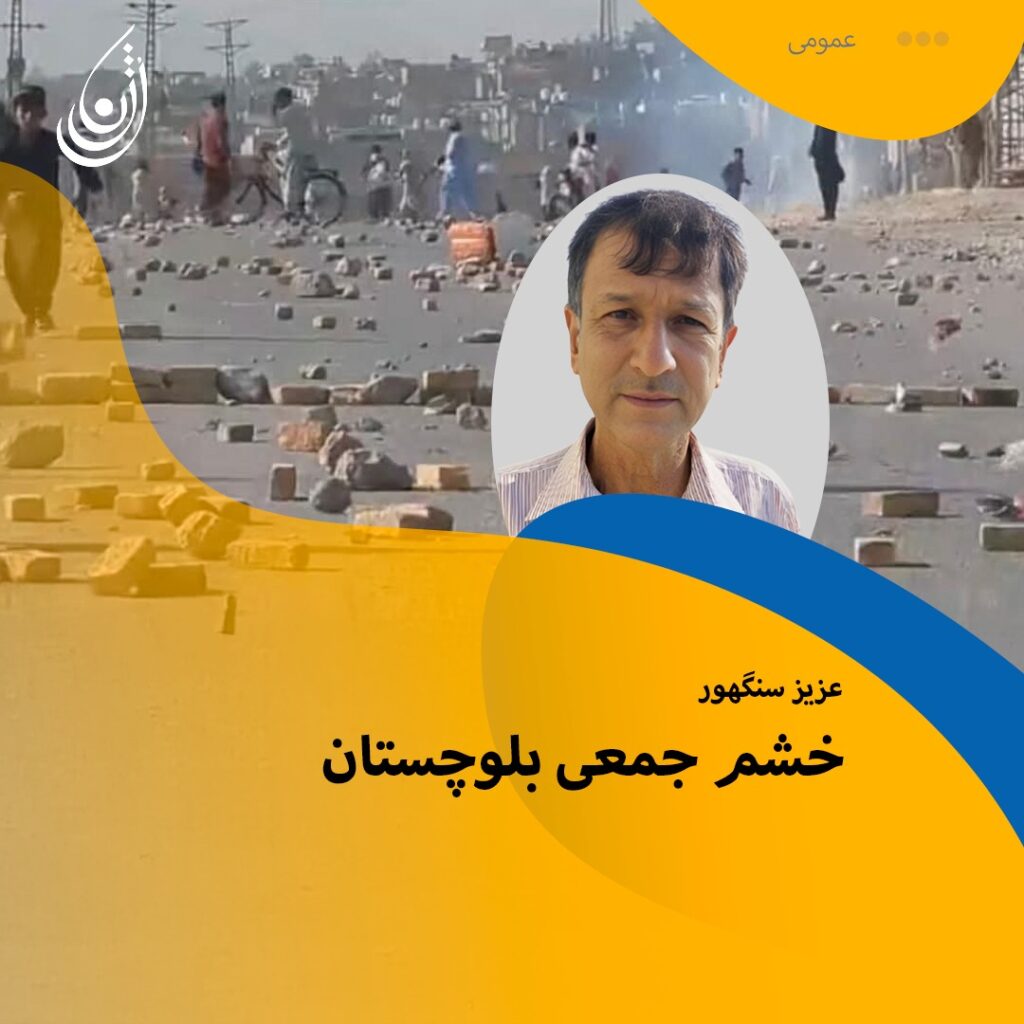
خشم جمعی بلوچستان
تلویزیون رُژن | جمعه ۲۱ شهریور ۱۴۰۴ خورشیدی / ۱۲ سپتامبر ۲۰۲۵ میلادی
نویسنده: عزیز سنگھور
در دوم سپتامبر ۲۰۲۵، انفجاری خونین در برابر استادیوم شاهوانی منطقه سریاب کویته رخ داد که بار دیگر بلوچستان را در خون غوطهور ساخت. در این حادثه دلخراش، ۱۶ تن جان باختند و دهها نفر دیگر زخمی شدند. این رویداد تنها یک حمله تروریستی نبود بلکه برگ سیاه دیگری در تاریخ پر از زخم بلوچستان افزوده شد. اما این بار واکنش مردم بلوچستان متفاوت از گذشته بود. بلوچ و پشتون با هم در برابر این کشتار ایستادند و همبستگی کمسابقهای از خود نشان دادند.
در هشتم سپتامبر، به دعوت «آل پارٹیز بلوچستان» سراسر ایالت شاهد اعتصاب عمومی و تعطیلی کامل بازارها و جادهها بود. از کویته تا ژوب، مستونگ، قلات، سوراب، لورالایی، جعفرآباد و گوادر تنها یک صدا بلند شد: «بس است، دیگر کافیست!»
در جریان اعتصاب، رهبران و فعالان احزاب سیاسی مختلف به خیابانها آمدند. اعضای حزب ملی عوامی پشتونخوا (پشتونخوا میپ)، حزب ملی بلوچستان (بیاِنپی)، حزب ملی (نیشنل پارٹی)، عوامی نیشنل پارٹی (اےاِنپی)، تحریک انصاف و جماعت اسلامی در صفوف اعتراض شرکت کردند. این حرکت تنها اعتراض یک گروه نبود بلکه پیام مشترک تمامی نیروهای سیاسی اصلی بلوچستان بود.
اما نهادهای دولتی همچون همیشه به سرکوب متوسل شدند. تنها در کویته بیش از صد معترض دستگیر شدند که در میان آنان چهرههایی چون عبدالرحیم زیارتوال و قهار خان ودان از پشتونخوا میپ، ملک نصیر شاهوانی و طاهر شاهوانی از بیاِنپی و سید آغا از تحریک انصاف حضور داشتند. در سایر مناطق بلوچستان نیز دهها فعال سیاسی بازداشت شدند. از سوراب، مستونگ، لورالایی، جعفرآباد، نصیرآباد، دکی، زیارت، قلات و چمن خبر دستگیریهای گسترده رسید.
اصغر خان اچکزئی، رئیس ایالتی اےاِنپی، دولت را متهم کرد که برای تخریب یک اعتراض مسالمتآمیز از خشونت استفاده کرده است. به گفته او، رهبران برجستهای چون عبدالرحیم زیارتوال (دبیرکل پشتونخوا میپ)، نصیر احمد شاهوانی (نماینده پیشین بیاِنپی)، جاوید مشوانی (فرزند رهبر جماعت اسلامی جمیل مشوانی) و شماری دیگر در کویته بازداشت و به زندان منتقل شدند. او همچنین مدعی شد که نیروهای امنیتی در حضور وی چندین بار دفتر پشتونخوا میپ را هدف شلیک گاز اشکآور قرار دادند.
با وجود این، اصغر خان اعتصاب را موفقترین اعتصاب تاریخ بلوچستان خواند و گفت: «این رفراندوم مردم بلوچستان بود، جایی که نیروهای واقعی سیاسی ایالت موضع خود را علیه حکومت تولیدشده توسط فرم ۴۷ و نهادهای قدرتمند به روشنی بیان کردند.»
در گذشته، استبلشمنت همواره سیاست «تفرقه بینداز و حکومت کن» را در بلوچستان دنبال کرده است. آنان کوشیدهاند بلوچ و پشتون را بر مبنای قومی از یکدیگر جدا کنند. گاهی بحث تشکیل ایالت مستقل در مناطق پشتوننشین را مطرح میکردند، زمانی دیگر با ایجاد تفاوت در بودجههای توسعهای بین مناطق بلوچ و پشتون بیاعتمادی میکاشتند. حتی در رسانهها و بیانیههای رسمی، این تقسیم به عمد دامن زده میشد.
اما پس از انفجار سریاب، صحنهای معکوس پدیدار شد. بلوچ و پشتون با هم فریاد زدند. در راهپیماییها پرچمهای هر دو قوم برافراشته شد و شعارها در یک مسیر همآهنگ گشت. این همبستگی نشان داد که مردم بلوچستان زخمهایشان را مشترک میدانند و دیگر در دام تفرقه نخواهند افتاد.
این اعتصاب شعور جمعی بلوچستان را به نمایش گذاشت. از ژوب تا گوادر تمامی شهرها تعطیل شد، جادهها مسدود گردید و مراکز تجاری بسته ماند. این حرکت تنها یک اعتراض نبود بلکه بیانگر خشم انباشته مردم بود. پیام روشن بود: چه بلوچ و چه پشتون، رنج آنان یکی است، خونشان بر یک خاک ریخته میشود و زخمهایشان همسان است.
برای مردم بلوچستان، این لحظه یک نقطه عطف سیاسی به شمار میرود. اتحاد بلوچ و پشتون میتواند پایههای سیاستهای استبلشمنت را فرو ریزد. اگر این اتحاد پایدار بماند، جنبشهای سیاسی در بلوچستان میتوانند قویتر و مؤثرتر شوند. در گذشته، نهادهای قدرت با ایجاد شکاف بین دو قوم به اهداف خود دست یافتند، اما امروز همبستگی مردم این راهبرد را به چالش کشیده است.
اعتصاب سراسری در پاسخ به انفجار سریاب تنها یک رویداد نمادین نبود، بلکه پیامی سیاسی بود؛ پیامی خطاب به استبلشمنت که مردم بلوچستان دیگر ساکت نخواهند ماند. بلوچ و پشتون خون ریختهشده عزیزانشان را بخشی از سرنوشت جمعی خویش میدانند. اتحاد آنان نشان میدهد که نیروی واقعی بلوچستان در همبستگی مردمی نهفته است، نه در تقسیمات ساختگی.
این اعتصاب برای مردم بلوچستان همانند یک «رفراندوم» بود که با صدایی واحد اعلام کردند: «ما یکی هستیم، و خونمان فروشی نیست.»
ENBalochistan’s Collective AngerRead in English
Rozhn TV | Friday, September 12, 2025
Author: Aziz Sanghur
On September 2, 2025, a bloody explosion took place in front of the Shahwani Stadium in the Sariab area of Quetta, once again drowning Balochistan in blood. In this harrowing incident, 16 people were killed and dozens of others were wounded. This event was not merely a terrorist attack; it added another black page to Balochistan’s history, so full of wounds. But this time the response of the people of Balochistan was different from the past. Baloch and Pashtuns stood together against this massacre and showed a rarely seen solidarity.
On September 8, at the call of “All Parties Balochistan,” the entire province witnessed a general strike and the complete closure of markets and roads. From Quetta to Zhob, Mastung, Kalat, Surab, Loralai, Jaffarabad and Gwadar, only one voice rose: “Enough is enough!”
During the strike, leaders and activists of various political parties took to the streets. Members of the Pashtunkhwa Milli Awami Party (PkMAP), the Balochistan National Party (BNP), the National Party, the Awami National Party (ANP), Pakistan Tehreek-e-Insaf and Jamaat-e-Islami took part in the protest ranks. This movement was not the protest of a single group but the shared message of all the main political forces of Balochistan.
But the state institutions, as always, resorted to repression. In Quetta alone, more than a hundred protesters were arrested, among them figures such as Abdul Rahim Ziaratwal and Qahar Khan Wadan of PkMAP, Malik Naseer Shahwani and Tahir Shahwani of the BNP, and Syed Agha of Pakistan Tehreek-e-Insaf. Dozens of political activists were also detained in other parts of Balochistan. News of widespread arrests came from Surab, Mastung, Loralai, Jaffarabad, Naseerabad, Dki, Ziarat, Kalat and Chaman.
Asghar Khan Achakzai, the ANP’s provincial president, accused the government of using violence to undermine a peaceful protest. According to him, prominent leaders such as Abdul Rahim Ziaratwal (secretary general of PkMAP), Naseer Ahmad Shahwani (former BNP lawmaker), Javed Mashwani (son of Jamaat-e-Islami leader Jamil Mashwani) and a number of others were arrested in Quetta and sent to jail. He also claimed that security forces fired tear gas at the PkMAP office several times in his presence.
Despite this, Asghar Khan called the strike the most successful in the history of Balochistan and said: “This was a referendum of the people of Balochistan, in which the real political forces of the province clearly stated their position against the government manufactured by Form 47 and the powerful institutions.”
In the past, the establishment has always pursued a policy of “divide and rule” in Balochistan. It has tried to separate Baloch and Pashtuns from one another along ethnic lines. At times it raised the idea of a separate province in Pashtun-majority areas, and at other times it sowed distrust by creating differences in development budgets between Baloch and Pashtun areas. Even in the media and in official statements, this division was deliberately fanned.
But after the Sariab explosion, a reverse scene emerged. Baloch and Pashtuns cried out together. In the marches, the flags of both peoples were raised and the slogans moved in harmony. This solidarity showed that the people of Balochistan regard their wounds as shared and will no longer fall into the trap of division.
This strike displayed the collective consciousness of Balochistan. From Zhob to Gwadar, all cities were shut down, roads were blocked and commercial centers stayed closed. This movement was not merely a protest but an expression of the people’s accumulated anger. The message was clear: whether Baloch or Pashtun, their suffering is one, their blood is spilled on one land, and their wounds are the same.
For the people of Balochistan, this moment is considered a political turning point. Baloch-Pashtun unity can bring down the foundations of the establishment’s policies. If this unity endures, political movements in Balochistan can become stronger and more effective. In the past, the power structures achieved their goals by creating a rift between the two peoples, but today the solidarity of the people has challenged this strategy.
The nationwide strike in response to the Sariab explosion was not merely a symbolic event but a political message, a message to the establishment that the people of Balochistan will no longer remain silent. Baloch and Pashtuns regard the spilled blood of their loved ones as part of their shared destiny. Their unity shows that the real strength of Balochistan lies in popular solidarity, not in artificial divisions.
For the people of Balochistan, this strike was like a “referendum,” in which they declared with one voice: “We are one, and our blood is not for sale.”