
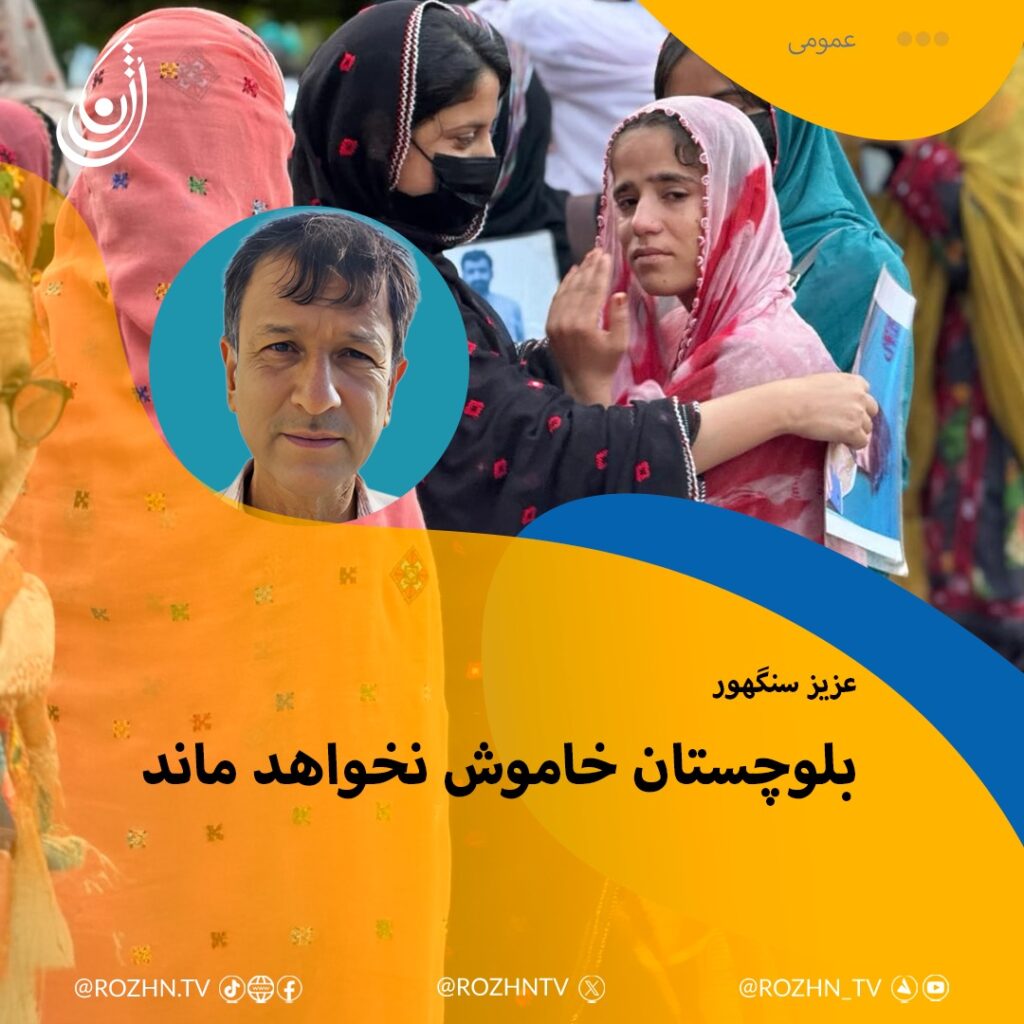
بلوچستان خاموش نخواهد ماند
تلویزیون رُژن | سهشنبه ۸ مهر ۱۴۰۴ خورشیدی / ۳۰ سپتامبر ۲۰۲۵ میلادی
عزیز سنگھور
وضعیت امنیتی در بلوچستان روزبهروز وخیمتر میشود. این تنها تحلیل یک شهروند عادی یا یک فعال سیاسی بلوچ نیست، بلکه اعتراف صریح جانمحمد جمالی، نخستوزیر و رئیس سابق مجلس ایالتی بلوچستان و عضو حزب حاکم «حزب عوامی بلوچستان» در جریان انتخابات درونحزبی است. او اذعان کرد که جادههای بلوچستان نه برای مردم امناند و نه برای سیاستمداران. به گفته او، شرایط بهگونهای است که حتی وزرا نیز قادر به سفر زمینی نیستند.
جمالی مثال آورد که خود نمیتواند از مسیر بولان عبور کند و حتی صادق سنجرانی، رئیس سنا، جرئت گذر از نوشکی را ندارد. او گفت وضعیت در قلات و دیگر مناطق نیز بهشدت نگرانکننده است. این اعتراف بار دیگر وخامت اوضاع بلوچستان را در سطح ملی آشکار کرد. اما پرسش اصلی این است: چه کسانی بلوچستان را به این نقطه رساندهاند؟
حقیقت آن است که مسئولیت ناامنی و بیثباتی امروز بلوچستان بر دوش همان حاکمانی است که دههها کوشیدند مسائل را با زور حل کنند. سیاست رسمی دولت همواره بر عملیات نظامی استوار بوده است. نخبگان اسلامآباد بارها فرصت گفتوگوی واقعی با بلوچها را از دست دادهاند.
در سال 2021 خانوادههای ناپدیدشدگان در میدان «دیچوک» اسلامآباد تحصن کردند. در سال 2024 کاروانی از تربت تا اسلامآباد راهپیمایی شد. و اخیراً خانوادههای ناپدیدشدگان 74 روز در پایتخت تحصن داشتند. همه این اعتراضها حقیقتی واحد را فریاد میزنند: حاکمان پاکستان حاضر به مذاکره معنادار با بلوچها نیستند.
نگاهی به تجربه همین تحصنها تصویری تلختر ترسیم میکند. بهجای دادخواهی، با لواحقین ناپدیدشدگان با باتوم برخورد شد، آنان بازداشت و تحقیر شدند ــ آن هم در اسلامآباد، جایی که بالاترین نهادهای حکومتی، قضایی و رسانهای کشور قرار دارند.
در جامعه بلوچ چنین برخوردی با زنان مانند ریختن نفت بر آتش تلقی میشود. زنان بلوچ که برای عزیزان ناپدیدشدهشان صدا بلند کردند، با خشونت پاسخ گرفتند. دولت بهجای عدالت، تلاش کرد صدای آنان را خاموش کند. نتیجه این شد که بیاعتمادی بلوچها نسبت به دولت بیشازپیش افزایش یافت.
بزرگترین معضل بلوچستان ناپدیدشدنهای اجباری است. هزاران خانواده سالهاست در جستوجوی عزیزان خود سرگرداناند. سازمانهای حقوق بشری بارها این موضوع را در سطح بینالمللی مطرح کردهاند، اما دولتهای پاکستان بهجای حل مسئله، همواره آن را نادیده گرفتهاند.
اگر فردی واقعاً مرتکب جرم علیه دولت یا قانون شده، چرا به دادگاههای پاکستان معرفی نمیشود؟ دادگاهها نیز بخشی از همان ساختار حکومتیاند و معمولاً مطابق میل دولت حکم میدهند. پس از چه میترسند؟ اگر جوان بلوچ مجرم است، در دادگاه محاکمه و محکوم شود. اما قتلهای فراقضایی و ناپدیدشدنهای اجباری بههیچوجه پذیرفتنی نیستند.
رفتار اسلامآباد به بلوچها این پیام را داده است که کسی صدایشان را نمیشنود. هر بار پس از تحصن، خانوادهها ناامید بازمیگردند. وقتی معترضان دست خالی برمیگردند، در ذهن جوانان بلوچ این تصور تقویت میشود که مبارزه مسالمتآمیز بینتیجه است. همین احساس نسل تازه را بهسوی مسیرهای مقاومتی سوق میدهد.
طبقات حاکم در بلوچستان ــ از جمله سیاستمدارانی که در مجالس اسلامآباد حضور دارند ــ نیز بهاندازه نخبگان مرکز مسئولاند. آنان میدانند سیاست زور شکست خورده، اما باز هم بر زخمهای مردم خود مرهم نمیگذارند. برای لذت از قدرت و امتیازات، تماشاگر خاموش باقی میمانند.
اعتراف جانمحمد جمالی درباره ناامنی جادهها مهم است، اما پس از این اعتراف چه اقدام عملی صورت گرفته است؟ آیا او این پرسشها را در مجالس اسلامآباد نیز مطرح خواهد کرد؟ آیا به همحزبان و متحدان خود خواهد گفت که مشکلات بلوچستان نظامی نیستند بلکه سیاسیاند؟
امروز بلوچستان در نقطهای ایستاده که تنها دو راه پیش رو دارد: یا دولت همچنان بر زور تکیه کند که پیامدی جز ویرانی ندارد، یا بهسوی گفتوگو و حل سیاسی گام بردارد. اگر دولت واقعاً خواهان فدراسیونی قدرتمند است، باید با بلوچها صادقانه مذاکره کند، ناپدیدشدگان را آزاد سازد و مجرمان واقعی را به دادگاه بسپارد.
زبان زور هرگز بلوچستان را آرام نکرده و نخواهد کرد. اکنون زمان آن رسیده که اسلامآباد در سیاستهای خود بازنگری کند و اعتماد مردم بلوچ را از راه عدالت، گفتوگو و حل سیاسی به دست آورد. در غیر این صورت، نگرانیهای جانمحمد جمالی دیگر صرفاً «هشدار» نخواهد بود، بلکه به واقعیتی هولناک بدل خواهد شد.
ENBalochistan Will Not Remain SilentRead in English
Rozhn TV | Tuesday, September 30, 2025
Aziz Sanghur
The security situation in Balochistan is getting worse by the day. This is not merely the analysis of an ordinary citizen or a Baloch political activist, but the frank admission of Jan Muhammad Jamali, former chief minister and speaker of the Balochistan provincial assembly and a member of the ruling Balochistan Awami Party, made during the party’s internal elections. He acknowledged that Balochistan’s roads are safe neither for the people nor for politicians. According to him, conditions are such that even ministers are unable to travel by road.
Jamali gave the example that he himself cannot pass through the Bolan route and that even Sadiq Sanjrani, the Senate chairman, does not dare to pass through Nushki. He said the situation in Kalat and other areas is also extremely worrying. This admission once again revealed the gravity of the situation in Balochistan at the national level. But the main question is: who has brought Balochistan to this point?
The truth is that responsibility for today’s insecurity and instability in Balochistan rests on the shoulders of the same rulers who for decades tried to solve problems by force. The state’s official policy has always rested on military operations. The elites of Islamabad have repeatedly missed the opportunity for genuine dialogue with the Baloch.
In 2021, the families of the disappeared staged a sit-in at “D-Chowk” in Islamabad. In 2024, a caravan marched from Turbat to Islamabad. And recently, the families of the disappeared held a sit-in in the capital for 74 days. All these protests cry out a single truth: Pakistan’s rulers are unwilling to engage in meaningful negotiations with the Baloch.
A look at the experience of these very sit-ins paints a bleaker picture. Instead of being given a hearing, the relatives of the disappeared were met with batons, detained and humiliated, and this in Islamabad, where the country’s highest governmental, judicial and media institutions are located.
In Baloch society, such treatment of women is regarded as pouring oil on a fire. Baloch women who raised their voices for their disappeared loved ones were met with violence. Instead of justice, the state tried to silence their voices. The result was that the Baloch’s distrust of the state increased further.
The biggest problem in Balochistan is enforced disappearances. Thousands of families have been wandering for years in search of their loved ones. Human rights organizations have repeatedly raised this issue at the international level, but Pakistan’s governments, instead of solving the problem, have always ignored it.
If a person has truly committed a crime against the state or the law, why is he not brought before Pakistan’s courts? The courts are also part of the same governing structure and usually rule according to the wishes of the state. So what are they afraid of? If a young Baloch is guilty, let him be tried and convicted in court. But extrajudicial killings and enforced disappearances are by no means acceptable.
Islamabad’s treatment of the Baloch has sent the message that nobody hears their voice. Each time after a sit-in, the families return disappointed. When protesters return empty-handed, the notion is reinforced in the minds of young Baloch that peaceful struggle is fruitless. This very feeling pushes a new generation toward paths of resistance.
The ruling classes in Balochistan, including the politicians who sit in Islamabad’s assemblies, are as responsible as the elites of the center. They know that the policy of force has failed, yet they still do not put balm on the wounds of their own people. For the sake of enjoying power and privileges, they remain silent spectators.
Jan Muhammad Jamali’s admission about the insecurity of the roads is important, but what practical action has been taken after this admission? Will he also raise these questions in Islamabad’s assemblies? Will he tell his fellow party members and allies that Balochistan’s problems are not military but political?
Today Balochistan stands at a point where it has only two paths ahead: either the state continues to rely on force, which has no outcome other than devastation, or it takes steps toward dialogue and a political solution. If the state truly wants a strong federation, it must negotiate honestly with the Baloch, release the disappeared and hand the real criminals over to the courts.
The language of force has never calmed Balochistan and never will. The time has now come for Islamabad to review its policies and win the trust of the Baloch people through justice, dialogue and a political solution. Otherwise, Jan Muhammad Jamali’s concerns will no longer be merely a “warning” but will turn into a terrifying reality.



