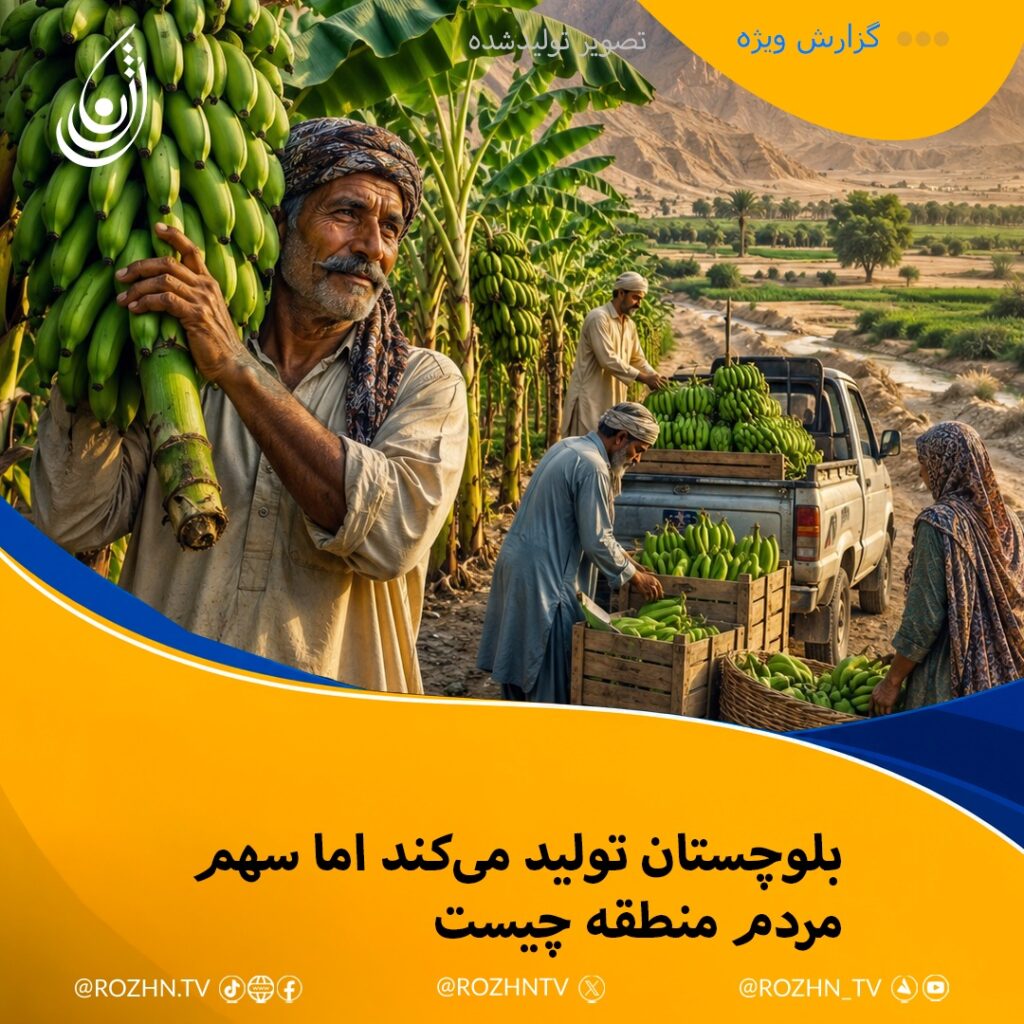
بلوچستان تولید میکند اما سهم مردم بلوچ چیست
تلویزیون رُژن | دوشنبه ۵ مرداد ۱۴۰۵ | ۲۷ ژوئیه ۲۰۲۶
بر اساس آمار اعلامشده از سوی سازمان جهاد کشاورزی سیستان و بلوچستان بخش عمده موز تولیدشده در ایران در زرآباد دشتیاری چابهار کنارک راسک قصرقند و سرباز کشت میشود
هزاران کشاورز و کارگر بلوچ زندگی خود را از این محصول تأمین میکنند اما افزایش تولید زمانی به سود مردم منطقه خواهد بود که آب پایدار قیمت عادلانه بیمه کشاورزی سردخانه راه مناسب و دسترسی مستقیم به بازار فراهم شود
این سازمان شمار شاغلان مستقیم در صنعت موز را بیش از ۴۰ هزار نفر اعلام کرده و از برنامه افزایش پنج هزار و ۳۰۰ هکتاری سطح زیر کشت خبر داده است
با این حال گزارشهای منتشرشده از کمبود زیرساختهای آبیاری راههای نامناسب امکانات ناکافی برای نگهداری محصول هزینه بالای تجهیزات و خسارت ناشی از گرمای شدید حکایت دارند
جزئیات کاملی درباره بودجه منابع آب مالکیت اراضی و سهم کشاورزان محلی از طرح توسعه منتشر نشده است
توسعه تولید نباید تنها به کاهش واردات و تأمین بازار دیگر مناطق محدود شود
ایجاد سردخانه مراکز بستهبندی و صنایع فرآوری در خود بلوچستان میتواند فرصتهای شغلی بیشتری ایجاد کند درآمد تولیدکنندگان را افزایش دهد و وابستگی آنان به واسطهها را کاهش دهد
بلوچستان تولیدکننده اصلی موز کشور است و مردم بلوچ باید نخستین بهرهمندان ظرفیت اقتصادی و کشاورزی سرزمین خود باشند
#بلوچستان #زرآباد #کشاورزان_بلوچ #کشاورزی #Balochistan #Zarabad #BalochFarmers
ENBalochistan Produces, but What Is the Baloch People’s Share?Read in English
Rozhn TV | Monday, July 27, 2026
According to figures announced by the Sistan and Baluchestan Agricultural Jihad Organization, most of the bananas produced in Iran are grown in Zarabad, Dashtiari, Chabahar, Konarak, Rask, Qasr-e Qand and Sarbaz.
Thousands of Baloch farmers and workers earn their livelihood from this crop, but increased production will benefit the people of the region only if stable water, fair prices, agricultural insurance, cold storage, suitable roads and direct access to markets are provided.
The organization has put the number of people directly employed in the banana industry at more than 40,000 and has announced a plan to expand the cultivated area by 5,300 hectares.
However, published reports point to a shortage of irrigation infrastructure, poor roads, inadequate facilities for storing the crop, high equipment costs and losses caused by extreme heat.
Full details on the budget, water resources, land ownership and the share of local farmers in the development plan have not been published.
Expanding production should not be limited merely to reducing imports and supplying the markets of other regions.
Cold storage facilities, packaging centers and processing industries in Balochistan itself could create more jobs, raise producers’ incomes and reduce their dependence on middlemen.
Balochistan is the country’s main banana producer, and the Baloch people should be the first to benefit from the economic and agricultural potential of their own land.