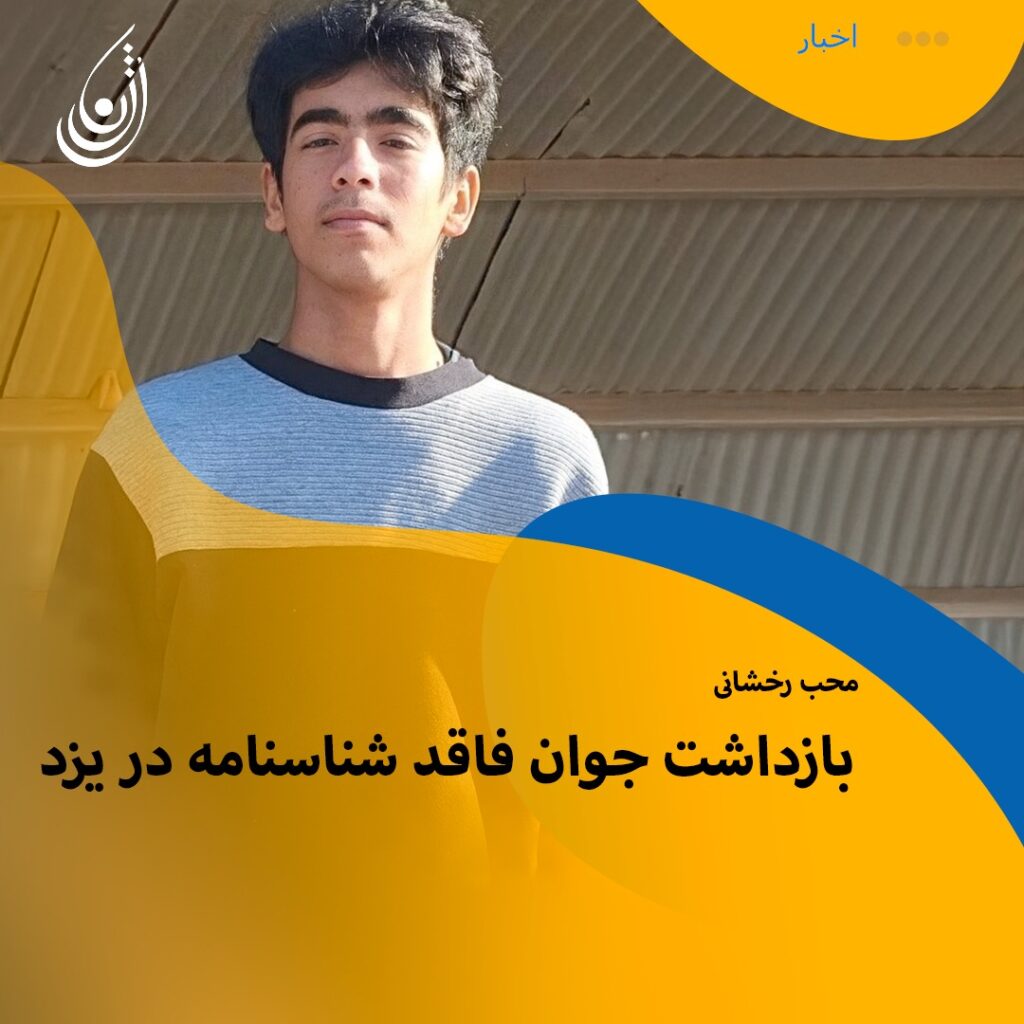
بازداشت جوان فاقد شناسنامه در یزد و انتقال به اردوگاه اتباع خارجی
ENYoung Man Without Identity Papers Arrested in Yazd and Transferred to Camp for Foreign NationalsRead in English
Yazd – Monday, July 14, 2025
In a continuation of the arrests of citizens without identity documents, a 19-year-old Baloch man named Moheb Rakhshani was arrested in the city of Yazd on Sunday, July 13, and transferred to a special camp for foreign nationals.
Moheb, who is from Zahedan and lives in Yazd, was staying in the city for work as a laborer and had no official identity card. According to his relatives, his family has spent years trying to obtain identity documents but has so far had no result.
The young man is now at risk of deportation from Iran, to a country with which he has no family or documentary ties. Human rights activists have warned about such measures and regard the detention of people without identity cards as a violation of human rights principles and contrary to the spirit of Iran’s Constitution.
Some civil activists have also stressed that the lack of identity documents is the result of structural neglect of the situation of ethnic groups and minorities, and that security-driven treatment of these people only makes their situation more critical.