بابای من کجاست؟
ENWhere Is My Daddy?Read in English
Thursday, July 24, 2025
By: Aziz Sanghur
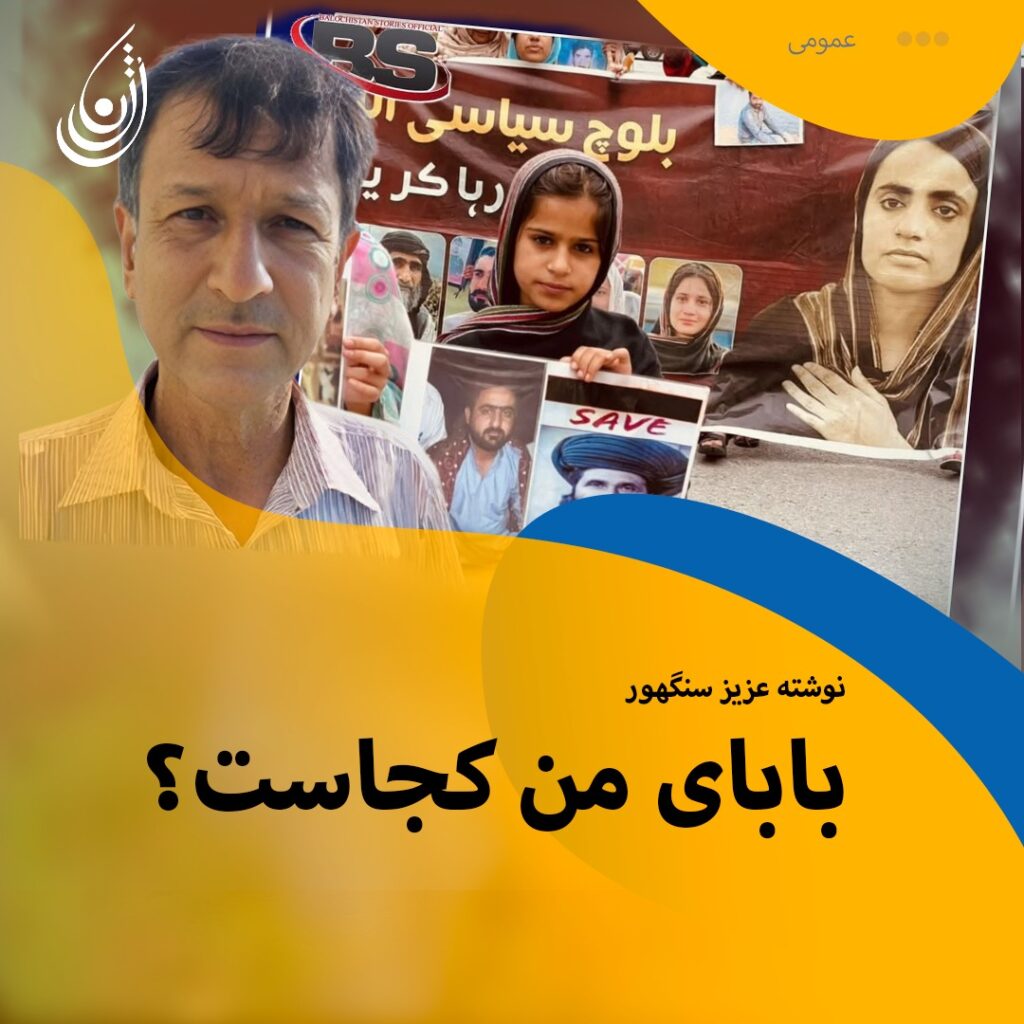
On the rainy streets of Islamabad, a little girl can be seen with no schoolbag and no books, with only a photograph and a question: “Where is my daddy?”
She is Sirat Baloch, a third-grade student, whose father, Mehrgul Marri, disappeared from Quetta in 2015. The family says he was detained by security agencies and then disappeared; from then until today there has been no news of him and no sign of his return. No court, no order, and not even an official acknowledgment of his detention.
Now, nine years later, Sirat has come to the capital along with hundreds of other families of the disappeared, a place where power is silent and the rain falls without pause.
While her classmates take their end-of-year exams, Sirat sits beside the other protesters, holding a photograph of her father. She who once felt anxious over solving math exercises now stands calmly in front of the buildings of power and repeats a question bigger than any exam: Why should a Baloch child have to grow up fatherless?
Sirat demands no retribution from any official or judge; she only wants an answer to a question that not just she but thousands of other Baloch children have been asking for years.
In her small hands one sees not a pencil and notebook but a photograph and a hope. Not childish play but a patience far greater than her age. And in Sirat’s eyes there are no tears, only a clear demand: “the right to know.”