اشکهایی که تاریخ شدند
تلویزیون رُژن | دوشنبه ۲۰ مرداد ۱۴۰۴ خورشیدی / ۱۱ اوت ۲۰۲۵ میلادی
نوشته: عزیز سنگھور
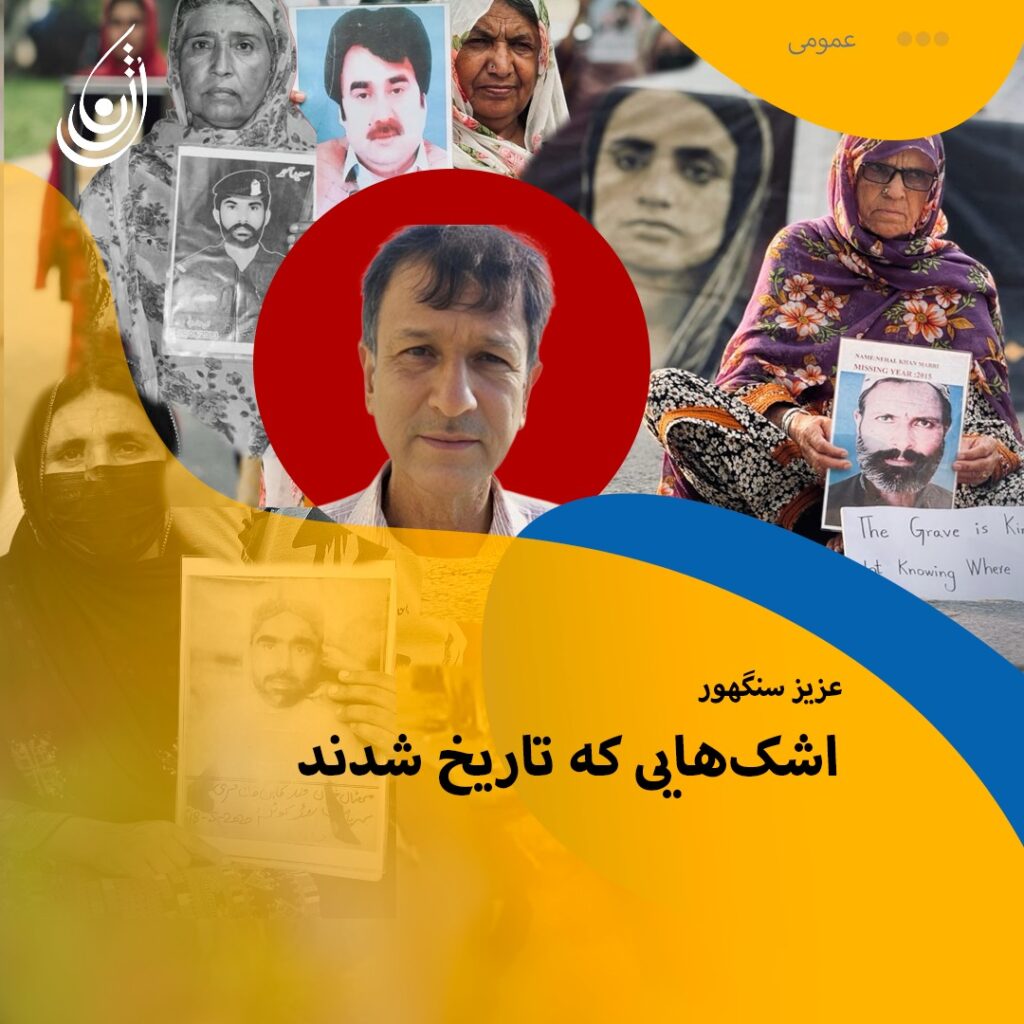
در برابر «پرس کلاب» اسلامآباد، بر زمین داغخورده از آفتاب، آن چهرهها فقط در حال اعتراض نیستند، بلکه تاریخ مینویسند؛ تاریخی که با رنگهای خون، اشک و امید نگاشته میشود. اینها زنانی بلوچاند که سالهاست در برابر ناپدیدسازی اجباری عزیزانشان ایستادهاند و رنج شخصی خود را به بخشی از مبارزهای جمعی بدل کردهاند؛ حکایتهایی از مقاومتی که نه خسته شده، نه متوقف گشته و نه سر خم کرده است.
زندگی «فاطی بلوچ» روزی عادی را میگذراند تا اینکه در ۱۸ مه ۲۰۲۰، همسرش «مِتا خان مری» بهدست نیروهای امنیتی ناپدید شد. او که با سه فرزند تنها ماند، میتوانست زخمهایش را در سکوت تحمل کند، اما فاطی این مسیر را برنگزید. او تصمیم گرفت دردش را به نیرویی برای ایستادگی بدل کند.
از پیوستن به خیمهٔ اعتراضی «ماما قدیر» در کویته تا حضور در برابر باشگاههای مطبوعاتی، فاطی بلوچ هرجا صدایی علیه ناپدیدسازی اجباری بلند شده، خود را رسانده است. او برای شرکت در اعتراضات، بارها شغلش را قربانی کرده؛ در مدرسهای بهعنوان نظافتچی کار میکند تا خرج کودکانش را بدهد، اما هرگاه فراخوان اعتراضی باشد، همهچیز را رها کرده و راهی میشود.
خانهٔ دائمی ندارد؛ گاهی مهمان بستگان است و گاهی شب را بر زمین خیمههای اعتراضی صبح میکند. در سال ۲۰۲۳ در «راهپیمایی اسلامآباد» کمیتهٔ همبستگی بلوچ شرکت کرد، ۲۰۲۴ در گردهمایی ملی بلوچ در گوادر حضور یافت و ۲۰۲۵ در «جلسهٔ دالبندین» ایستاد.
امروز نیز دوباره در اسلامآباد است، بیاعتنا به خطر از دست دادن معاش، تنها یک خواسته دارد: آزادی همسرش. فاطی بلوچ نماد این حقیقت است که زن بلوچ فقط رنجکش نیست، بلکه در صف نخست مقاومت میایستد.
«لمه زرگُل» از مستونگ نیز زندگیای سراسر رنج را از سر گذرانده است؛ ۲۰۰۹ پسرش «میر محمد» کشته شد، ۲۰۱۲ پسر دیگرش «ریاض احمد» قربانی خشونت گردید، «وحید احمد» دو بار ناپدید شد و سرانجام در ۲۹ اوت ۲۰۱۳ «سعید احمد» نیز غیب شد.
این زخمها هنوز تازه بود که در ۲۰۱۶ دختر خردسالش «بیبی شبانه» بر اثر اندوه ناپدیدشدن برادرش، جان باخت. با وجود این، لمه زرگل هفت فرزندش را با امید بزرگ کرد و از کویته تا اسلامآباد در برابر خشونت ایستاد. او را کشانکشان به زندان بردند، بهزور به بلوچستان بازگرداندند، اما گامهایش را متوقف نکردند.
«لمه شاه بیبی» از منگوچر قلات، داستانش از ۲۰۰۴ آغاز میشود، زمانی که برادرش «غفار لانگو» بارها دستگیر و ناپدید شد. او بارها میان دادگاهها، زندانها و خیمههای اعتراضی رفتوآمد کرد. یک ماه در اسلامآباد در تحصن ماند، اما در ۲۰۱۱ پیکر بیجان برادرش را تحویل گرفت.
او معلم مدرسه و مادر سه فرزند است، اما رنجش پایان نیافت. برادرزاده، داماد و نوهاش نیز ناپدید شدند و بعدها آزاد گشتند. در ۲۰۰۹ پسر خودش بازداشت شد و سالها با ترسِ ناپدیدشدن او زندگی کرد. این ترس در ۱۸ ژوئن ۲۰۲۴ به واقعیت پیوست، هنگامی که تنها پسرش «محمود بلوچ» ناپدید شد و این بار او مصممتر از همیشه به میدان آمد.
در دشت مستونگ، «اماں ماهپری» نیز روایتی دیگر از رنج بلوچستان را زنده نگاه میدارد. در ۲۰۱۵ پسرش «نهال خان مری» ناپدید شد و دردش دوچندان گشت زمانی که نوهٔ خردسالش را دید که با تصویر پدر در دست، در اعتراض ایستاده بود.
او مادر ده فرزند است و در ۲۰۲۵، شوهرش در غم جستوجوی بیپایان پسر، چشم از جهان فروبست. پس از آن، سکوت را کنار گذاشت و به «راهپیمایی طولانی» کمیتهٔ همبستگی بلوچ پیوست.
این چهار روایت، نمایندهٔ هزاران زن بلوچاند که با وجود سرکوب، عقب ننشستهاند. اعتراضشان فقط برای عزیزان خودشان نیست، بلکه برای نجات نسلهای آینده است.
زنان بلوچ نشان دادهاند که مقاومت، میدان مردان تنها نیست. آنان با وجود فشار اجتماعی و مشکلات اقتصادی، صدای خود را خاموش نکردهاند. حضورشان در هر اعتراض، اعلام میکند که زن بلوچ دیگر در حاشیهٔ تاریخ نیست، بلکه در متن آن ایستاده است.
از «پرس کلاب» اسلامآباد تا جلسات دالبندین، و از خیمههای اعتراضی کویته تا راهپیماییهای طولانی، زنان بلوچ اشکهایشان را به نیروی مقاومت بدل کردهاند.
روزی که تاریخ بلوچستان نوشته شود، نامهایی چون فاطی بلوچ، لمه زرگُل، لمه شاه بیبی و اماں ماهپری با حروفی زرین ثبت خواهد شد، زیرا آنان ثابت کردند که وقتی زن برای مقاومت برخیزد، به بزرگترین نیروی تغییر بدل میشود.
ENTears That Became HistoryRead in English
Rozhn TV | Monday, August 11, 2025
By: Aziz Sanghur
In front of the Islamabad “Press Club,” on ground scorched by the sun, those faces are not merely protesting; they are writing history, a history written in the colors of blood, tears and hope. These are Baloch women who have for years stood against the enforced disappearance of their loved ones and turned their personal suffering into part of a collective struggle; stories of a resistance that has neither tired, nor stopped, nor bowed its head.
Fati Baloch’s life was passing an ordinary day until, on May 18, 2020, her husband, Meta Khan Marri, was disappeared by security forces. Left alone with three children, she could have borne her wounds in silence, but Fati did not choose that path. She decided to turn her pain into a force for standing firm.
From joining Mama Qadir’s protest camp in Quetta to appearing outside press clubs, Fati Baloch has shown up wherever a voice has been raised against enforced disappearances. To take part in protests she has repeatedly sacrificed her job; she works as a cleaner at a school to support her children, but whenever there is a call to protest, she drops everything and sets out.
She has no permanent home; sometimes she is a guest of relatives and sometimes she spends the night on the ground of protest tents until morning. In 2023 she took part in the “Islamabad March” of the Baloch Yakjehti Committee (BYC), in 2024 she attended the Baloch National Gathering in Gwadar, and in 2025 she stood at the “Dalbandin gathering.”
Today she is in Islamabad again, indifferent to the risk of losing her livelihood, with only one demand: the release of her husband. Fati Baloch symbolizes the truth that the Baloch woman is not merely a sufferer but stands in the front line of resistance.
Lama Zargul of Mastung has also lived a life full of suffering: in 2009 her son Mir Muhammad was killed, in 2012 another son, Riaz Ahmad, fell victim to violence, Waheed Ahmad was disappeared twice, and finally, on August 29, 2013, Saeed Ahmed was disappeared too.
These wounds were still fresh when, in 2016, her young daughter, Bibi Shabana, died of grief over her brother’s disappearance. Even so, Lama Zargul raised her seven children in hope and stood against violence from Quetta to Islamabad. She was dragged off to prison and forcibly returned to Balochistan, but they did not stop her steps.
Lama Shah Bibi of Mangchar in Kalat: her story begins in 2004, when her brother, Ghaffar Langove, was repeatedly arrested and disappeared. She went back and forth between courts, prisons and protest camps many times. She stayed a month at a sit-in in Islamabad, but in 2011 she received her brother’s lifeless body.
She is a schoolteacher and a mother of three, but her suffering did not end. Her nephew, son-in-law and grandchild were also disappeared and later released. In 2009 her own son was detained, and for years she lived in fear of his disappearance. That fear became reality on June 18, 2024, when her only son, Mahmoud Baloch, was disappeared, and this time she entered the field more determined than ever.
In the Dasht area of Mastung, Amma Mahpari also keeps alive another account of Balochistan’s suffering. In 2015 her son, Nihal Khan Marri, was disappeared, and her pain doubled when she saw her young grandchild standing in a protest holding a picture of their father.
She is the mother of ten children, and in 2025 her husband died, grieving over the endless search for their son. After that, she cast aside silence and joined the BYC’s “Long March.”
These four stories represent thousands of Baloch women who have not backed down despite repression. Their protest is not only for their own loved ones but to save future generations.
Baloch women have shown that resistance is not the arena of men alone. Despite social pressure and economic hardship, they have not silenced their voices. Their presence at every protest declares that the Baloch woman is no longer on the margins of history but stands at its center.
From the Islamabad “Press Club” to the Dalbandin gatherings, and from the protest tents of Quetta to the long marches, Baloch women have turned their tears into a force of resistance.
On the day the history of Balochistan is written, names such as Fati Baloch, Lama Zargul, Lama Shah Bibi and Amma Mahpari will be inscribed in letters of gold, because they proved that when a woman rises to resist, she becomes the greatest force for change.