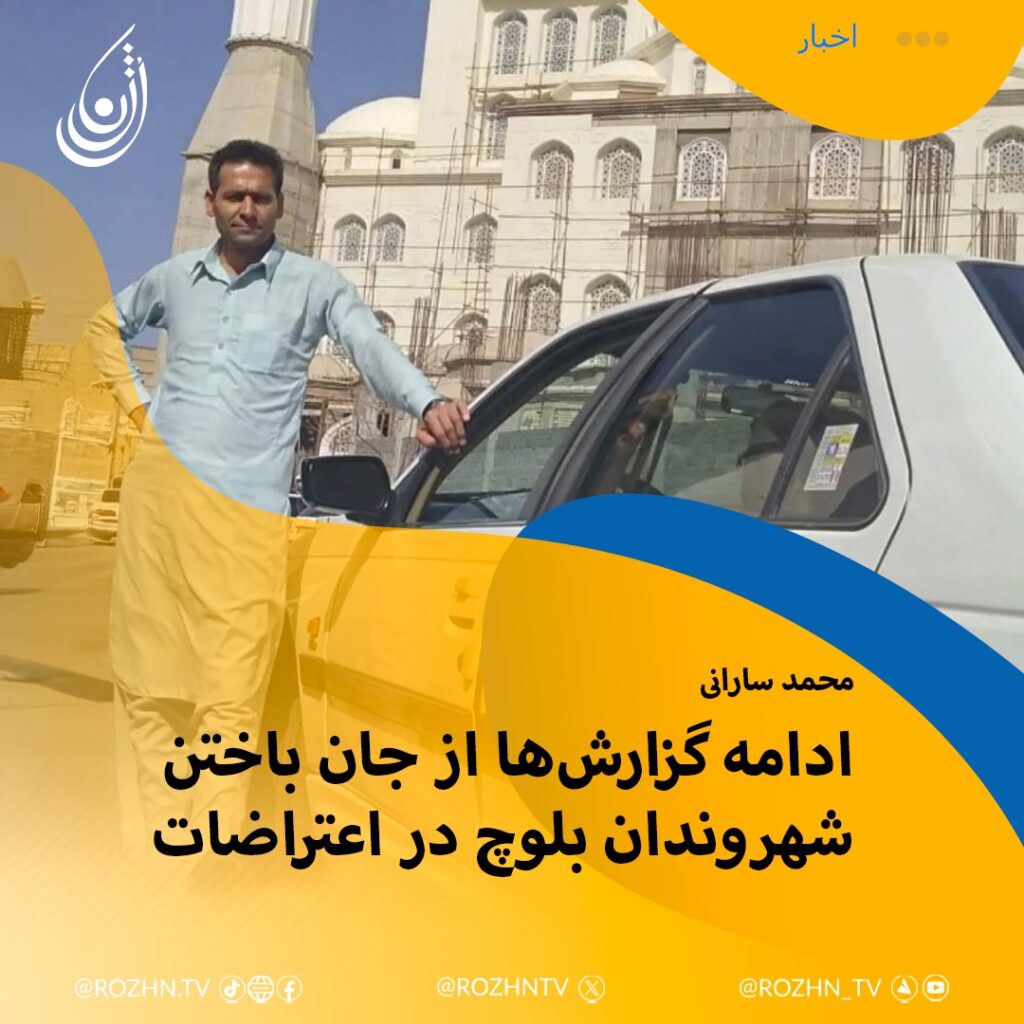
ادامه گزارشها از جان باختن شهروندان بلوچ در اعتراضات
تلویزیون رُژن | سهشنبه ۷ بهمن ۱۴۰۴ / ۲۷ ژانویه ۲۰۲۶
روز دوشنبه ۶ بهمن ماه ۱۴۰۴ یک شهروند بلوچ که شامگاه شنبه ۲۰ دیماه در جریان تجمعات اعتراضی در شهر ورامین استان تهران از ناحیه پا بر اثر تیراندازی نیروهای نظامی مجروح شده بود پس از انتقال به بیمارستان جان خود را از دست داده است
بر اساس اطلاعات موجود این شهروند پس از بستری شدن در مرکز درمانی و در شرایطی که تحت مراقبت قرار داشت با شلیک گلوله در داخل بیمارستان کشته شده است
هویت این فرد محمد سارانی فرزند گلمحمد اهل استان گلستان و ساکن تهران اعلام شده است او دارای سه فرزند دختر بوده است
منابع آگاه میگویند پس از کشته شدن این شهروند پیکر او بدون اطلاع خانواده و خارج از روندهای متعارف در ساعات اولیه بامداد به خاک سپرده شده و خانواده پس از پیگیری از مراکز مختلف از این موضوع مطلع شدهاند
این رویداد در ادامه اعتراضات سراسری اوایل دیماه ۱۴۰۴ رخ داده است اعتراضاتی که از تهران آغاز شد و به سرعت به دیگر شهرهای کشور گسترش یافت همزمان با این تحولات محدودیتهای شدید ارتباطی و قطع گسترده اینترنت دسترسی به اطلاعات میدانی را با تأخیر و دشواری همراه کرده است
منبع: رَسانک نیوز
ENMore Reports of Baloch Citizens Killed in ProtestsRead in English
Rozhn TV | Tuesday, January 27, 2026
On Monday, January 26, a Baloch citizen who had been wounded in the leg by gunfire from military forces on the evening of Saturday, January 10, during protest gatherings in the city of Varamin in Tehran province, died after being taken to hospital.
According to available information, after being admitted to the medical center, while he was under care, he was killed by a gunshot inside the hospital.
The man’s identity has been given as Mohammad Sarani, son of Gol Mohammad, from Golestan province and a resident of Tehran. He had three daughters.
Informed sources say that after the citizen was killed, his body was buried in the early hours of the morning without the family’s knowledge and outside normal procedures, and the family learned of it after inquiring at various places.
The incident took place as part of the nationwide protests of early Dey 1404, protests that began in Tehran and quickly spread to other cities. Meanwhile, severe communication restrictions and the widespread internet shutdown have made access to on-the-ground information slow and difficult.
Source: Rasank News