آشتی میان طوایف زیرکاری و خارکوهی در زاهدان با وساطت علما
- زاهدان، شنبه ۲۸ تیر ۱۴۰۴ خورشیدی / ۱۹ ژوئیه ۲۰۲۵ میلادی
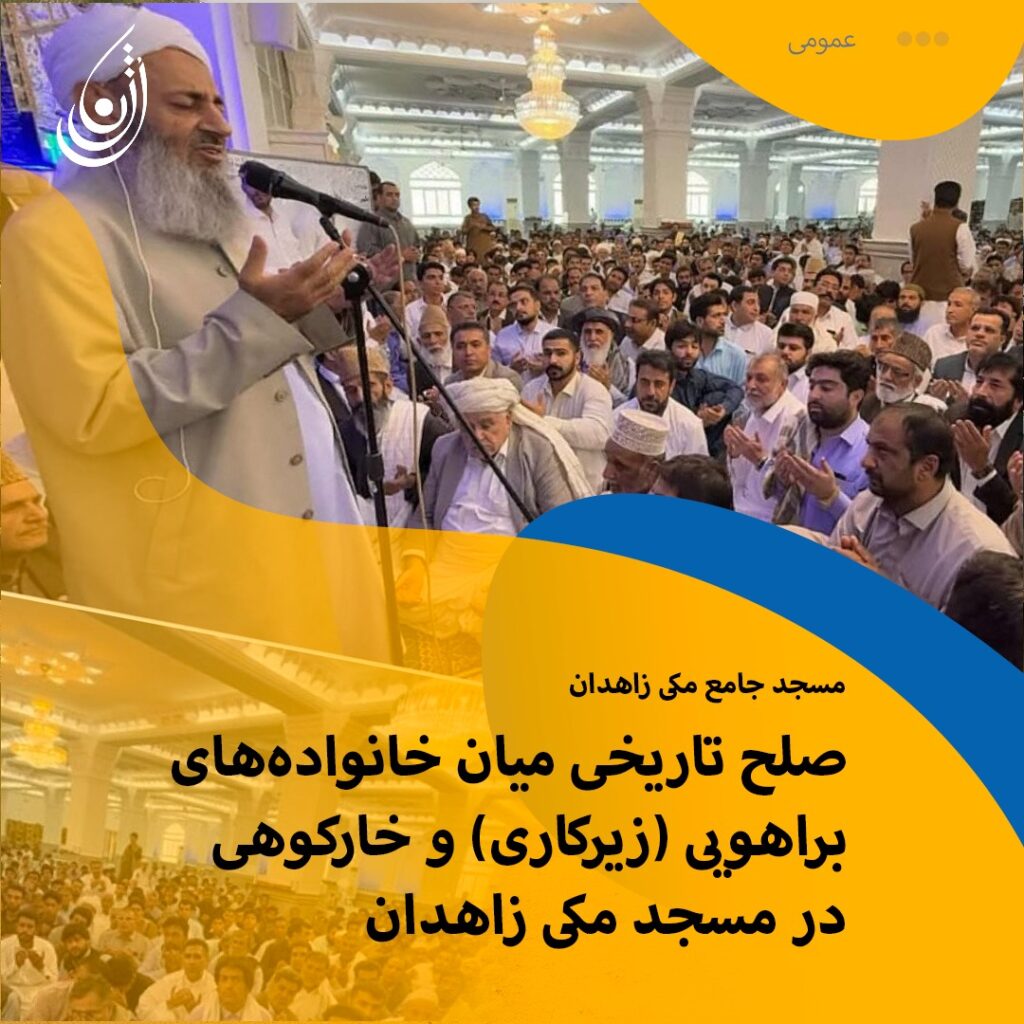
- در مراسمی رسمی و پر احترام در مسجد جامع مکی زاهدان، دو طایفه براهویی زیرکاری و خارکوهی پس از هفت سال اختلاف، با وساطت مولوی عبدالحمید و همراهی ریشسفیدان و بزرگان محلی، به صلح و آشتی رسیدند.
- این مراسم که با حضور گسترده مردم، معتمدان و چهرههای دینی برگزار شد، به بازسازی اعتماد میان اعضای دو طایفه انجامید. بزرگان هر دو طرف، با گفتوگوی مستقیم و تأکید بر احترام متقابل، مسیر تنش را به تفاهم تبدیل کردند.
- مولوی عبدالحمید در این گردهمایی ضمن تمجید از اقدام دو طایفه، از جوانان خواست تا از تکرار تنشها در آینده پرهیز کرده و این آشتی را الگویی برای همبستگی در سطح جامعه قرار دهند. او همچنین نقش مسجد مکی را فراتر از عبادتگاه دانسته و آن را محل همگرایی اجتماعی و حل مسالمتآمیز اختلافات توصیف کرد.
- این مصالحه در ادامه روند صلحهای قبیلهای اخیر در بلوچستان صورت گرفته که با میانجیگری بزرگان و ریشسفیدان، نمونههایی از بلوغ اجتماعی و انسجام قومی در منطقه را به نمایش گذاشتهاند.
- فعالان اجتماعی و ناظران، این رویداد را الگویی موفق برای حل اختلافات سنتی از طریق گفتوگو، مشورت و هدایت علما میدانند.
ENReconciliation Between the Zirkari and Kharkouhi Tribes in Zahedan Through the Mediation of ClericsRead in English
Zahedan, Saturday, July 19, 2025
In a formal and respectful ceremony at the Makki Grand Mosque in Zahedan, the two Brahui tribes, the Zirkari and the Kharkouhi, reached peace and reconciliation after seven years of dispute, through the mediation of Molavi Abdolhamid and with the support of elders and local notables.
The ceremony, held in the presence of a large crowd of people, respected local figures and religious personalities, led to the restoration of trust between the members of the two tribes. Through direct dialogue and an emphasis on mutual respect, the elders of both sides turned the path of tension into one of understanding.
At the gathering, Molavi Abdolhamid praised the action of the two tribes, asked young people to avoid a recurrence of tensions in the future, and urged them to make this reconciliation a model for solidarity across society. He also described the role of the Makki Mosque as going beyond a place of worship, calling it a place of social convergence and the peaceful resolution of disputes.
The settlement follows the recent tribal peace agreements in Balochistan which, through the mediation of elders, have showcased examples of social maturity and ethnic cohesion in the region.
Social activists and observers regard the event as a successful model for resolving traditional disputes through dialogue, consultation and guidance from clerics.