Baloch Women: Direct Targets of Repression
Enforced disappearances in Balochistan are not a new phenomenon, but in recent years reports have pointed to a worrying change in the pattern of these actions, a change that affects not only fundamental human rights …
Show photo (≈ 93 KB)
Aziz Sanghur
Enforced disappearances in Balochistan are not a new phenomenon, but in recent years reports have pointed to a worrying change in the pattern of these actions, a change that affects not only fundamental human rights but also social security and human dignity. In the past, most reports concerned the detention and disappearance of Baloch men and young people, but in the recent period Baloch women have also been counted among the disappeared, a development that has raised serious concerns across society.
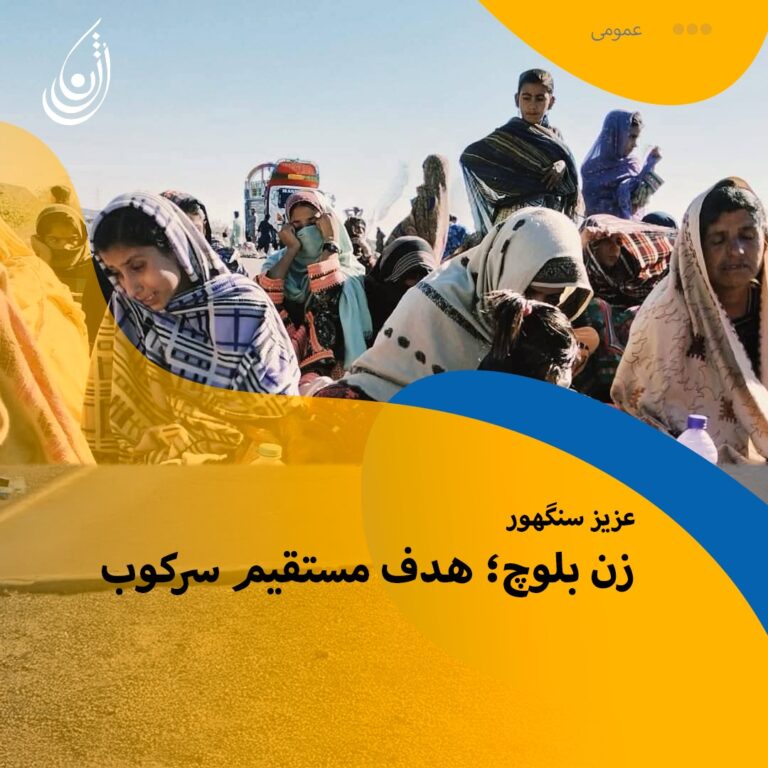
According to local reports, the latest case in this trend occurred in the Karki Tajaban area of Kech district in Balochistan. According to these reports, four members of one family, including two women, were detained and taken to an unknown location. Following the incident, the families and a number of citizens, protesting the unknown whereabouts of the detainees, staged a sit-in and blocked the China–Pakistan Economic Corridor (CPEC) road.
According to the families, the disappeared are Farid Ejaz, Sanaullah Dalosh, Hani Dalosh and Gulnisa Wahid. According to the information provided, Hani Dalosh and Gulnisa Wahid were detained the day before in the industrial town of Hub Chowki, while Farid Ejaz and Sanaullah Dalosh were detained in Kech district and then taken to an unknown location.
The families have said that Gulnisa Wahid, whom some local sources also refer to as “Hairunnisa,” is 17 years old and a first-year college student. According to them, she had traveled to Hub Chowki during the summer holidays, where she was detained. According to the families’ statements, Hani Dalosh was eight months pregnant at the time of her detention, and her detention was carried out without a judicial warrant or any notification of legal process.
This is not the first report of the detention and disappearance of Baloch women in Hub Chowki. On December 18, 2025, forces reportedly entered a home in the Daru Hotel area of Hub Chowki and detained a Baloch woman named Hazra Baloch, wife of Sanaullah. According to local sources, she was seen in public two days later, but so far no official explanation has been given about the reason for her detention, and no judicial case has been registered.
Earlier, on November 22, 2025, reports were published about the disappearance of a 15-year-old girl named Nasreen Baloch from the same area.
Nasreen’s family announced at a press conference on December 18, 2025 that forces had entered their home and taken the girl away. Several weeks on, no official information has been released about where she is being held or her legal status.
Similar reports have also emerged from other parts of Balochistan. In Khuzdar, a woman named Farzana was detained and taken to an unknown location, and in Dalbandin Rahima Baloch and her brother were detained; to date, no information about their status or release has become available. The case of Mahjabeen Baloch, a Baloch student who disappeared in May 2025, also remains without an official answer.
Families and human rights activists are asking on what legal basis, and on what charge, teenage girls, housewives, pregnant women and university students are being detained. Under Pakistan’s constitution, any detention requires due legal process, formal registration of a case, and the production of the detainee before a judicial authority.
The enforced disappearance of Baloch women constitutes, under international human rights standards, a serious violation of fundamental human rights and leaves wide-ranging psychological and social effects on families and society. Reports indicate that this situation has increased feelings of insecurity, fear and psychological pressure among citizens, particularly women.
At the same time, families have expressed concern over the silence of the responsible institutions and the slow pace of judicial proceedings. Despite the formation of commissions on enforced disappearances and the work of human rights organizations, the continued uncertainty over the status of the disappeared women has become a serious matter of institutional accountability.
Reports published from Hub Chowki, Kech, Khuzdar and Dalbandin show that the human rights situation in Balochistan continues to need urgent attention and serious transparency. This issue is not limited to a few families but carries broader social consequences for the entire region.
Families and legal observers stress that, if the state is committed to the constitution, the rule of law and the principles of human dignity, the status of the disappeared women must be announced transparently and immediately, official accountability must be provided to the families, and this trend must be stopped. Otherwise, the continuation of this situation could have broader legal, social and political consequences.
Translated from the Persian original
Follow Rozhn TV for reports, interviews and programmes on Balochistan
Telegram: https://t.me/rozhn_tv
YouTube: https://youtube.com/@rozhn_tv
Instagram: https://www.instagram.com/rozhn_tv
#Arrest #Baloch Women #Balochistan, Pakistan #Enforced disappearance #Pakistani Army #Rozhn TV