Opinion | From Gang Wars to Football Dreams: How One Family Turned Grief Into Hope in Lyari
For years, the name Lyari was associated with fear. This neighborhood, one of the oldest and most densely populated areas of Karachi, was known for gang wars, shootings, killings and a difficult security situation, and …
Show photo (≈ 96 KB)
Rozhn TV | Wednesday, October 14, 2026
By Mohammad Asif Khan
For years, the name Lyari was associated with fear.
This neighborhood, one of the oldest and most densely populated areas of Karachi, was known for gang wars, shootings, killings and a difficult security situation, and its narrow lanes bore the marks of years of violence.
But Lyari has always had another identity as well: its people’s deep love of sport, and especially football.
The passion of the people of this area for football is such that for years Lyari has been called “Little Brazil,” and generations of children have grown up dreaming of becoming players like Messi, Ronaldo and Neymar.
It was this love of football that drew a teenager named Imad Naqvi from a more affluent part of Karachi to Lyari.
Imad grew very fond of the neighborhood and its football culture and worked with the Karachi United football club.
He later went to Manchester to continue his studies, but football remained an important part of his life, and alongside his studies he coached a youth team and worked toward a coaching qualification.
Then a bitter tragedy occurred.
Imad took his own life in Manchester, and his parents, Asfar Naqvi and Atiya Naqvi, were left facing immense grief.
Yet they decided to carry on their son’s dream.
They also spoke openly about Imad’s death, believing that talking about mental health could help people facing similar struggles.
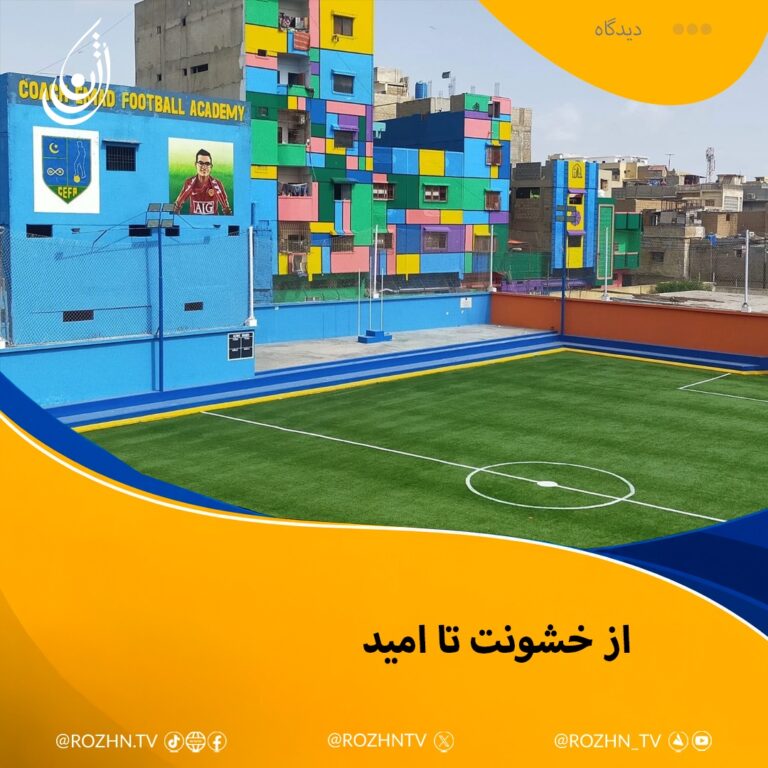
In 2018, they rebuilt a soldier’s ground in the Singo Lane area of Lyari, previously a dirt field, and turned it into the Coach Imad Football Academy.
The ground was fitted with artificial turf and futsal facilities, and alongside the football academy, boxing and weightlifting clubs were also set up.
Today the academy is more than a football ground; it has become a place where the children of Lyari find the chance to dream and, in some cases, to build a professional future.
Waseem Sarbazi, the academy’s manager and a social activist, says about 250 to 300 boys and more than 100 girls train there.
According to him, some of the academy’s players have represented Pakistan, played abroad, joined clubs or work as coaches.
He also says a number of former players now receive salaries at clubs, while others work as coaches in schools and football academies.
These opportunities have extended to girls as well.
Some of the academy’s female players have joined various clubs and teams and have found the chance to play at a higher level and, in some cases, to earn an income from football.
According to Waseem Sarbazi, the aim of the Coach Imad Football Academy is not for children to stay at the academy forever, but that wherever they find a good opportunity to earn a living, build a career and support themselves and their families, they can continue on their path.
However, he has expressed concern about the shrinking of job opportunities for footballers after the closure of football teams linked to several institutions.
According to him, this issue has repeatedly been raised with provincial and federal governments and through the media, and officials have been asked to act for sport and, in particular, to create job opportunities for athletes.
Waseem Sarbazi remains hopeful about the future and speaks of visits by foreign coaches and observers and the academy’s growing connection with the international football community.
He regards Pakistan’s participation in a FIFA-related competition as an important step, believes that reaching the highest level of football is a gradual process, and hopes that Pakistani players will one day reach the World Cup.
He has also called for greater transparency in the selection process of players by the Pakistan Football Federation.
According to him, trials should be open and transparent, clubs and academies should be able to nominate their players, and the timing of trials should be announced publicly so that anyone who sees the necessary ability in themselves has the chance to take part.
He believes qualified coaches and evaluators should assess players and decide on selection based on merit.
What the Naqvi family began in memory of their son has today become, for many girls and boys in Lyari, an opportunity to pursue their football dreams.
Lyari’s violent past is part of the neighborhood’s history, but the writer believes this is no longer its only story.
On streets once known for fear, children today train with footballs, compete and imagine a future beyond their neighborhood.
In the writer’s view, football is shaping a different narrative of Lyari, a narrative of dreams, discipline, opportunity and hope, while at the same time presenting a different picture of the sporting talent of this area and of Pakistan.
Imad’s life ended in tragedy, but his football dream lives on today in the path of hundreds of young people pursuing their own dreams.
Translated from the Persian original
Follow Rozhn TV for reports, interviews and programmes on Balochistan
Telegram: https://t.me/rozhn_tv
YouTube: https://youtube.com/@rozhn_tv
Instagram: https://www.instagram.com/rozhn_tv