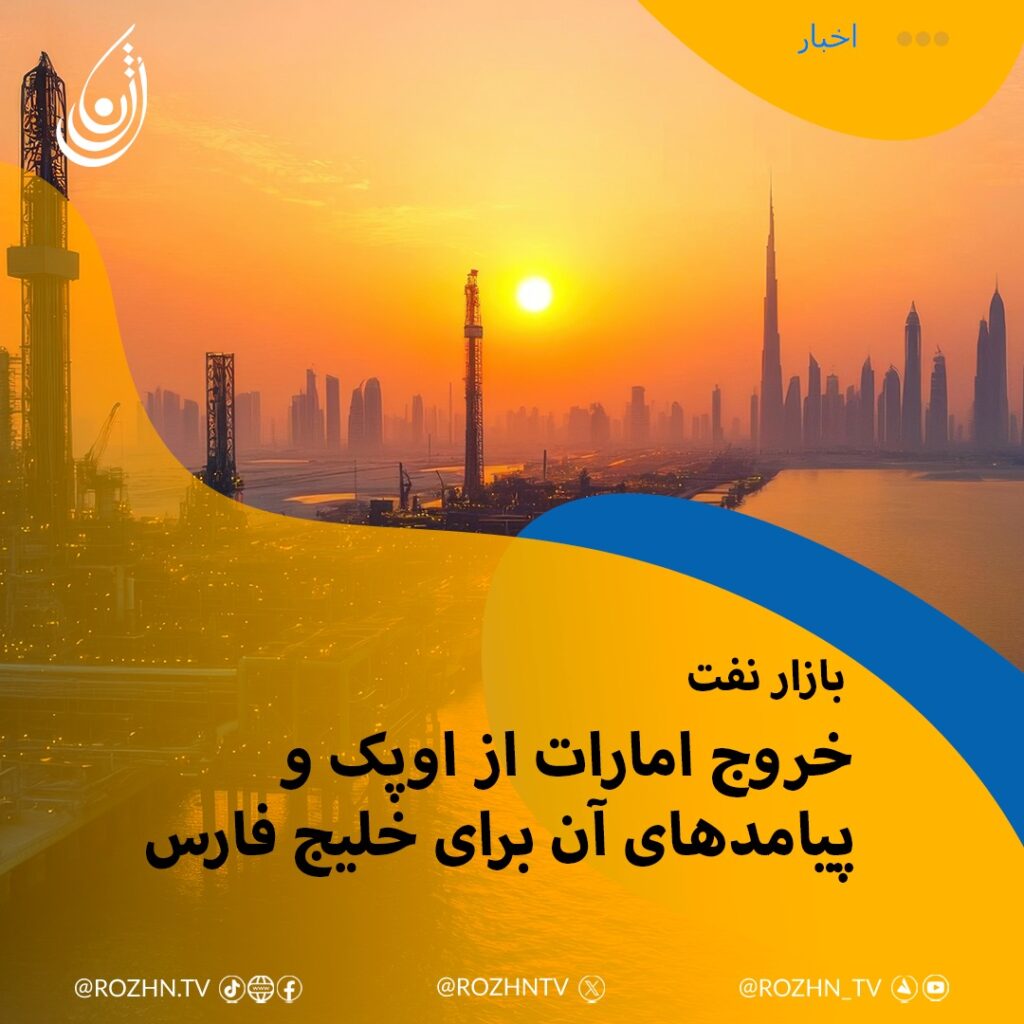
خروج امارات از اوپک و پیامدهای آن برای خلیج فارس
تلویزیون رُژن | سهشنبه ۸ اردیبهشت ۱۴۰۵ / ۲۸ آوریل ۲۰۲۶
در تحول مهمی در بازار انرژی و معادلات سیاسی منطقه، کشور امارات متحده عربی اعلام کرده است که از سازمان اوپک خارج میشود؛ تصمیمی که میتواند توازن قدرت در خلیج فارس را تغییر دهد و اختلافات پنهان میان ابوظبی و عربستان سعودی را آشکارتر کند
این اقدام به امارات امکان میدهد تولید نفت خود را بدون محدودیتهای سهمیهای افزایش دهد و با انعطاف بیشتری به نوسانات بازار پاسخ دهد در حالی که همزمان توان اوپک برای مدیریت قیمت جهانی نفت کاهش مییابد
این تصمیم در شرایطی اتخاذ شده که تنشهای منطقهای بهویژه در پی درگیری با ایران افزایش یافته و هماهنگی سیاسی میان کشورهای شورای همکاری خلیج فارس با چالش مواجه شده است
گزارشها نشان میدهد امارات به دنبال تقویت نقش مستقل خود در بازار جهانی انرژی و همچنین گسترش روابط راهبردی با ایالات متحده آمریکا است موضوعی که میتواند بر توازن سیاسی و اقتصادی منطقه تأثیرگذار باشد
افزایش ظرفیت تولید نفت امارات تا سالهای آینده و تلاش برای ایفای نقش مستقیمتر در تعیین عرضه جهانی از جمله اهداف اعلامشده این کشور است در حالی که کاهش تولید در پی اختلالات منطقهای فشار بیشتری بر بازار وارد کرده است
این تحول میتواند نشانهای از تغییر جهت سیاستهای اقتصادی و امنیتی در خلیج فارس باشد و پیامدهای آن فراتر از بازار انرژی به روابط ژئوپلیتیکی منطقه نیز گسترش یابد
ENUAE Exit From OPEC and Its Implications for the Persian GulfRead in English
Rozhn TV | Tuesday, April 28, 2026
In a major development in the energy market and regional political equations, the United Arab Emirates has announced that it is leaving OPEC, a decision that could change the balance of power in the Persian Gulf and bring into the open the hidden differences between Abu Dhabi and Saudi Arabia.
The move allows the UAE to increase its oil production without quota restrictions and respond more flexibly to market fluctuations, while at the same time reducing OPEC’s ability to manage global oil prices.
The decision was taken at a time when regional tensions have risen, particularly following the conflict with Iran, and political coordination among the Gulf Cooperation Council states has faced challenges.
Reports indicate that the UAE is seeking to strengthen its independent role in the global energy market and also to expand strategic relations with the United States, an issue that could affect the political and economic balance of the region.
Increasing the UAE’s oil production capacity in the coming years and seeking a more direct role in determining global supply are among the country’s declared goals, while reduced output following regional disruptions has put further pressure on the market.
This development could signal a change of direction in economic and security policies in the Persian Gulf, and its consequences could extend beyond the energy market to the region’s geopolitical relations.