زنان بلوچ و چالش کمبود سرویسهای بهداشتی در جادههای بینشهری
تلویزیون رُژن | پنجشنبه ۱۴ خرداد ۱۴۰۵ / ۴ ژوئن ۲۰۲۶
گزارشها و روایتهای منتشرشده از مسیرهای اصلی بلوچستان نشان میدهد که کمبود یا نبود سرویسهای بهداشتی مناسب در برخی جادههای این استان همچنان یکی از مشکلات زنان مسافر به شمار میرود
در برخی مسیرهای ارتباطی میان گوادر، تربت، کویته، کراچی و تفتان، توقفگاههای بینراهی امکانات کافی و مناسب برای استفاده زنان را در اختیار ندارند و همین موضوع سفرهای طولانی را برای بسیاری از خانوادهها دشوارتر کرده است
برخی زنان میگویند برای جلوگیری از نیاز به استفاده از سرویس بهداشتی در طول مسیر، ناچار میشوند مصرف آب و مایعات را پیش از سفر یا در طول راه کاهش دهند؛ موضوعی که میتواند بر سلامت و آسایش آنان تأثیر بگذارد
این در حالی است که بلوچستان از جمله مناطق دارای ظرفیتهای گسترده اقتصادی و منابع طبیعی در پاکستان به شمار میرود و دارای ذخایر گاز طبیعی، طلا، مس، زغالسنگ، کرومیت، آهن، سرب، روی، سنگ مرمر، منابع شیلاتی و سواحل راهبردی است
در سالهای گذشته پروژههای مختلفی در حوزه راهسازی و توسعه زیرساختها در بلوچستان اجرا شده است، اما برخی شهروندان معتقدند امکانات مورد نیاز مسافران هنوز با سطح انتظارات و نیازهای روزمره مردم فاصله دارد
بسیاری از زنان بلوچ با وجود دشواریهای موجود، نقش مهمی در زندگی اجتماعی، اقتصادی و خانوادگی ایفا میکنند و خانوادهها امیدوارند شرایطی فراهم شود که سفر برای زنان، کودکان و سالمندان با آسایش، امنیت و کرامت بیشتری همراه باشد
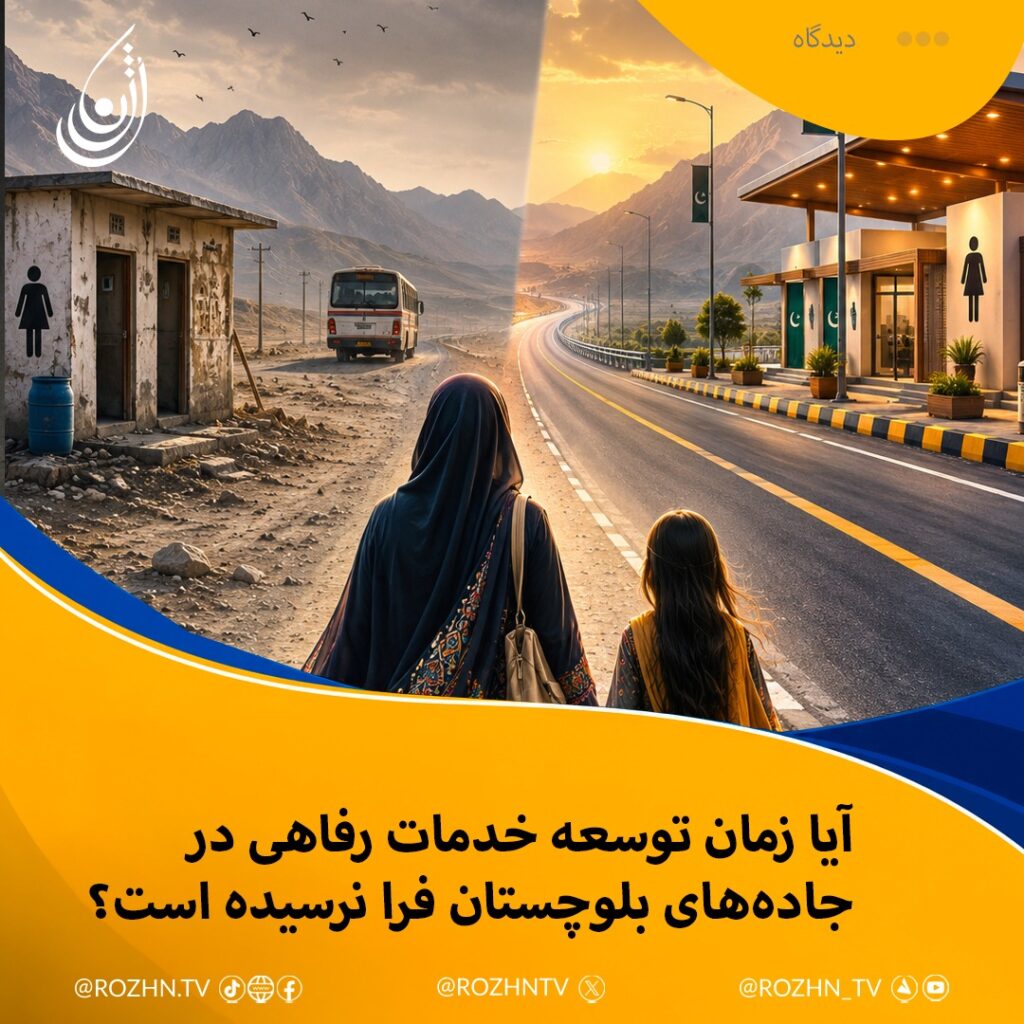
برخی شهروندان این پرسش را مطرح میکنند که اگر در بسیاری از مسیرهای منتهی به شهرهایی مانند اسلامآباد، لاهور و دیگر مراکز بزرگ پاکستان، استراحتگاههای مجهز، سرویسهای بهداشتی استاندارد و خدمات رفاهی گسترده برای مسافران فراهم شده است، آیا زمان آن نرسیده که جادههای اصلی بلوچستان نیز از امکانات مشابه برخوردار شوند
توسعه پایدار تنها به ساخت جادهها محدود نمیشود و دسترسی به خدمات بهداشتی، آب آشامیدنی، استراحتگاههای مناسب، روشنایی، خدمات امدادی و امکانات رفاهی نیز بخشی از زیرساختهای ضروری برای زندگی روزمره شهروندان به شمار میرود
بسیاری از ساکنان بلوچستان امیدوارند همزمان با توسعه اقتصادی و بهرهبرداری از ظرفیتهای طبیعی این استان، سرمایهگذاری بیشتری برای بهبود خدمات عمومی و ارتقای کیفیت زندگی مردم صورت گیرد.
ENBaloch Women and the Challenge of Missing Toilet Facilities on Intercity RoadsRead in English
Rozhn TV | Thursday, June 4, 2026
Published reports and accounts from Balochistan’s main routes show that a shortage or lack of suitable toilet facilities on some roads in the province remains one of the problems facing women travelers.
On some routes linking Gwadar, Turbat, Quetta, Karachi and Taftan, roadside rest stops lack adequate and suitable facilities for women, and this has made long journeys harder for many families.
Some women say that, to avoid needing a toilet along the way, they are forced to cut down on water and fluids before or during the trip, something that can affect their health and comfort.
This comes as Balochistan is among the regions of Pakistan with extensive economic potential and natural resources, with reserves of natural gas, gold, copper, coal, chromite, iron, lead, zinc, marble, fisheries resources and a strategic coastline.
In past years various projects in road building and infrastructure development have been carried out in Balochistan, but some citizens believe that the facilities travelers need are still far from meeting people’s expectations and everyday needs.
Despite the existing hardships, many Baloch women play an important role in social, economic and family life, and families hope for conditions in which travel for women, children and the elderly will come with greater comfort, security and dignity.
Some citizens ask: if on many routes leading to cities such as Islamabad, Lahore and other major centers of Pakistan, well-equipped rest areas, standard toilet facilities and extensive amenities have been provided for travelers, is it not time for Balochistan’s main roads to enjoy similar facilities?
Sustainable development is not limited to building roads; access to health services, drinking water, suitable rest areas, lighting, emergency services and welfare facilities is also part of the infrastructure essential to citizens’ daily lives.
Many residents of Balochistan hope that, alongside economic development and the use of the province’s natural potential, more investment will be made in improving public services and raising people’s quality of life.