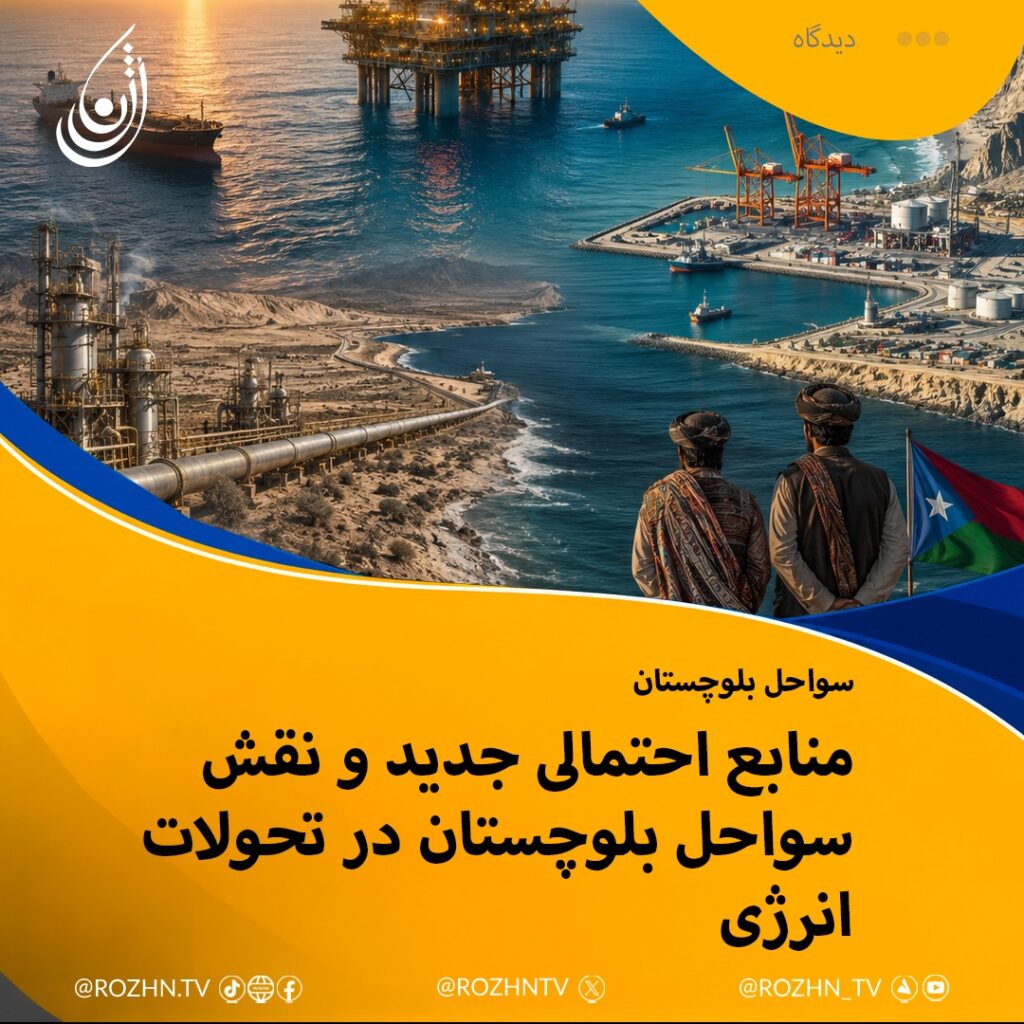
منابع احتمالی جدید و نقش سواحل بلوچستان در تحولات انرژی
تلویزیون رُژن | چهارشنبه ۱۳ خرداد ۱۴۰۵ / ۳ ژوئن ۲۰۲۶
گزارشهای منتشرشده درباره شناسایی منابع احتمالی جدید نفت و گاز در آبهای پاکستان توجه گستردهای را در داخل و خارج از کشور جلب کرده است
بر اساس اطلاعات منتشرشده این ظرفیتهای احتمالی پس از چند سال مطالعات دریایی و بررسیهای زمینشناسی در دریای عرب شناسایی شدهاند هرچند مقامهای مسئول هنوز حجم دقیق ذخایر و محل نهایی این منابع را به صورت رسمی اعلام نکردهاند
این موضوع برای بلوچستان اهمیت ویژهای دارد زیرا این استان دههها یکی از مهمترین مناطق تولید انرژی در پاکستان بوده است کشف میدان گاز سوئی در سال ۱۹۵۲ بلوچستان را به یکی از پایههای اصلی تأمین انرژی کشور تبدیل کرد و برای سالهای طولانی بخش بزرگی از گاز مصرفی پاکستان از این منطقه تأمین میشد
بلوچستان علاوه بر منابع انرژی زمینی به دلیل موقعیت راهبردی خود در سواحل دریای عرب و بندر گوادر نیز از اهمیت ویژهای برخوردار است و بسیاری از طرحهای مرتبط با اقتصاد دریایی توسعه بنادر تجارت منطقهای و سرمایهگذاریهای ساحلی با این منطقه پیوند دارند
با وجود این جایگاه تاریخی بسیاری از شهرها و روستاهای بلوچستان همچنان با کمبود زیرساختهای انرژی روبهرو هستند و در برخی مناطق خانوادهها برای پختوپز و گرمایش از هیزم و سایر سوختهای سنتی استفاده میکنند
همزمان گمانهزنیها درباره منابع احتمالی جدید پرسشهایی را نیز مطرح کرده است
آیا بخشی از این ظرفیتهای احتمالی در آبهای نزدیک به سواحل بلوچستان قرار دارند
اگر این منابع در آینده به مرحله تولید برسند چه میزان از منافع اقتصادی آن به جوامع محلی خواهد رسید
آیا شهرها و روستاهای بلوچستان که دههها نقش مهمی در تأمین انرژی کشور داشتهاند از توسعه زیرساختها و فرصتهای شغلی جدید بهرهمند خواهند شد
آیا بندر گوادر میتواند به یکی از مراکز اصلی فعالیتهای مرتبط با انرژی و اقتصاد دریایی تبدیل شود
در حال حاضر پاسخ قطعی به این پرسشها وجود ندارد و روند اکتشاف و ارزیابی فنی همچنان ادامه دارد
تا زمان انتشار نتایج رسمی حجم واقعی ذخایر محل دقیق آنها و امکان استخراج تجاری این منابع همچنان در دست بررسی قرار دارد
با این حال این تحولات بار دیگر توجه افکار عمومی را به جایگاه بلوچستان در بخش انرژی پاکستان و نقش بالقوه سواحل این منطقه در پروژههای آینده جلب کرده است
ENPossible New Resources and the Role of Balochistan’s Coast in Energy DevelopmentsRead in English
Rozhn TV | Wednesday, June 3, 2026
Published reports about the identification of possible new oil and gas resources in Pakistan’s waters have drawn wide attention at home and abroad.
According to published information, these potential reserves were identified in the Arabian Sea after several years of marine surveys and geological studies, although the responsible officials have not yet officially announced the exact volume of the reserves or the final location of these resources.
The matter is of particular importance to Balochistan, because the province has been one of Pakistan’s most important energy-producing regions for decades. The discovery of the Sui gas field in 1952 made Balochistan one of the main pillars of the country’s energy supply, and for many years a large share of the gas consumed in Pakistan came from this region.
In addition to its onshore energy resources, Balochistan is also of special importance because of its strategic position on the Arabian Sea coast and the port of Gwadar, and many projects related to the maritime economy, port development, regional trade and coastal investment are tied to this region.
Despite this historic standing, many cities and villages in Balochistan still face a shortage of energy infrastructure, and in some areas families use firewood and other traditional fuels for cooking and heating.
At the same time, the speculation about possible new resources has also raised questions.
Are some of these potential resources located in waters close to the coast of Balochistan?
If these resources reach the production stage in the future, how much of the economic benefit will reach local communities?
Will the cities and villages of Balochistan, which have played an important role in supplying the country’s energy for decades, benefit from infrastructure development and new job opportunities?
Could the port of Gwadar become one of the main hubs for energy-related activities and the maritime economy?
At present there are no definitive answers to these questions, and the process of exploration and technical assessment is still continuing.
Until official results are published, the actual volume of the reserves, their exact location and the possibility of commercial extraction of these resources remain under review.
Nevertheless, these developments have once again drawn public attention to Balochistan’s place in Pakistan’s energy sector and the potential role of the region’s coast in future projects.