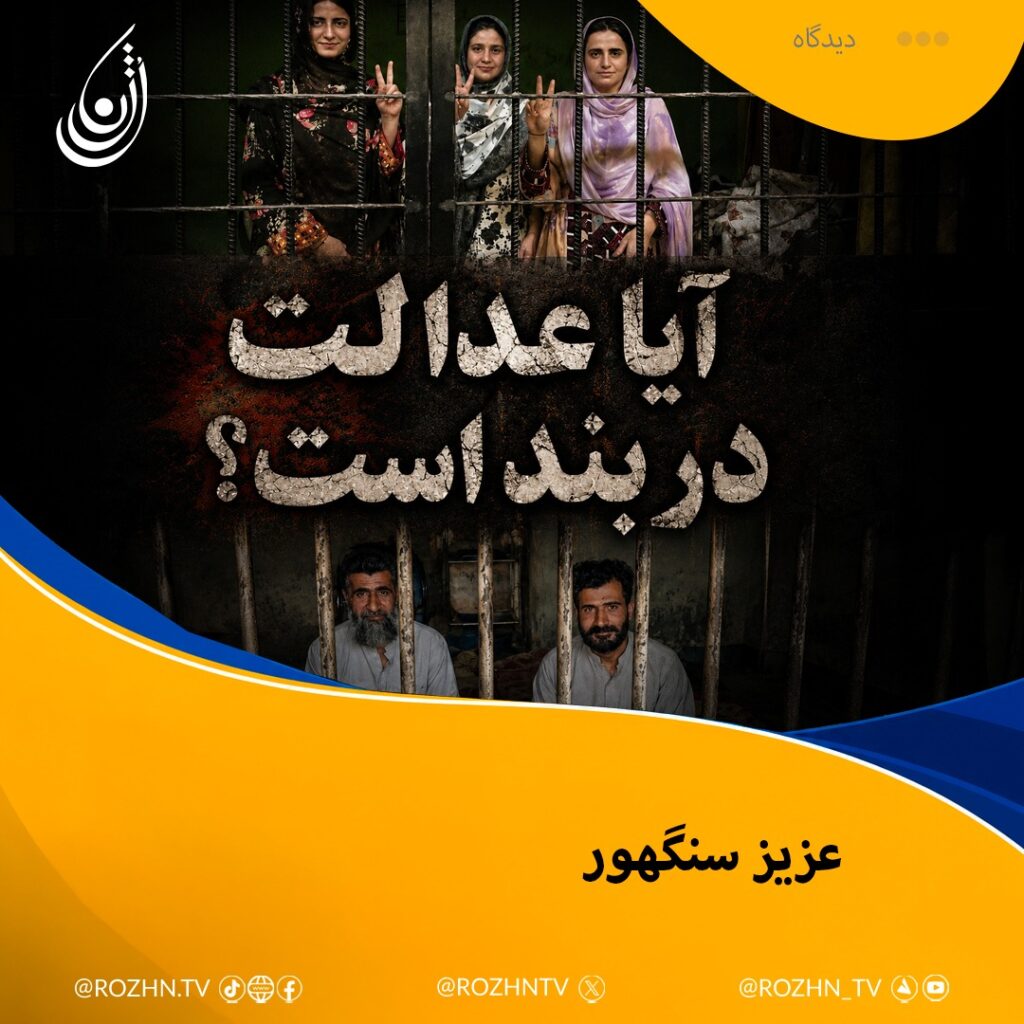
آیا عدالت در بند است؟
تلویزیون رُژن | یکشنبه ۳۱ خرداد ۱۴۰۵ | ۲۱ ژوئن ۲۰۲۶
عزیز سنگهور
در جوامع متمدن جهان، عدالت بهعنوان پایه اعتماد میان دولت و شهروندان شناخته میشود. به همین دلیل، حقوقدانان همواره بر این اصل تأکید میکنند که صرف اجرای عدالت کافی نیست، بلکه عدالت باید بهگونهای اجرا شود که مردم نیز آن را ببینند و به آن اطمینان داشته باشند. هنگامی که روندهای قضایی از دید افکار عمومی پنهان شوند، دسترسی وکلا و اعضای خانواده محدود گردد و محاکمات به شکلی برگزار شوند که شفافیت آنها مورد تردید قرار گیرد، اعتماد عمومی به نظام عدالت نیز آسیب میبیند.
در روزهای اخیر، موضوع محاکمات غیرشفاف و موسوم به «فیسلیس» رهبران بازداشتشده کمیته همبستگی بلوچ، بحثهای گستردهای را در بلوچستان برانگیخته است. در شانزدهم ژوئن، جامعه وکلای کویته در برابر دادگاههای سشن، کچهری و دادگاه مبارزه با تروریسم دست به اعتراض زدند و اعلام کردند که چنین محاکماتی با قانون اساسی، قوانین کشور و اصول دادرسی عادلانه سازگار نیست. به باور آنان، اگر متهمی از حق حضور وکیل، اعضای خانواده و نظارت عمومی بر روند محاکمه محروم شود، نمیتوان از تحقق عدالت سخن گفت.
این موضوع تنها به چند فعال سیاسی یا یک سازمان خاص محدود نمیشود. پرسش اصلی این است که آیا نظام قضایی پاکستان همچنان به این اصل بنیادین پایبند خواهد ماند که هر شهروند حق برخورداری از یک محاکمه علنی و عادلانه را دارد؟ اگر امروز حقوق یک فرد یا گروه محدود شود، فردا این رویه میتواند دیگران را نیز دربر گیرد.
رهبران بازداشتشده کمیته همبستگی بلوچ، از جمله دکتر ماهرنگ بلوچ، بیبو بلوچ، گلزادی، بیبرگ زهری و صبغتالله، در اعتراض به این محاکمات در زندان دست به تحصن زدهاند. آنان تأکید دارند که پروندههایشان باید در دادگاهی علنی بررسی شود و هیچکس نمیتواند حقوقی را که قانون اساسی برای آنان تضمین کرده است، سلب کند. گزارشها حاکی از آن است که این زندانیان هشدار دادهاند در صورت بیتوجهی به خواستههایشان، دست به اعتصاب غذا خواهند زد.
یکی دیگر از جنبههای نگرانکننده این وضعیت، محدودیت دسترسی خانوادهها و وکلا به زندانیان است. بستگان این افراد میگویند که برای ملاقات به زندان مراجعه کردهاند، اما پس از ساعتها انتظار، اجازه دیدار با عزیزان خود را نیافتهاند. چنین وضعیتی نهتنها با اصول انسانی در تضاد است، بلکه با موازین قانونی نیز همخوانی ندارد. در بسیاری از نظامهای حقوقی جهان، زندانیان حق دارند با خانواده و وکلای خود در تماس باشند، زیرا این ارتباط بخشی از حقوق بنیادین آنان محسوب میشود.
جامعه وکلای بلوچستان این وضعیت را یک بحران جدی حقوقی و قانون اساسی توصیف کرده است. به باور آنان، نبود شفافیت در روندهای قضایی تنها مشکل یک پرونده خاص نیست، بلکه زنگ خطری برای کل نظام عدالت کشور است. حاکمیت قانون زمانی معنا پیدا میکند که نهادهای دولتی نهتنها عدالت را اجرا کنند، بلکه امکان نظارت عمومی و بررسی قانونی آن را نیز فراهم آورند.
بلوچستان از پیش نیز به دلیل ناآرامیهای سیاسی، موضوع ناپدیدشدگان اجباری، نگرانیهای حقوق بشری و سیاستهای دولتی در کانون توجه قرار داشته است. در چنین شرایطی، اهمیت شفافیت قضایی دوچندان میشود. اگر مردم احساس کنند که درهای عدالت به روی آنان بسته است، بیاعتمادی و احساس محرومیت در جامعه عمیقتر خواهد شد.
اکنون زمان اتهامزنی و بهرهبرداری سیاسی نیست، بلکه زمان پاسداری از قانون اساسی و حاکمیت قانون است. دولت، دستگاه قضایی، وکلا و نهادهای حقوق بشری باید برای بازگرداندن اعتماد عمومی همکاری کنند. روند محاکمات باید شفاف باشد، دسترسی وکلا و خانوادهها تضمین شود و تمامی حقوقی که قانون برای متهمان در نظر گرفته است، رعایت گردد.
در پایان، همان پرسشی مطرح میشود که امروز وکلای بلوچستان در خیابانها فریاد میزنند: اگر عدالت از دید مردم پنهان شود، پس عدالت کجاست؟ قدرت یک دولت در استفاده از زور خلاصه نمیشود، بلکه در پایبندی به حاکمیت قانون، شفافیت قضایی و احترام به حقوق شهروندان معنا پیدا میکند. همین اصول، ضامن آینده قانونمدار و ثبات دموکراتیک پاکستان خواهند بود.
ENIs Justice in Chains?Read in English
Rozhn TV | Sunday, June 21, 2026
Aziz Sanghur
In the civilized societies of the world, justice is recognized as the foundation of trust between the state and its citizens. For this reason, jurists have always stressed that it is not enough for justice merely to be done; it must be done in such a way that people can also see it and have confidence in it. When judicial proceedings are hidden from public view, access for lawyers and family members is restricted, and trials are held in a manner whose transparency is open to doubt, public trust in the justice system is also damaged.
In recent days, the issue of the non-transparent, so-called “faceless” trials of the detained leaders of the Baloch Yakjehti Committee has sparked wide debate in Balochistan. On June 16, the Quetta bar protested in front of the Sessions Court, the Katchery and the Anti-Terrorism Court, declaring that such trials are incompatible with the constitution, the country’s laws and the principles of a fair trial. In their view, if an accused person is deprived of the right to have a lawyer, family members and public oversight of the trial, one cannot speak of justice being achieved.
This issue is not limited to a few political activists or one particular organization. The central question is whether Pakistan’s judicial system will continue to adhere to the fundamental principle that every citizen has the right to a public and fair trial. If the rights of one person or group are restricted today, tomorrow this practice could extend to others.
The detained leaders of the Baloch Yakjehti Committee, including Dr. Mahrang Baloch, Bibo Baloch, Gulzadi, Bibarg Zehri and Sibghatullah, have staged a sit-in in prison in protest against these trials. They insist that their cases must be heard in open court and that no one can strip away the rights the constitution guarantees them. Reports indicate that these prisoners have warned they will go on a hunger strike if their demands are ignored.
Another worrying aspect of this situation is the restricted access of families and lawyers to the prisoners. Their relatives say they went to the prison to visit but, after hours of waiting, were not allowed to see their loved ones. Such a situation not only conflicts with humane principles but is also inconsistent with legal standards. In many legal systems around the world, prisoners have the right to be in contact with their families and lawyers, since this contact is considered part of their fundamental rights.
The lawyers’ community of Balochistan has described this situation as a serious legal and constitutional crisis. In their view, the lack of transparency in judicial proceedings is not the problem of one particular case alone but a warning bell for the entire justice system of the country. The rule of law takes on meaning when state institutions not only administer justice but also make public oversight and legal scrutiny of it possible.
Balochistan has already been in the spotlight because of political unrest, the issue of enforced disappearances, human rights concerns and government policies. In such circumstances, the importance of judicial transparency is doubled. If people feel that the doors of justice are closed to them, distrust and a sense of deprivation in society will deepen.
Now is not the time for accusations and political exploitation, but a time to safeguard the constitution and the rule of law. The state, the judiciary, lawyers and human rights institutions must cooperate to restore public trust. The trial process must be transparent, access for lawyers and families must be guaranteed, and all the rights the law provides for the accused must be respected.
In the end, the same question arises that the lawyers of Balochistan are shouting in the streets today: if justice is hidden from the people’s view, then where is justice? The strength of a state is not summed up in the use of force, but takes on meaning in its adherence to the rule of law, judicial transparency and respect for citizens’ rights. These very principles will guarantee a law-abiding future and democratic stability for Pakistan.