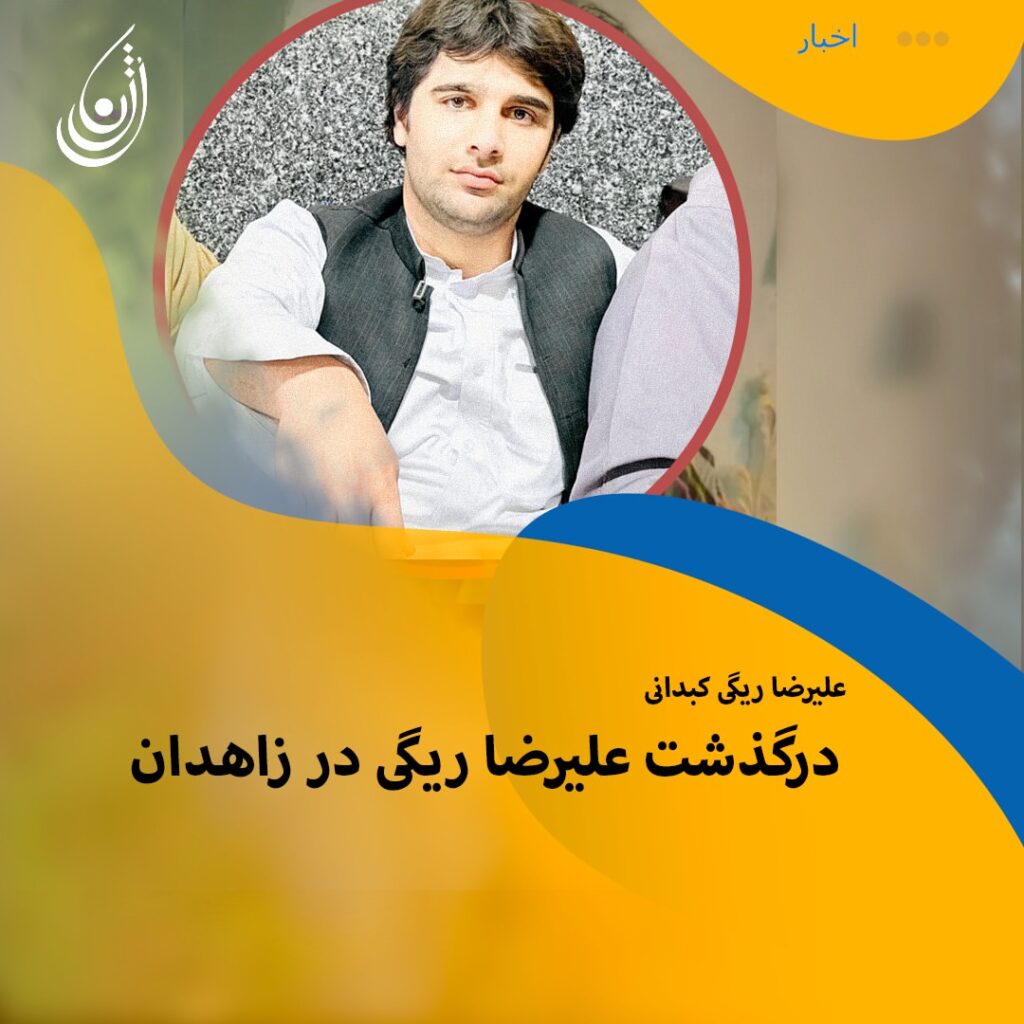
درگذشت علیرضا ریگی، از مجروحان جمعه خونین زاهدان
ENAlireza Rigi, Wounded in Zahedan’s Bloody Friday, DiesRead in English
Zahedan – Thursday, July 24, 2025
Alireza Rigi Kabdani, a 31-year-old citizen and one of the people wounded in the events of 8 Mehr 1401 (September 30, 2022) in Zahedan, died on Tuesday, July 22 at his home in the Shirabad area of Zahedan.
Alireza, the father of a 7-year-old child, had earlier been wounded by two bullets during the security forces’ crackdown on the popular protests. Shrapnel remained in his pelvis and spinal area, which doctors said could not be removed surgically.
According to local sources, the cause of his death was announced as severe infection of the wound and blood, but some speculation has also been raised about a possible suicide, which had not been officially confirmed as of the time of writing.
Over the past three years, Alireza had lived with chronic pain and serious psychological problems resulting from his physical injuries and the pressures that followed the incident. He was among the hundreds of people wounded in the event known as Zahedan’s Bloody Friday who have remained deprived of medical care, psychological support and legal assistance.
His death once again recalls the difficult and forgotten situation of those wounded in the 1401 protests in the cities of Zahedan and Khash, people who, years later, have not only gone untreated but are dying in silence and neglect.