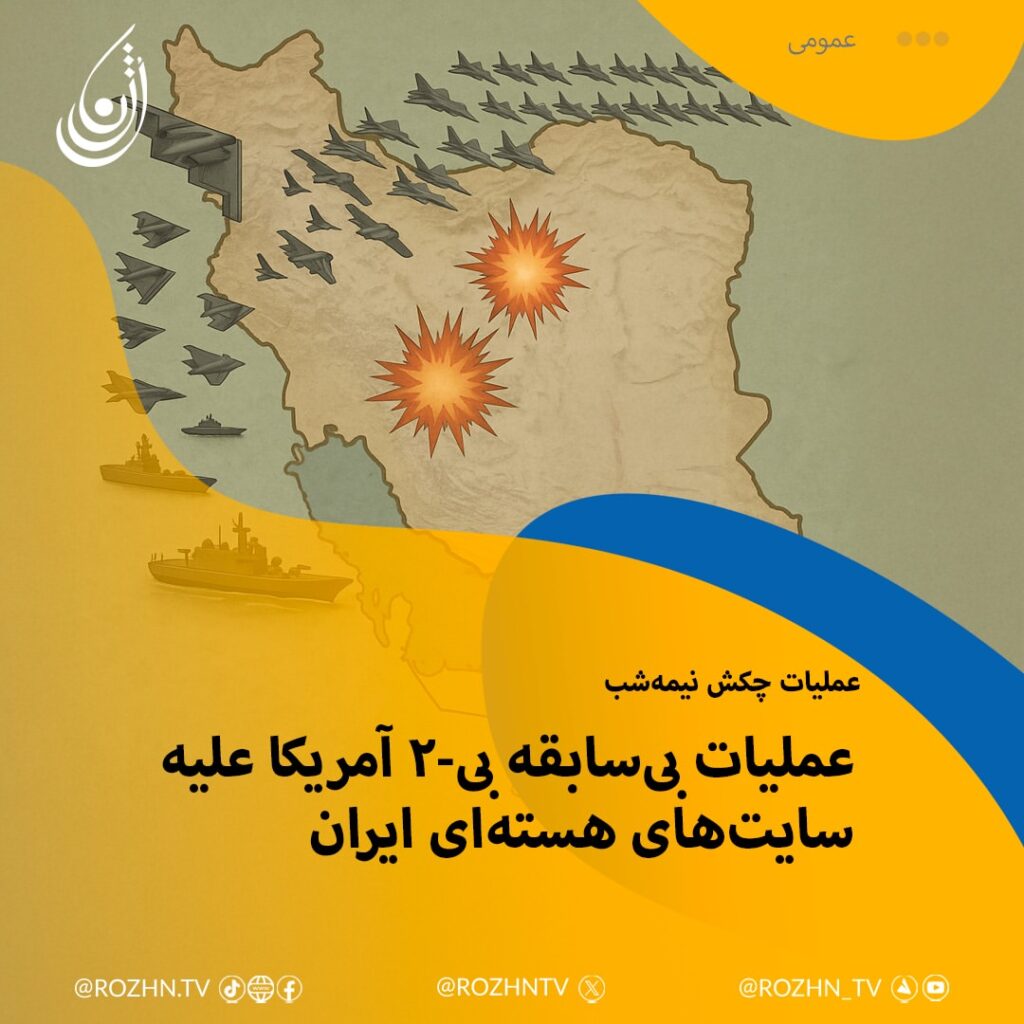
عملیات بیسابقه بمبافکنهای بی-۲ آمریکا علیه سایتهای هستهای ایران
ENUnprecedented US B-2 Bomber Operation Against Iran’s Nuclear SitesRead in English
Monday, June 23, 2025
In one of the largest air operations in US history, seven B-2 Spirit stealth bombers, backed by more than 125 aircraft, targeted Iran’s nuclear facilities at Fordow, Natanz and Isfahan at midnight last Friday. The operation, carried out under the code name “Midnight Hammer,” for the first time operationally used the super-heavy GBU-57 bombs known as “bunker busters.”
The first bomb was dropped on the underground Fordow site at 2:10 a.m. Iran time. The B-2 bombers, which took off from Whiteman base in Missouri, crossed several European and Middle Eastern countries and reached Iranian airspace without being intercepted. At the same time, a US submarine in regional waters fired 24 Tomahawk cruise missiles at surface targets in Isfahan.
The US Department of Defense has said the operation was carried out with minimal communications and maximum surprise. General Daniel Caine said Iran’s air defense systems were unable to mount an effective response and that no evidence of a successful interception was observed.
Initial analysis indicates that the damage to the targeted facilities was “very extensive” and that Iran’s nuclear infrastructure at three key centers was severely damaged.
Military experts have assessed the operation as a turning point in the US military’s combat capability and a clear message to Tehran.