سه جلد مجله تایم؛ سه نقطه عطف در خاورمیانه
ENThree Time Magazine Covers; Three Turning Points in the Middle EastRead in English
London – Friday, June 20, 2025
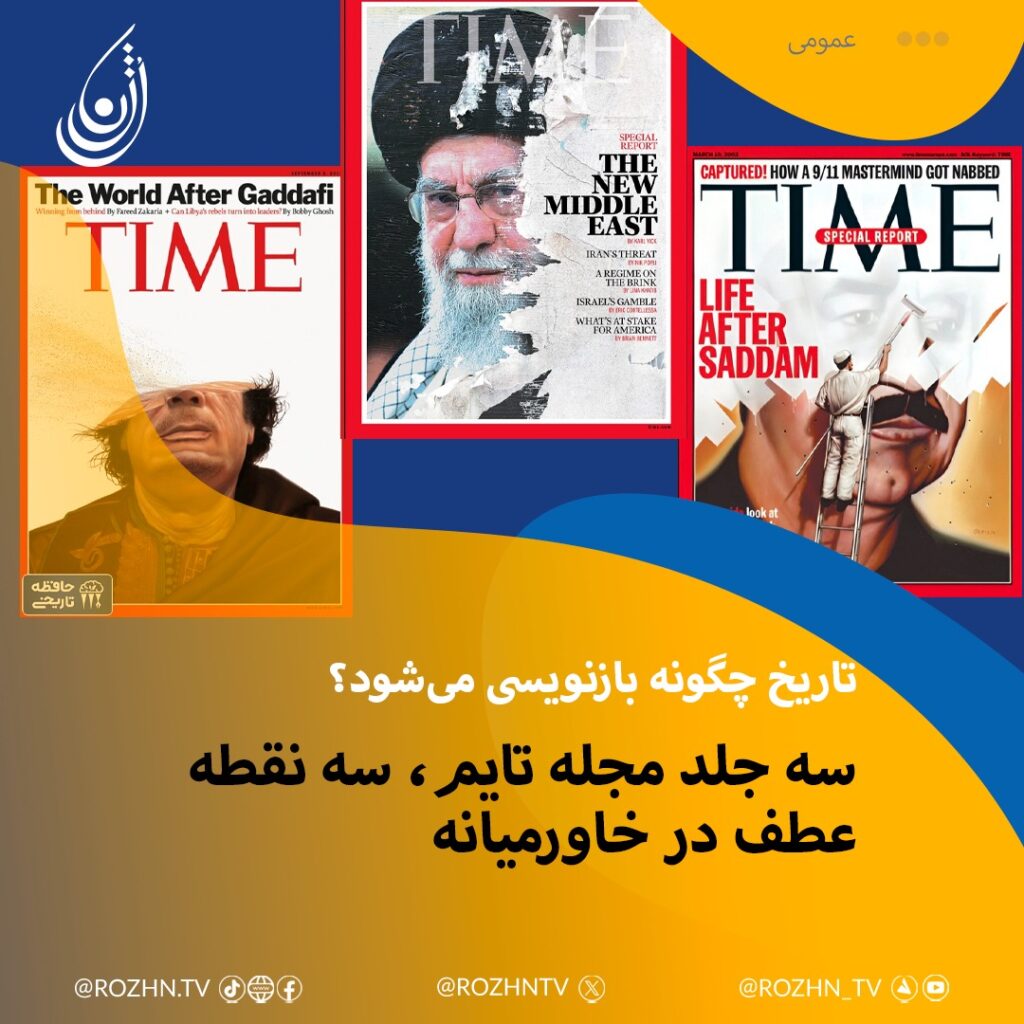
The American magazine Time, by publishing three historic images on its covers, has presented a reflection of the deep political changes in the Middle East. The three covers deal, respectively, with the fall of Saddam Hussein, the overthrow of Muammar Gaddafi, and a special report on the standing and political future of Ali Khamenei, leader of the Islamic Republic, in the year 1404.
Analysts say these images are not only a reflection of political events but also part of a media narrative about “the end of an era” in the Middle East. Time’s media coverage of these three figures, they say, indicates an emphasis on the personalization of power and the dramatization of transitional moments in the region’s contemporary history.
On the covers about Saddam Hussein and Muammar Gaddafi, the media tone is decisive and judgmental; their fall is portrayed as the irreversible end of authoritarian systems. On the cover about Ayatollah Khamenei, however, the tone is more questioning; instead of announcing an end, it appears to raise a reflection on the future of the system and the power structure in Iran.
Some observers believe these covers reflect a trend in which Western media, by depicting critical moments, not only record history but also shape it. An image printed on the cover of a global magazine is transferred to collective memory and in some cases even influences international policymaking.
The question remains whether the media are merely narrators of the fall of governments or have themselves become active players in this process.