بلوچستان · ویدیو
انتقال آب دریای بلوچستان به اصفهان؛ کشاورزان بلوچ با گالن باغها را آبیاری میکنند
ENBalochistan’s Sea Water Is Piped to Isfahan While Baloch Farmers Irrigate Orchards With JerrycansRead in English
Dashtiari and Nigwar, Balochistan – Tuesday, June 3, 2025
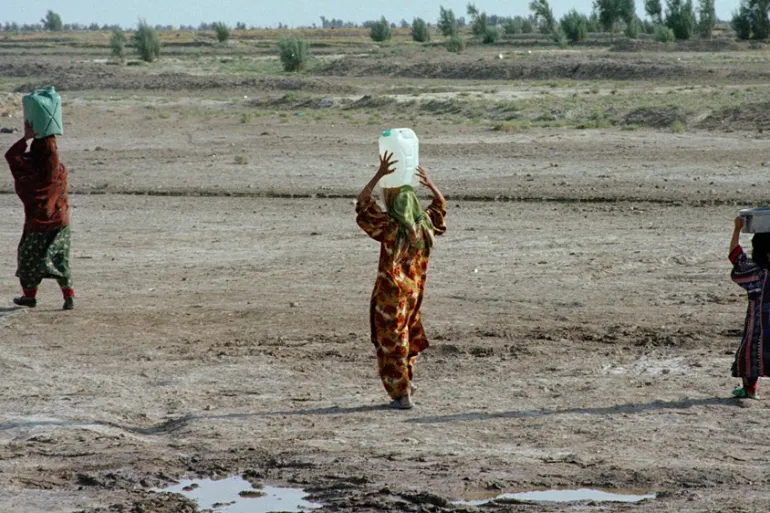
While Balochistan’s sea water is being transferred to industries and central provinces such as Isfahan through multibillion projects, Baloch farmers in Dashtiari and Nigwar are struggling with a complete lack of water.
In the rural district of Nigwar, orchard owners carry water to their land in jerrycans and private cars to save their banana trees. The region’s dams, which previously operated even at low capacity, are now completely closed, and water resources have been placed at the disposal of state-linked companies such as “Mahan.”
In the absence of government support, local people are trying through mutual aid and collective effort to save their orchards from destruction, but this solution is temporary and exhausting. Many farmers say they can no longer sustain this situation, and the orchards are drying up one by one.
Experts see this situation as a clear sign of structural discrimination. According to some informed observers, the ultimate aim of such pressures is the forced displacement of the indigenous Baloch from their land and the transfer of the land to non-Baloch, in a land whose inhabitants have lived there for centuries.
A post shared by Rozhn TV (@rozhn_tv)