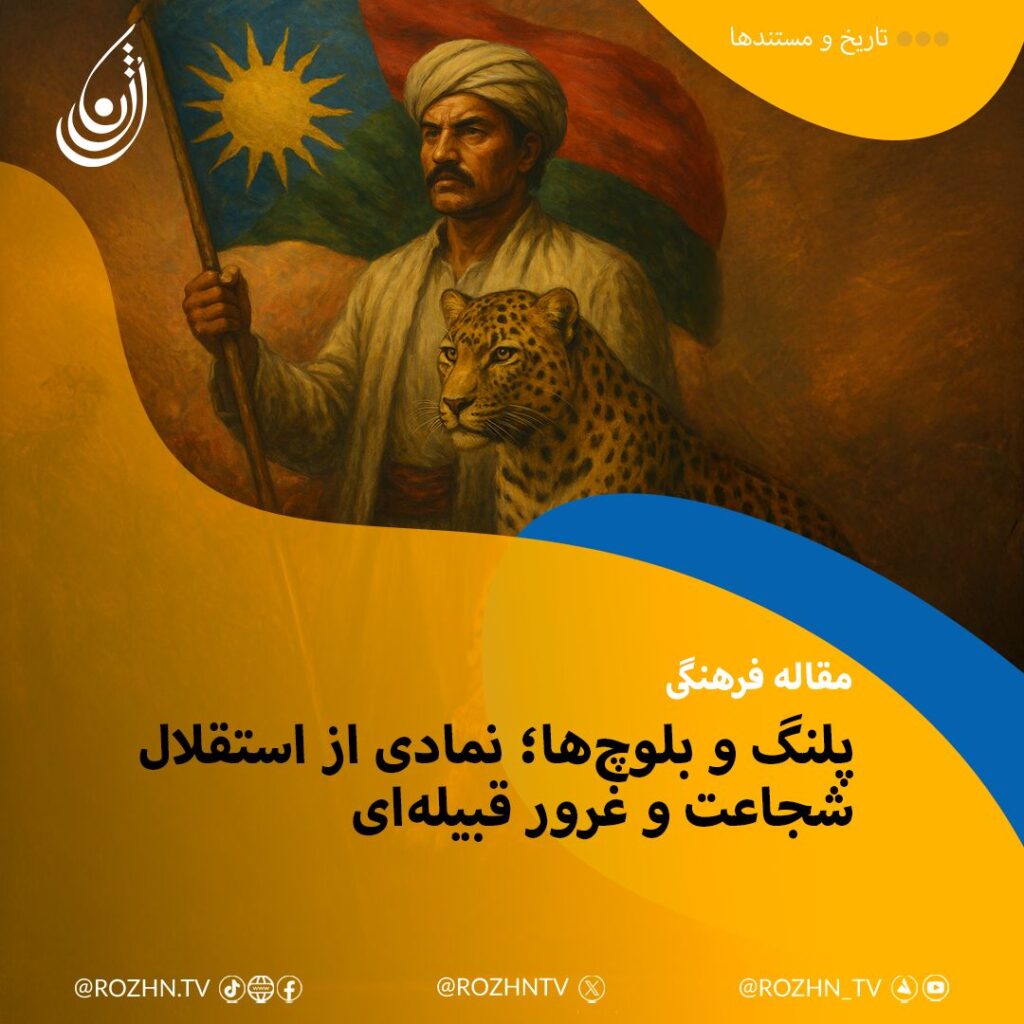
پلنگ و بلوچها؛ نمادی از استقلال، شجاعت و غرور قبیلهای
جمعه ۱۹ اردیبهشت ۱۴۰۴ خورشیدی / ۹ مه ۲۰۲۵ میلادی
در فرهنگ بلوچ، پلنگ نه تنها بهعنوان حیوانی چابک و نیرومند، بلکه بهعنوان نمادی پرمعنا در شعر، سنت شفاهی و هویت فرهنگی بلوچها جایگاه ویژهای دارد. این حیوان به سبب ویژگیهایی مانند زیست انفرادی، حملات ناگهانی، قدرت جسمانی و توانایی حرکت سریع در مناطق صعبالعبور، اغلب در ادبیات بومی بهعنوان استعارهای از جنگجویان بلوچ بهکار میرود—افرادی که مستقل، بیباک و وفادار به طایفه خود هستند و نه تابع دولتهای مرکزی
در شعرهای بلوچی (shairi)، پلنگ نماد عزت، شهامت و آمادگی برای دفاع از خود حتی در شرایط نابرابر است. حضور طبیعی پلنگ ایرانی (Panthera pardus saxicolor) در بخشهایی از استان سیستان و بلوچستان ایران و همچنین بلوچستان پاکستان، بعد اسطورهای این نماد را در ذهنیت جمعی بلوچها تقویت کرده است
بلوچها دارای تاریخی سرشار از مقاومت، هویت قبیلهای قوی و فرهنگ سلحشوری هستند که در روایتهای محلی با خصوصیات رفتاری پلنگ پیوند یافته است. در افسانهها، ترانههای حماسی و روایات شفاهی، بلوچپلنگ اغلب بهعنوان جنگجویی آزاد توصیف میشود؛ کسی که تنها زندگی میکند، به سرعت حمله میبرد و از هرگونه سلطه و وابستگی سر باز میزند. این تصویر، بهخوبی با ساختار قبیلهای و استقلالطلبانهی جوامع بلوچ همخوانی دارد
واژهی «پلنگ» در متون شاعرانهی فارسی و بلوچی نیز برای اشاره به مردانی دلیر و نجیب بهکار میرود—چهرههایی که در فرهنگ قبیلهای بهعنوان الگوهایی از شجاعت و وقار شناخته میشوند
در مقابل، هرچند شتر در زندگی روزمره و معیشت بلوچها بهویژه در نواحی بیابانی نقش مهمی ایفا کرده و نماد صبر، بقا و کارآمدی است، اما این پلنگ است که در ناخودآگاه فرهنگی بلوچها، جلوهای از آزادی، قدرت و غرور منزوی دارد—همان غروری که قرنهاست در جغرافیای خشک و دشوار بلوچستان شکل گرفته است
ENThe Leopard and the Baloch: A Symbol of Independence, Courage and Tribal PrideRead in English
Rozhn TV | Friday, May 9, 2025
In Baloch culture, the leopard holds a special place not only as an agile and powerful animal but also as a deeply meaningful symbol in Baloch poetry, oral tradition and cultural identity. Because of traits such as its solitary life, sudden attacks, physical strength and ability to move fast in rugged terrain, it is often used in local literature as a metaphor for Baloch warriors: people who are independent, fearless and loyal to their tribe, and not subject to central governments.
In Balochi poetry (shairi), the leopard is a symbol of dignity, courage and readiness to defend oneself even in unequal circumstances. The natural presence of the Persian leopard (Panthera pardus saxicolor) in parts of Iran’s Sistan and Baluchestan province and in Pakistan’s Balochistan has strengthened the mythical dimension of this symbol in the collective mind of the Baloch.
The Baloch have a history rich in resistance, a strong tribal identity and a martial culture, which in local narratives is linked to the behavioral traits of the leopard. In legends, epic songs and oral accounts, the “Baloch leopard” is often described as a free warrior: one who lives alone, attacks swiftly and refuses any domination or dependence. This image fits well with the tribal structure and independence-seeking character of Baloch communities.
The word “leopard” in Persian and Balochi poetic texts is also used to refer to brave and noble men, figures who are regarded in tribal culture as models of courage and dignity.
By contrast, although the camel has played an important role in the daily life and livelihood of the Baloch, particularly in desert areas, and is a symbol of patience, survival and efficiency, it is the leopard that, in the cultural subconscious of the Baloch, carries an image of freedom, power and solitary pride, the same pride that has been shaped for centuries in the dry and harsh geography of Balochistan.