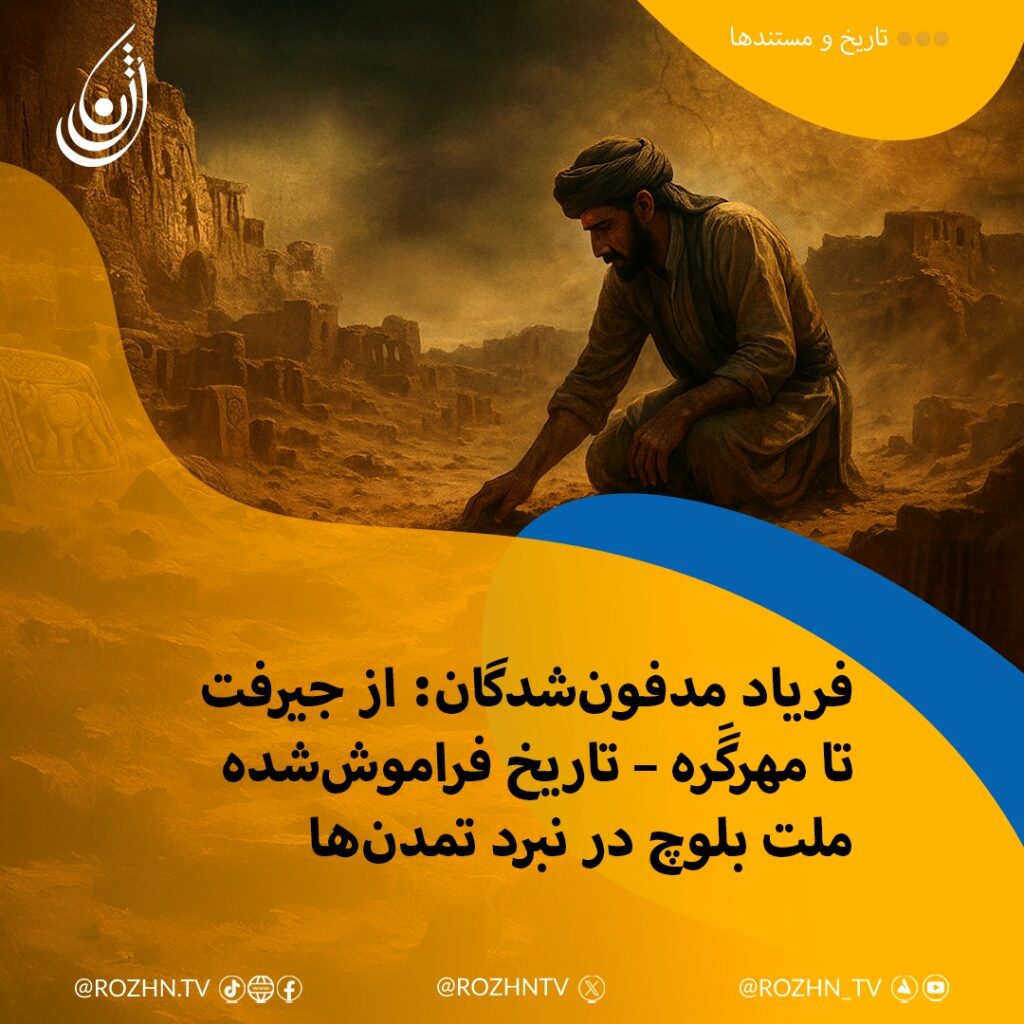
فریاد مدفونشدگان: از جیرفت تا مهرگَره – تاریخ فراموششده ملت بلوچ در نبرد تمدنها
ENThe Cry of the Buried: From Jiroft to Mehrgarh – The Forgotten History of the Baloch Nation in the Clash of CivilizationsRead in English
Jiroft – Sibi – Mehrgarh | May 4, 2025
In southeastern Iran, somewhere among ancient mountains, plains and rivers, traces of civilizations have emerged that have rarely been reflected in the official history of Iran and South Asia. Jiroft, Mehrgarh and Sibi are all parts of a lost puzzle that cries out in silence from an erased history: the history of the Baloch nation.
Jiroft, Mehrgarh and Sibi: The Civilizational Trinity of Balochistan. The Jiroft civilization, with evidence of independent writing, architecture and pottery, has long amazed archaeologists. But beyond Iran’s present borders, in Pakistan’s province of Balochistan, lies an area called Mehrgarh, whose traces of habitation, according to experts, date back 10,000 years.
From bodies buried with religious rites to stone houses and handmade tools, the evidence rivals that of the earliest human civilizations. Not far away lies Mohenjo-daro, the center of the Indus Valley civilization, one of the first planned cities in history. The link between these areas is no coincidence. All of them lie within the historical context of Greater Balochistan.
Linguistic, cultural and osteological studies show that many of the civilizations of this region are related to the Dravidian peoples, who later spread across South Asia. The Baloch, who have lived in these same lands for centuries, still preserve traces of that ancient heritage in their language, music, rituals and handicrafts.
Balochistan, Arena of Clashing Civilizations. From the Elamite and Achaemenid eras to the Sasanian and then the Islamic conquests, the powers that sought dominion over southeastern Iran and beyond inevitably met resistance from the Baloch people. With their mountain-dwelling lifestyle, desire for independence and strong tribal structure, this people have managed to preserve their identity for most of history, even in the face of imperial powers.
Although the Baloch at times engaged and coexisted with dominant powers, history shows that they were never fully integrated into the political structures of the invaders. Now, archaeology and modern research are once again reviving the cry of that buried history, a history that belongs to the Baloch nation.