
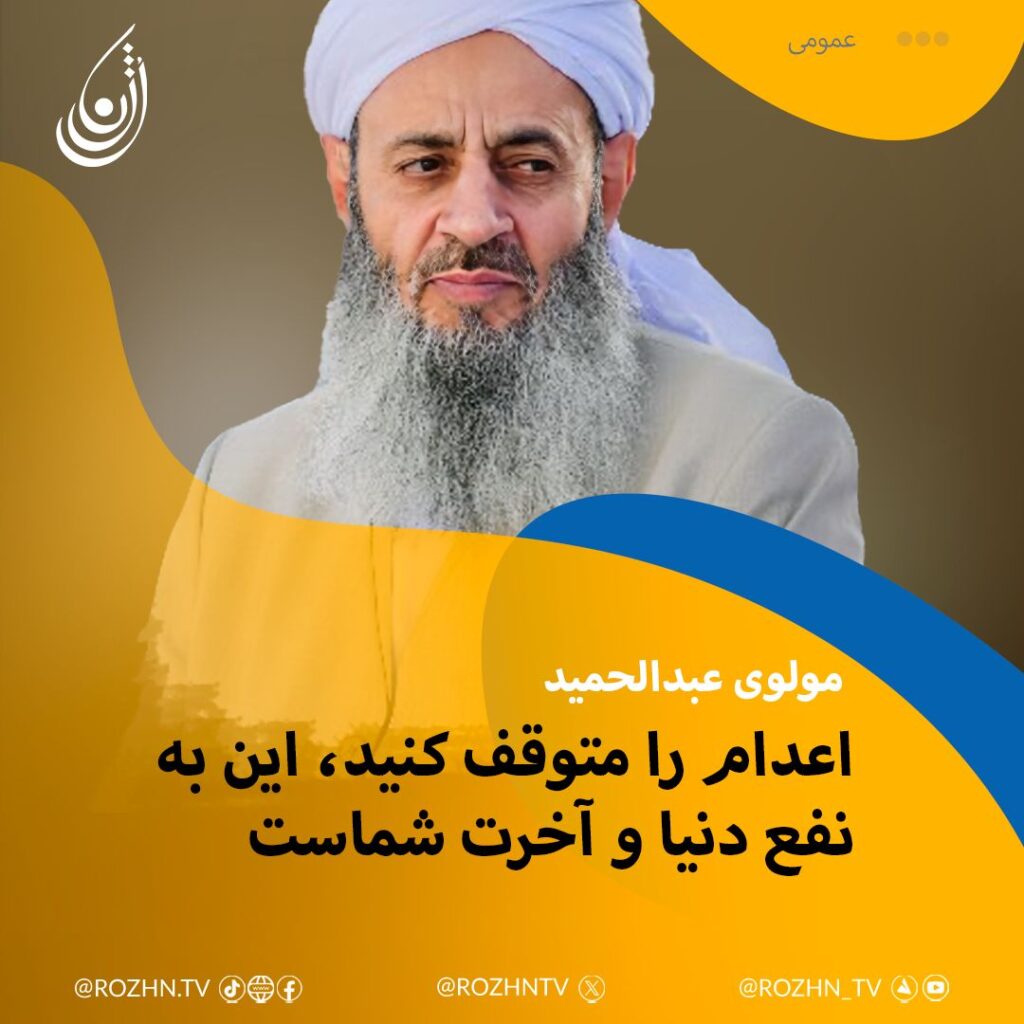
اعدام را متوقف کنید؛ راهی بهسوی عدالت و آخرتی سبکبار
دوشنبه ۱ اردیبهشت ۱۴۰۴ / ۲۱ آوریل ۲۰۲۵
مولوی عبدالحمید، عالم برجسته اهل سنت و امام جمعه زاهدان، بار دیگر در خطبههای نماز جمعه، صدای عدالت و دعوت به رحمت را بلند کرد؛ صدایی آرام، اما استوار که سالهاست از منبر مسجد مکی به گوش میرسد و پژواکی عمیق در جان بسیاری از مردم دارد
او در تازهترین سخنان خود، با صراحت و در عین حال با لحنی پدرانه، خواستار توقف فوری اجرای احکام اعدام شد؛ رویکردی که به گفته وی نهتنها مانع صلح و همزیستی در این جهان میشود، بلکه در قیامت نیز مسئولیتی سهمگین بر دوش تصمیمگیرندگان خواهد گذاشت
«آیندهای بهتر از مسیر کرامت انسانی و عدالت میگذرد، نه از چوبههای دار»؛ این یکی از محورهای اصلی پیام اخیر مولوی عبدالحمید بود—پیامی که نهتنها خطاب به نهادهای رسمی، بلکه تلنگری برای وجدان عمومی جامعه نیز محسوب میشود
او همواره بر شنیدن صدای مردم، ترمیم شکافهای اجتماعی و دوری از خشونت تأکید داشته و بارها هشدار داده است که افراط در مجازاتهای مرگ، به جای امنیت، بذر انتقام و بیاعتمادی میپاشد
در روزهایی که آمار اعدامها بهویژه در میان اقلیتها و مناطق حاشیهای رو به افزایش گذاشته، تأکید بر مسیرهای جایگزین همچون عفو، گفتوگو و عدالت ترمیمی، نهفقط یک انتخاب اخلاقی، بلکه ضرورتی اجتماعی است
پژواک این خطبه میتواند فراتر از دیوارهای یک مسجد شنیده شود؛ شاید در گوش تصمیمسازانی که هنوز فرصت دارند راهی متفاوت، انسانیتر و الهیتر را برگزینند
ENStop the Executions: A Path Toward Justice and a Lighter Burden in the HereafterRead in English
Monday, April 21, 2025
Molavi Abdolhamid, a prominent Sunni scholar and the Friday prayer leader of Zahedan, once again raised the voice of justice and the call for mercy in his Friday prayer sermons; a calm but steadfast voice that for years has been heard from the pulpit of the Makki Mosque and has a deep echo in the souls of many people.
In his latest remarks, frankly yet in a fatherly tone, he demanded an immediate halt to the carrying out of death sentences; an approach that, according to him, not only obstructs peace and coexistence in this world but will also place a heavy responsibility on the shoulders of decision-makers on the Day of Resurrection.
“A better future passes through human dignity and justice, not through gallows”; this was one of the main themes of Molavi Abdolhamid’s recent message—a message that is addressed not only to official institutions but also counts as a nudge to the public conscience of society.
He has always stressed listening to the voice of the people, mending social divisions and staying away from violence, and has repeatedly warned that excess in death penalties, instead of security, sows the seeds of revenge and distrust.
In days when the number of executions has been rising, particularly among minorities and in marginal regions, emphasizing alternative paths such as amnesty, dialogue and restorative justice is not only a moral choice but a social necessity.
The echo of this sermon can be heard beyond the walls of a single mosque; perhaps in the ears of policymakers who still have the chance to choose a different, more humane and more divine path.



