
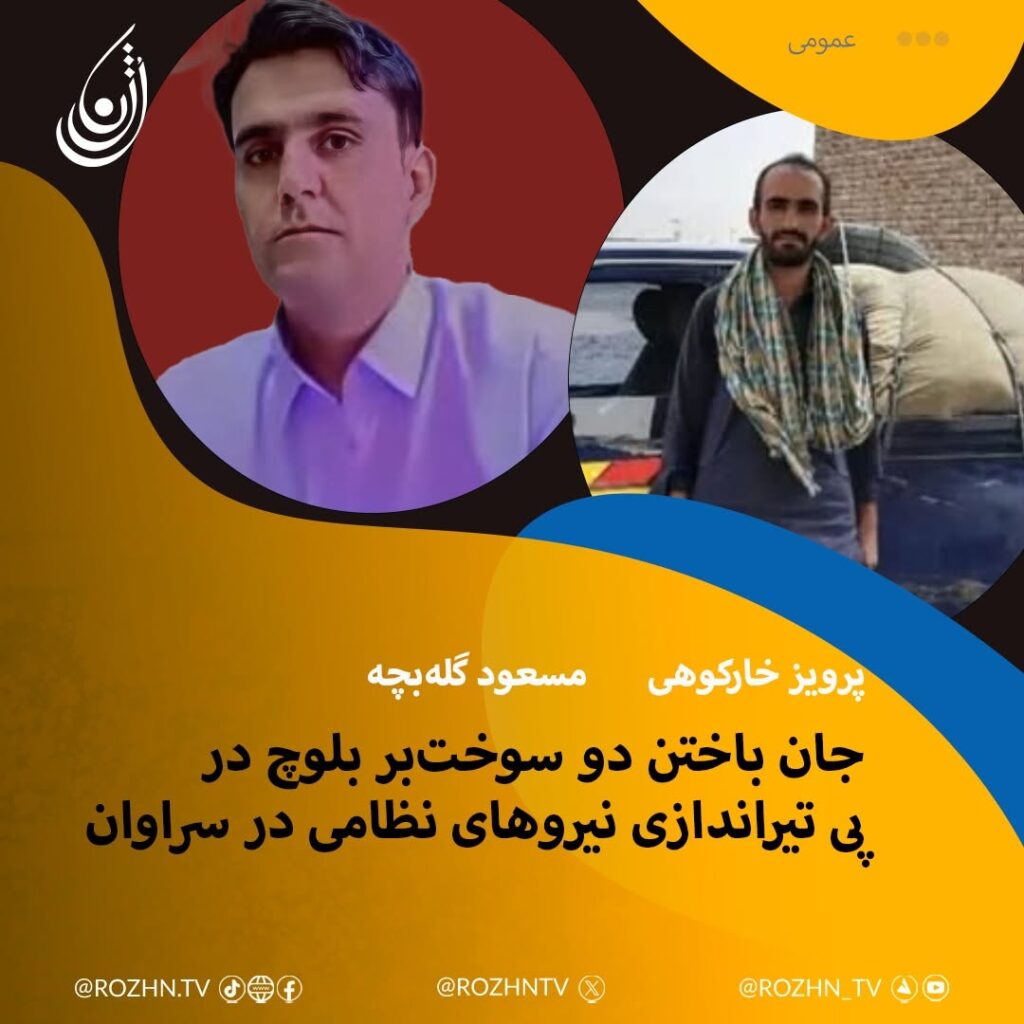
جان باختن دو سوختبر بلوچ در پی تیراندازی نیروهای نظامی در سراوان
ENTwo Baloch Fuel Porters Killed After Military Forces Open Fire in SaravanRead in English
Tuesday, April 16, 2025 – In another deadly instance of structural violence against Baloch fuel porters, direct fire by military forces on a fuel-carrying vehicle in the Aspich area of Saravan killed two Baloch citizens.
Masoud Galehbacheh and Parviz Kharkouhi, both 30 years old and residents of the Shirabad area of Zahedan, are the victims of this bitter incident. According to local reports, after the military forces opened fire, their vehicle overturned and caught fire. Parviz Kharkouhi died at the scene amid the flames, and Masoud Galehbacheh was taken to hospital with severe injuries but died a few hours later.
This incident once again draws attention to the bloody, everyday suppression of the livelihood of the Baloch people. Fuel porterage, for many Baloch families the only means of survival under structural discrimination and imposed poverty, is met with a securitized and violent response.
Over the past year, the number of dead and wounded among Baloch fuel porters, from direct shooting or from accidents caused by chases, has risen alarmingly, reaching more than 54 percent; a figure that points to a harsh and deliberate policy of systematically eliminating the Baloch people’s border-based livelihood.



