BalochistanLong read
One Sister, Two Tragedies
In Balochistan, the circle of repression around voices protesting enforced disappearances tightens by the day. Gulzadi Baloch, a member of the Baloch Yakjehti Committee (BYC), has been sentenced to life imprisonment in case No. 15/22 …
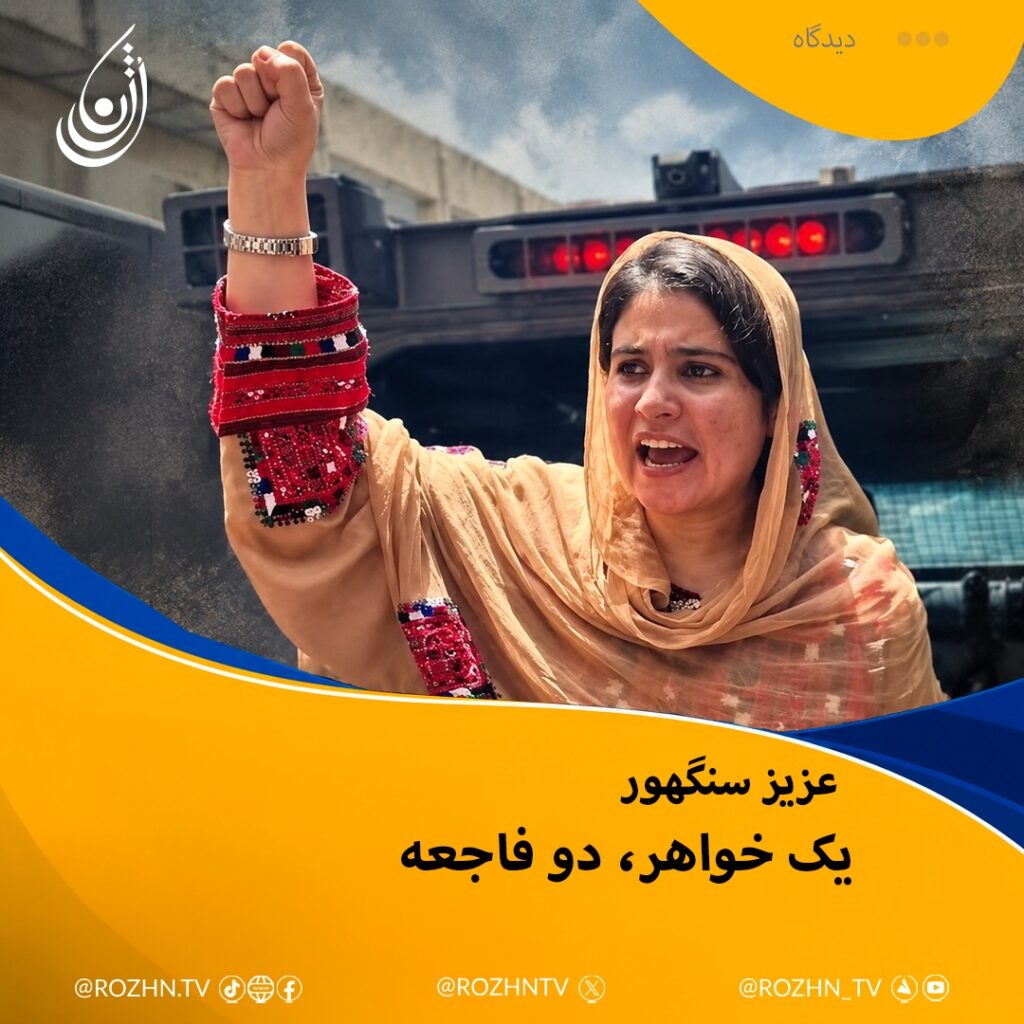
Aziz Sanghur
In Balochistan, the circle of repression around voices protesting enforced disappearances tightens by the day. Gulzadi Baloch, a member of the Baloch Yakjehti Committee (BYC), has been sentenced to life imprisonment in case No. 15/22 by order of Qadir Shah Bukhari, judge of the Additional District and Sessions Court in Quetta. The ruling has raised serious questions about human rights, the independence of the judiciary and the future of political resistance in Balochistan.
Gulzadi Baloch is from the Mach area of Balochistan. Political activity took on growing importance in her life after her brother, Abdul Wadood Baloch, known as Wadood Satakzai, disappeared. Her effort to find him and secure his release was the starting point of her struggle. She later raised her voice against enforced disappearances alongside the families of other disappeared Baloch. In this way, one sister’s personal suffering turned into a collective struggle.
The consequences of enforced disappearances in Balochistan reach every member of a family. A mother waits for her son to return, a sister knocks on the doors of justice institutions clutching her brother’s photograph, and a father spends years trying to learn what became of his child. In such circumstances, when a woman turns her family’s suffering into a public issue, she is no longer merely a representative of her own home and family but becomes the voice of a community whose wounds have yet to heal.
The story of Wadood Satakzai, Gulzadi Baloch’s brother, is also entangled in this complex tragedy of Balochistan. According to published reports, even after his release, allegations had been made of continued pressure and harassment against him by Pakistani institutions. Reports and accounts from people close to him have cited these conditions as among the factors that affected the later course of his life. He later joined the armed struggle and was killed in an operation. Even so, the family’s story raises a fundamental question: what conditions make a young man feel cut off from ordinary life and drawn toward armed struggle?
Looking at Balochistan’s political crisis solely through the lens of law and order means overlooking its root causes. Allegations of enforced disappearances, the detention of political activists, the prolonged uncertainty of families and the difficulty of obtaining justice are among the factors that can deepen mistrust in society. A young person’s turn to armed struggle can be the product of a complex mix of political, social and personal factors. Even so, if young people in a region come to feel that avenues for peaceful political activity, legal pursuit of their demands and ordinary life are narrowing day by day, this situation should be a cause for concern for both sides, the state and society.
It is the state’s responsibility to create an environment in which dissent and differing views are not treated as a crime, and in which no one has to pay with their freedom for demanding their rights.
The Baloch Yakjehti Committee has expressed serious concerns in response to Gulzadi Baloch’s life sentence. According to the committee, it had also voiced concern about the judicial proceedings on September 8, 2026. The BYC claims that, before the case was fully heard, the judge on several occasions spoke of pressure and said he might be compelled to hand down a life sentence or the death penalty.
The committee has also objected to the proceedings of September 7. According to the BYC, despite a judicial strike and the absence of defense counsel, the court continued the hearing and questioned and examined one of the witnesses without the defense being present or represented. If the claim is accurate, it raises a serious question about compliance with the basic requirements of a fair trial.
Article 10-A of Pakistan’s Constitution recognizes the right to a fair trial and due process. Article 14 of the International Covenant on Civil and Political Rights likewise recognizes the right to a fair judicial hearing.
The committee has described the sentence against Gulzadi Baloch as the third life sentence against BYC leaders in the past three months, and has also pointed to the cases of Dr. Mahrang Baloch and Sibghatullah Shahji. In these circumstances, the responsibility of the appellate courts and constitutional bodies to independently review the verdict and the judicial proceedings grows ever greater.
The path to lasting peace in Balochistan does not lie in silencing political voices but in addressing the grievances and discontent that have fueled unrest and mistrust for generations. A transparent, lawful review of the sentence against Gulzadi Baloch is not only a matter of a convicted woman’s right to justice; it also bears on a more important question: how can trust be restored, without which the gap between the state and its citizens will never narrow?