شتر؛ میراثی میلیونساله و نمادی از زندگی در سرزمینهای خشک
تلویزیون رُژن | سهشنبه ۳ آذرماه ۱۴۰۵ | ۲۴ نوامبر ۲۰۲۶
شتر تنها یک حیوان بارکش نیست؛ یکی از شگفتانگیزترین نمونههای سازگاری جانداران با محیطهای دشوار زمین است. تاریخ تکاملی خانواده شترسانان به میلیونها سال پیش بازمیگردد و نیاکان آنها نخستینبار در آمریکای شمالی پدیدار شدند.
از دیدگاه زیستشناسی، شتر مجموعهای از ویژگیهای منحصربهفرد دارد: توانایی تحمل کمآبی، کاهش اتلاف آب، پاهای پهن برای حرکت روی شن و ذخیره چربی در کوهان. برخلاف تصور رایج، کوهان شتر محل ذخیره آب نیست، بلکه ذخیرهای از چربی برای تأمین انرژی است.
انسانها هزاران سال پیش شتر را اهلی کردند و این حیوان به یکی از مهمترین همراهان جوامع ساکن مناطق خشک آسیا و آفریقا تبدیل شد. شتر علاوه بر حملونقل و تجارت، منبع شیر، گوشت و الیاف بوده و به تداوم معیشت در محیطهایی کمک کرده که پرورش بسیاری از دامهای دیگر دشوار است.
اما چرا شتر پس از میلیونها سال همچنان باقی مانده است؟
از نگاه علمی، پاسخ در فرگشت و انتخاب طبیعی نهفته است. ویژگیهایی که امکان بقا و تولیدمثل در شرایط سخت را افزایش دادهاند، در نسلهای متوالی حفظ شدهاند. اهلیسازی نیز به گسترش شتر و تداوم جمعیتهای اهلی آن کمک کرده است.
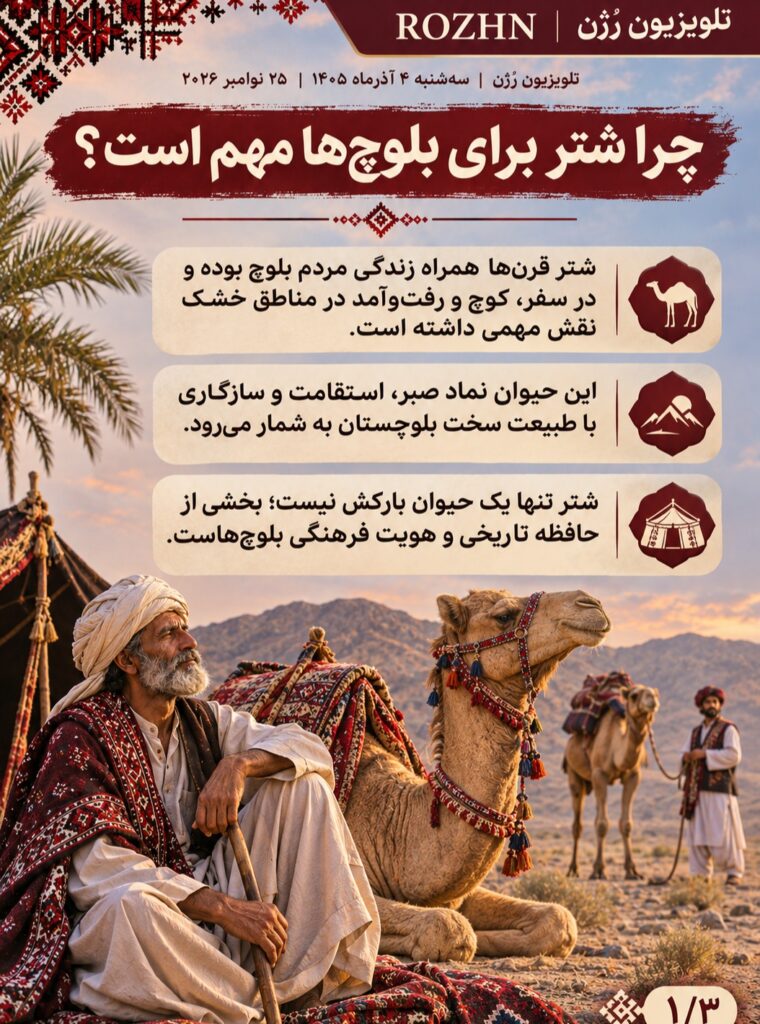
در فرهنگ بلوچ، شتر جایگاهی فراتر از ارزش اقتصادی دارد. این حیوان برای نسلهای گذشته همراه سفر، کوچ، تجارت و زندگی روزمره بوده و در حافظه فرهنگی بلوچستان با صبر، استقامت و سازگاری با طبیعت پیوند خورده است.
ارزش واقعی شتر را باید در سه بُعد شناخت: ارزش زیستی و تکاملی، اهمیت اقتصادی و معیشتی، و جایگاه تاریخی و فرهنگی آن.
شناخت و حفاظت از این حیوان، تنها پاسداشت یک سنت قدیمی نیست؛ بلکه بخشی از توجه به تنوع زیستی، معیشت پایدار و آینده سرزمینهای خشک جهان است.
ENThe Camel: A Heritage Millions of Years Old and a Symbol of Life in Arid LandsRead in English
Rozhn TV | Tuesday, November 24, 2026
The camel is not merely a beast of burden; it is one of the most remarkable examples of how living creatures adapt to the Earth’s harshest environments. The evolutionary history of the camel family dates back millions of years, and their ancestors first appeared in North America.
From a biological perspective, the camel has a set of unique traits: the ability to tolerate water scarcity, reduced water loss, broad feet for moving across sand, and fat stored in its hump. Contrary to popular belief, the camel’s hump does not store water; it is a reserve of fat that supplies energy.
Humans domesticated the camel thousands of years ago, and the animal became one of the most important companions of communities living in the arid regions of Asia and Africa. Besides transport and trade, the camel has been a source of milk, meat and fiber, and has helped sustain livelihoods in environments where raising many other kinds of livestock is difficult.
But why has the camel survived after millions of years?
From a scientific point of view, the answer lies in evolution and natural selection. Traits that increased the chances of survival and reproduction under harsh conditions have been preserved over successive generations. Domestication has also helped the camel spread and has sustained its domesticated populations.
In Baloch culture, the camel holds a place beyond its economic value. For past generations, the animal was a companion in travel, migration, trade and daily life, and in the cultural memory of Balochistan it is associated with patience, endurance and harmony with nature.
The true value of the camel should be understood in three dimensions: its biological and evolutionary value, its economic and livelihood importance, and its historical and cultural place.
Understanding and protecting this animal is not only about honoring an old tradition; it is also part of caring for biodiversity, sustainable livelihoods and the future of the world’s arid lands.