کدام کشورها بیشترین سلاح هستهای جهان را در اختیار دارند؟
تلویزیون رُژن | شنبه ۳۰ آبانماه ۱۴۰۵ | ۲۱ نوامبر ۲۰۲۶
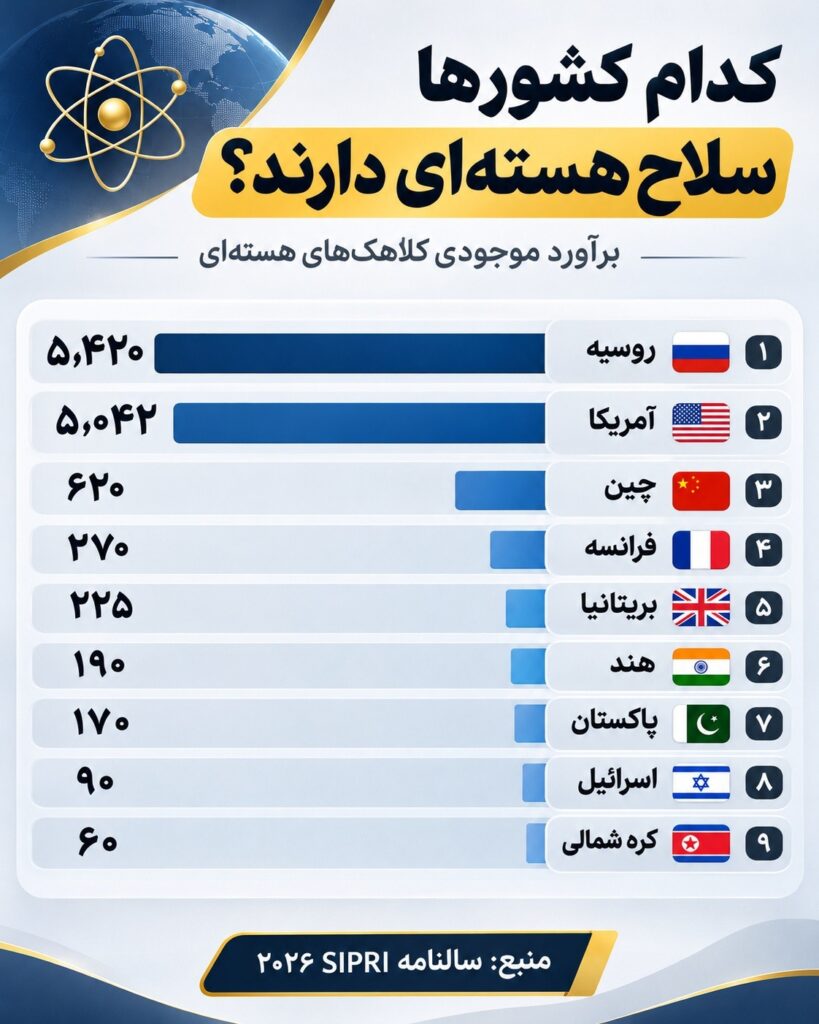
بر اساس تازهترین آمار مؤسسه بینالمللی پژوهشهای صلح استکهلم (SIPRI)، در آغاز سال ۲۰۲۶، مجموع کلاهکهای هستهای جهان حدود ۱۲ هزار و ۱۸۷ عدد برآورد شده است.
روسیه با حدود ۵٬۴۲۰ کلاهک و ایالات متحده آمریکا با ۵٬۰۴۲ کلاهک، همچنان بزرگترین زرادخانههای هستهای جهان را در اختیار دارند. این دو کشور بهتنهایی بیش از ۸۵ درصد کل موجودی هستهای جهان را تشکیل میدهند.
چین با ۶۲۰ کلاهک در جایگاه سوم قرار دارد و پس از آن فرانسه با ۳۷۰، بریتانیا با ۲۲۵، هند با ۱۹۰ و پاکستان با ۱۷۰ کلاهک قرار گرفتهاند.
همچنین شمار کلاهکهای هستهای اسرائیل حدود ۹۰ و کره شمالی حدود ۶۰ عدد برآورد شده است.
این آمار شامل کلاهکهای مستقر، ذخیرهشده و کلاهکهای بازنشسته در انتظار انهدام است؛ بنابراین همه آنها الزاماً آماده استفاده عملیاتی نیستند.
با وجود تلاشهای بینالمللی برای کنترل تسلیحات، ادامه نوسازی زرادخانههای هستهای، نگرانیها درباره آینده امنیت جهانی و خطر رقابت تسلیحاتی را افزایش داده است.
منبع: گزارش سالانه SIPRI، سال ۲۰۲۶
ENWhich Countries Hold the World’s Largest Nuclear Arsenals?Read in English
Rozhn TV | Saturday, November 21, 2026
According to the latest figures from the Stockholm International Peace Research Institute (SIPRI), the world’s total nuclear warhead stockpile was estimated at around 12,187 at the start of 2026.
Russia, with about 5,420 warheads, and the United States, with 5,042, continue to hold the world’s largest nuclear arsenals. Between them, the two countries account for more than 85 percent of the world’s total nuclear stockpile.
China ranks third with 620 warheads, followed by France with 370, the United Kingdom with 225, India with 190, and Pakistan with 170.
Israel’s nuclear warhead count is estimated at around 90, and North Korea’s at around 60.
These figures include deployed, stockpiled, and retired warheads awaiting dismantlement, so not all of them are necessarily ready for operational use.
Despite international efforts at arms control, the continued modernization of nuclear arsenals has heightened concerns about the future of global security and the risk of a renewed arms race.
Source: SIPRI Annual Report, 2026