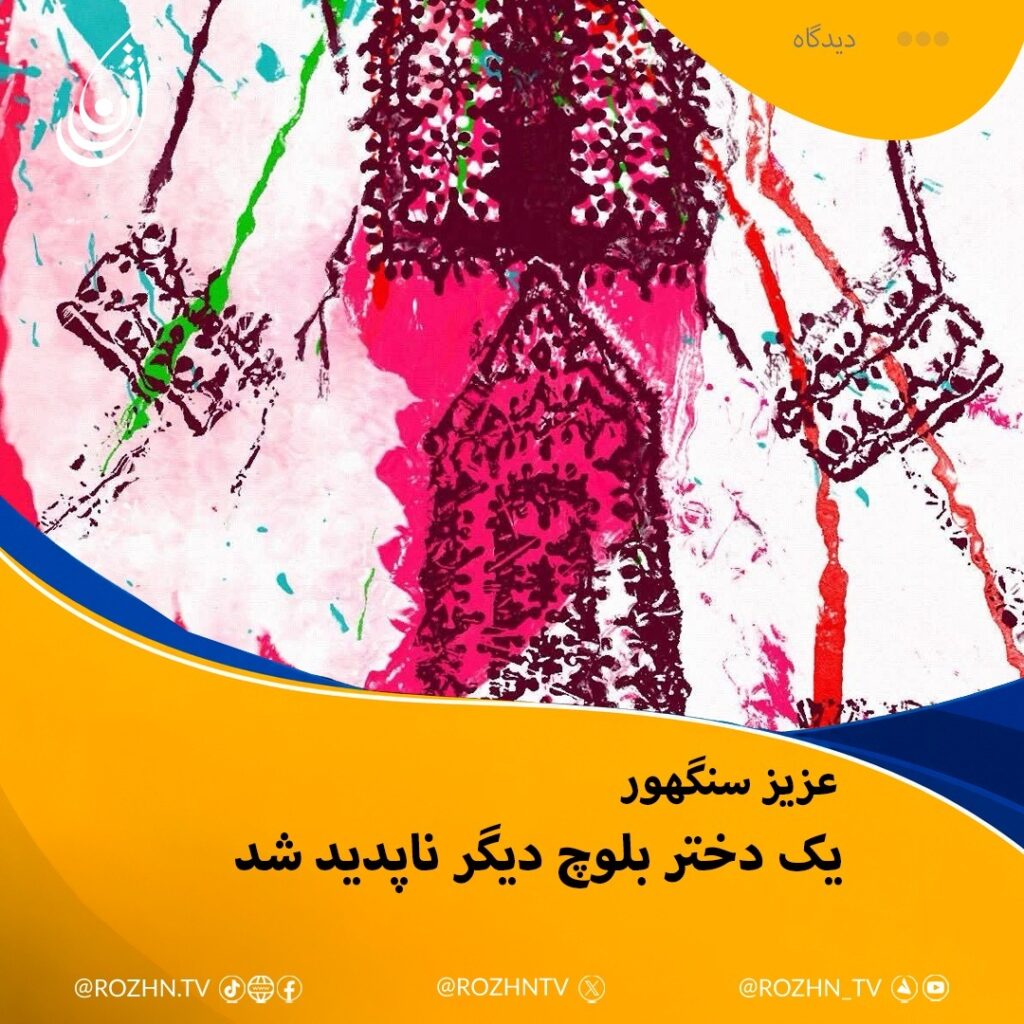
یک دختر بلوچ دیگر ناپدید شد
تلویزیون رُژن | چهارشنبه ۲۰ آبانماه ۱۴۰۵ | ۱۱ نوامبر ۲۰۲۶
یادداشت ارسالی | دیدگاه نویسنده
عزیز سنگھور
دامنه ناپدیدسازیهای قهری در بلوچستان اکنون چنان گسترش یافته است که حتی زنان، دختران کمسنوسال و افراد بیمار نیز در داخل خانههای خود احساس امنیت نمیکنند. ناپدیدسازی قهری ادعایی شائستہ کلمتی، دختر ۲۱ ساله اهل روستای پانوان از توابع بخش جیونی در گوادر، نمونهای دیگر از این وضعیت تأسفبار است؛ رویدادی که نهتنها وضعیت حقوق بشر در بلوچستان، بلکه درماندگی و رنج خانوادههای قربانیان را نیز آشکار میسازد.
به گفته اعضای خانواده، در شب میان ۸ و ۹ نوامبر ۲۰۲۶، نیروهای پاکستانی به خانهای در روستای پانوان یورش برده و شائستہ، دختر نورمحمد کلمتی، را با خود بردهاند. خانواده میگوید از آن زمان تاکنون هیچ اطلاعی از سرنوشت شائستہ در دست نیست. به گفته ظہیر نور، برادر او، نیروهای پاکستانی شب گذشته نیز بار دیگر به خانهشان یورش برده و خواهر کوچکش را بازداشت کردهاند.
نگرانکنندهترین جنبه این ماجرا وضعیت جسمانی شائستہ است. او از بیماری قلبی رنج میبرد و پیشتر نیز تحت عمل جراحی قلب قرار گرفته است. وی به درمان مستمر، دارو و مراقبتهای پزشکی نیاز دارد. جدا کردن چنین بیماری از خانواده و انتقال او به مکانی نامعلوم میتواند سلامت و حتی جان او را با خطر جدی مواجه کند.
به گفته منابع محلی و اعضای خانواده، این اقدام ناگهانی نبوده است، بلکه یک روز پیش از آن نیز همین خانه مورد یورش قرار گرفته بود. در جریان یورش نخست، نیروهای حاضر اعضای خانواده را مورد ضربوشتم قرار داده و تلاش کرده بودند شائستہ را با خود ببرند، اما با مداخله اعضای خانواده موفق به این کار نشدند. در نوبت بعد، نیروهایی با تعداد بیشتر به خانه بازگشتند و توانستند شائستہ را بازداشت کنند.
این خانواده پیش از این نیز با فاجعهای بزرگ روبهرو شده بود. علی اصغر کلمتی، برادر کمسنوسال شائستہ، نیز در تاریخ ۱۶ آوریل ۲۰۲۶، پس از بازداشت با شیوهای که خانواده آن را شبیه به آدمربایی توصیف میکند، ناپدید شده است. اکنون ناپدید شدن دو فرزند یک خانواده، پدر و مادر و دیگر اعضای آن را با رنج و فشار روانی شدیدی مواجه کرده است. از یک سو هیچ خبری از پسر کمسنوسال خانواده نیست و از سوی دیگر دختر بیمارشان نیز ناپدید شده است.
وضعیت پانوان از این هم نگرانکنندهتر است. به گفته منابع محلی، این خانواده تنها قربانی چنین شرایطی نیست و دهها خانواده دیگر در این روستا نیز با وضعیت مشابهی روبهرو هستند. خانههای آنان تخریب شده و اعضای خانوادهها بهطور مداوم با یورش به منازل، بازداشتهایی با ماهیت آدمربایی و ناپدیدسازیهای قهری مواجهاند. این شرایط بسیاری از ساکنان را مجبور به ترک خانههای آبا و اجدادی خود کرده است. شمار زیادی از خانوادهها به مناطق دیگر کوچ کرده و ناچارند دور از خانه و کاشانه خود، زندگیای شبیه به آوارگان را تجربه کنند.
در هر جامعهای، خانه آخرین پناهگاه انسان به شمار میرود. اما وقتی خانه نیز در معرض یورش قرار میگیرد، کودکان را با خود میبرند، زنان بازداشت میشوند و خانههای مردم تخریب میشوند، دیگر چه پناهگاهی برای این خانوادهها باقی میماند؟ شرایطی که مردم پانوان با آن روبهرو هستند، پرسشهای جدی درباره مفهوم مجازات جمعی و پیامدهای آن مطرح میکند.
فاجعه ناپدیدسازیهای قهری در بلوچستان دیگر صرفاً به فهرست افراد ناپدیدشده محدود نیست. پیامدهای آن به خانهها، خانوادهها، کودکان، زنان و حتی کل جوامع محلی گسترش یافته است. خانههای ویرانشده و خانوادههای ازهمپاشیده در پانوان، تصویری دردناک از این بحران هستند.
پرسش تنها این نیست که شائستہ کجاست؟ پرسش مهمتر این است که چه کسی از قلب بیمار او مراقبت میکند و چه کسی مسئول تأمین دارو و درمان اوست؟ خانواده او تا چه زمانی باید در انتظار بازگشت عزیزانش بماند؟
ENAnother Baloch Girl DisappearsRead in English
Rozhn TV | Wednesday, November 11, 2026
Submitted note | Author’s viewpoint – Aziz Sanghur
The scope of enforced disappearances in Balochistan has now grown so wide that even women, young girls and the sick no longer feel safe inside their own homes. The alleged enforced disappearance of Shaista Kalmati, a 21-year-old girl from the village of Panwan in the Jiwani sub-district of Gwadar, is yet another instance of this grim pattern — one that lays bare not only the state of human rights in Balochistan, but also the helplessness and suffering of victims’ families.
According to family members, on the night between November 8 and 9, 2026, Pakistani forces raided a house in the village of Panwan and took away Shaista, the daughter of Nur Muhammad Kalmati. The family says that since then, nothing has been heard of Shaista’s fate. According to her brother, Zaheer Noor, Pakistani forces raided their home again just last night and detained his younger sister.
The most alarming aspect of this case is Shaista’s physical condition. She suffers from heart disease and has previously undergone heart surgery. She requires ongoing treatment, medication and medical care. Separating a patient in her condition from her family and taking her to an unknown location could put her health, and even her life, at serious risk.
According to local sources and family members, this was not a sudden move: the same house had been raided a day earlier as well. During that first raid, the forces present beat family members and tried to take Shaista away, but family members intervened and prevented it. The next time, a larger contingent of forces returned to the house and succeeded in detaining Shaista.
This family had already faced a major tragedy before this. Shaista’s young brother, Ali Asghar Kalmati, disappeared on April 16, 2026, after being detained in a manner the family describes as resembling an abduction. Now the disappearance of two children from the same family has left the parents and other relatives under severe suffering and psychological strain: on one hand there is no word of their young son, and on the other their sick daughter has also disappeared.
The situation in Panwan is even more alarming than this single case. Local sources say this family is not the only one facing such conditions — dozens of other families in the village face a similar plight. Their homes have been destroyed, and family members are constantly subjected to house raids, abduction-like detentions and enforced disappearances. These conditions have forced many residents to leave their ancestral homes. A large number of families have migrated to other areas and are forced to live like displaced people, far from their homes and hearths.
In any society, the home is considered a person’s last refuge. But when homes themselves are subjected to raids, children are taken away, women are detained and people’s houses are destroyed, what refuge is left for these families? The conditions facing the people of Panwan raise serious questions about the meaning of collective punishment and its consequences.
The tragedy of enforced disappearances in Balochistan is no longer confined merely to a list of the disappeared. Its consequences have spread to homes, families, children, women and even entire local communities. The ruined houses and shattered families of Panwan are a painful picture of this crisis.
The question is not only where Shaista is. The more important question is: who is caring for her ailing heart, and who is responsible for providing her medication and treatment? How much longer must her family wait for the return of their loved ones?