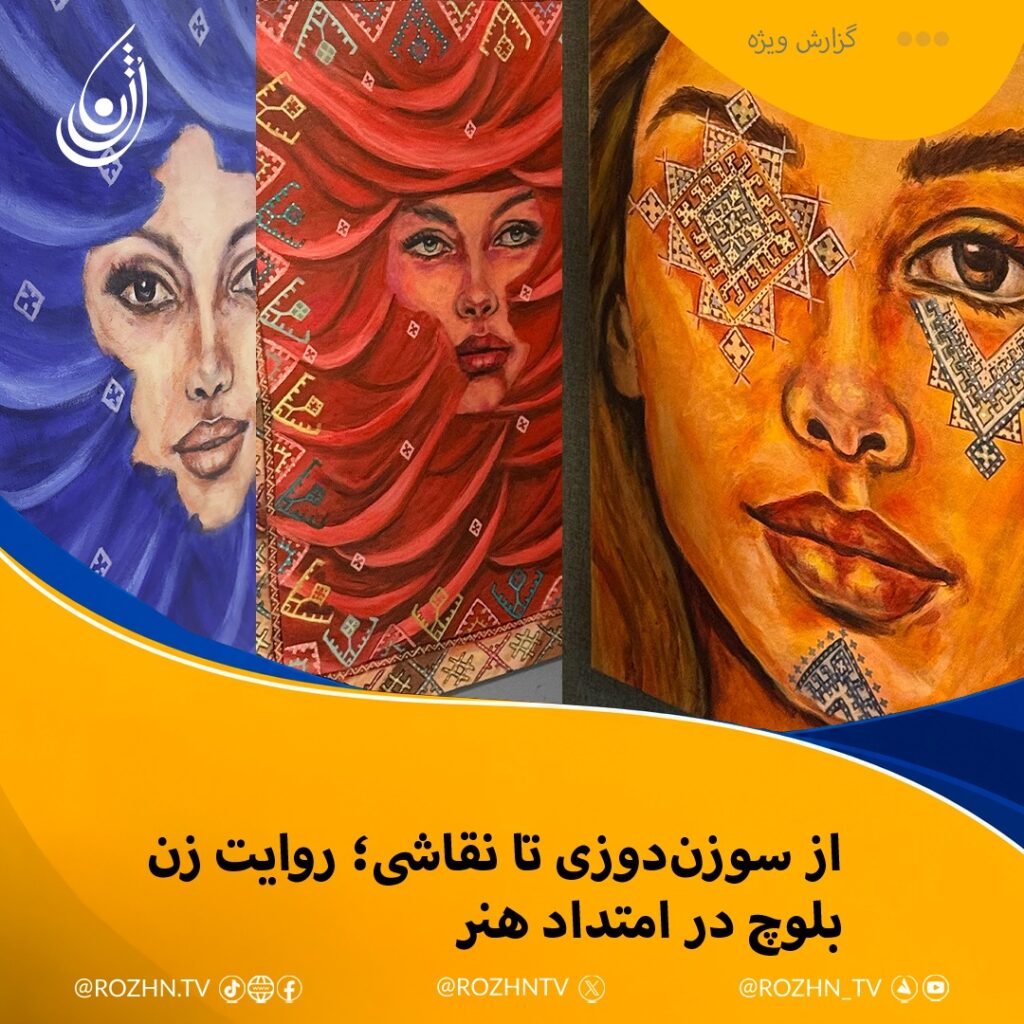
از سوزندوزی تا نقاشی؛ روایت زن بلوچ در امتداد هنر
تلویزیون رُژن | دوشنبه ۲۷ مهرماه ۱۴۰۵ | ۱۹ اکتبر ۲۰۲۶
نمایشگاه آثار مهسا مبارکی در خانه فرهنگ اوپسالا تنها فرصتی برای دیدن نقاشی و مجسمه نیست، بلکه یادآور جایگاهی است که زنان بلوچ در حفظ و شکلدادن فرهنگ و هویت جامعه خود داشتهاند
زن بلوچ برای نسلها هنر را با زندگی روزمره درآمیخته است از سوزندوزیهایی که نقش و رنگ بلوچستان را بر لباسها حفظ کردهاند تا قصهها، ترانهها، صنایع دستی و امروز نقاشی و هنرهای معاصر
هنر برای بسیاری از زنان بلوچ تنها زیبایی نبوده، بلکه راهی برای حفظ خاطره، هویت و تجربه زندگی بوده است
زنانی که در سکوت خانهها و روستاها، با دستهای خود بخشی از فرهنگ بلوچستان را نسل به نسل منتقل کردهاند
امروز همان روحیه را میتوان در آثار نسل تازهای از زنان هنرمند دید
زنانی که میراث گذشته را با زبان امروز پیوند میزنند و تجربه، احساس، رنج، امید و نگاه خود به جهان را بر بوم و در قالب هنر بیان میکنند
آثار این هنرمند بلوچ نیز در امتداد همین مسیر قرار میگیرد مسیری که از هنر زنان پیشین آغاز شده و امروز در گالریها و فضاهای فرهنگی خارج از بلوچستان نیز دیده میشود
زنان بلوچ تنها حافظان بخشی از فرهنگ بلوچستان نبودهاند، بلکه در شکلدادن به آن نقش داشتهاند
از نقشهای ظریف سوزندوزی تا آثار هنری امروز، رد پای زن بلوچ را میتوان در رنگ، فرم، صبر، خلاقیت و جسارتی دید که طی نسلها همراه او بوده است
نمایش این آثار در اوپسالا فرصتی است تا مخاطبان با چهرهای دیگر از بلوچستان آشنا شوند بلوچستانی که در کنار دشواریها، سرشار از هنر، خلاقیت و زنانی است که فرهنگ خود را با خود حمل کردهاند و آن را به نسلهای بعد رساندهاند
هنرمند: مهسا مبارکی
خانه فرهنگ اوپسالا، سوئدا
از نخ و سوزن تا رنگ و بوم، هنر زن بلوچ همچنان روایت خود را ادامه میدهد
ENFrom Needlework to Painting: Baloch Women’s Story Carried Forward Through ArtRead in English
Rozhn TV | Monday, October 19, 2026
The exhibition of Mahsa Mobaraki’s work at the Uppsala House of Culture is more than a chance to see paintings and sculpture; it is a reminder of the role Baloch women have played in preserving and shaping their community’s culture and identity.
For generations, Baloch women have woven art into everyday life: from the needlework that has kept Balochistan’s patterns and colors alive on clothing, to stories, songs and handicrafts, and today painting and contemporary art.
For many Baloch women, art has never been only about beauty; it has been a way of preserving memory, identity and lived experience. These are women who, in the quiet of homes and villages, have passed part of Balochistan’s culture down from one generation to the next with their own hands.
Today the same spirit can be seen in the work of a new generation of women artists, women who connect the heritage of the past with the language of today and express their experience, feelings, pain, hope and view of the world on canvas and through art.
The work of this Baloch artist follows that same path, one that began with the art of earlier generations of women and can now be seen in galleries and cultural spaces beyond Balochistan as well.
Baloch women have not merely been custodians of part of Balochistan’s culture; they have helped shape it.
From the delicate patterns of needlework to today’s works of art, the mark of Baloch women can be seen in the color, form, patience, creativity and courage that have stayed with them through the generations.
Showing these works in Uppsala gives audiences a chance to discover another face of Balochistan: a Balochistan that, alongside its hardships, is rich in art, in creativity, and in women who have carried their culture with them and handed it down to the generations that followed.
Artist: Mahsa Mobaraki
Uppsala House of Culture, Sweden
From thread and needle to paint and canvas, the art of Baloch women goes on telling its story.