زخمهای مرزها و تراژدی هویت
تلویزیون رُژن | چهارشنبه ۲۲ مرداد ۱۴۰۴ خورشیدی / ۱۳ اوت ۲۰۲۵ میلادی
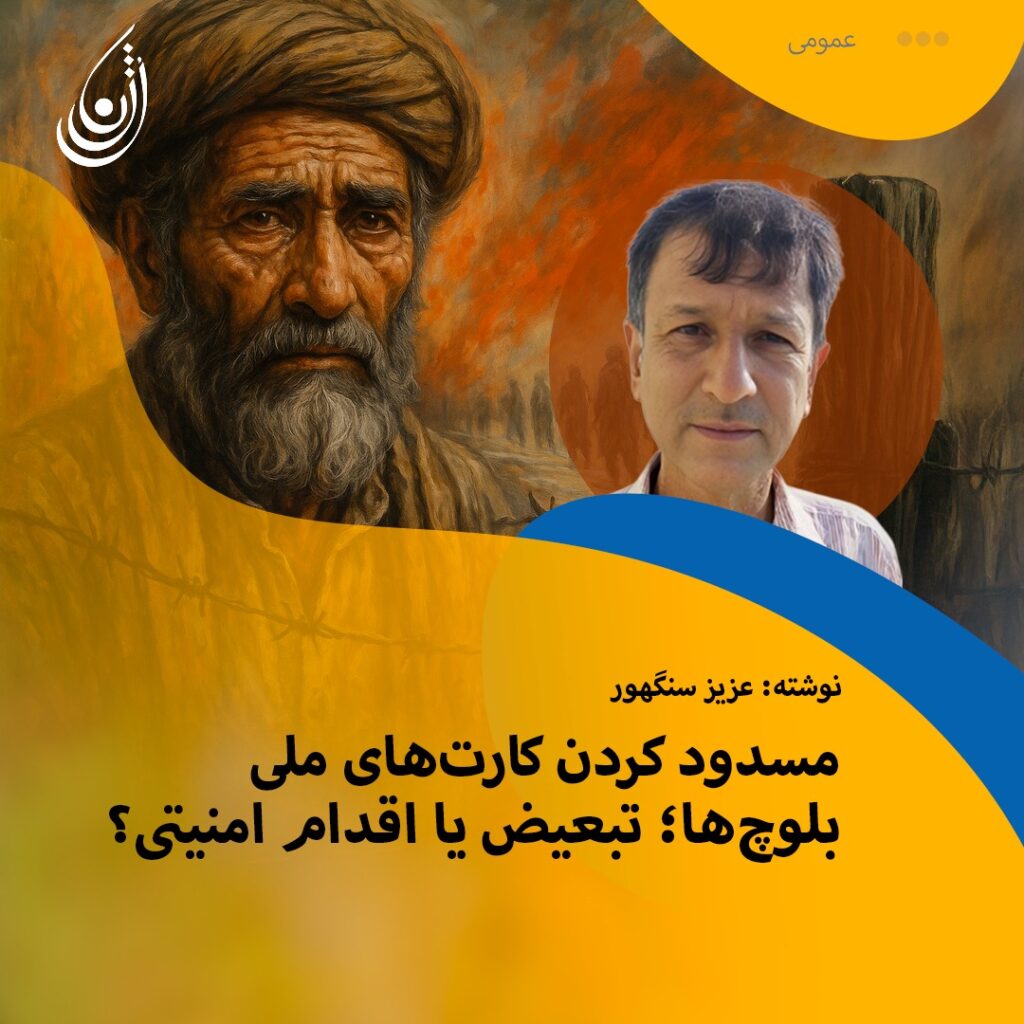
نوشته: عزیز سنگھور
تاریخ بلوچستان سرشار از فصلهایی است آمیخته با قربانی، مبارزه و درماندگی؛ فصلهایی که نادیده گرفتن آنها نه تنها بیانصافی تاریخی است، بلکه به پیچیدهتر شدن بحرانهای کنونی نیز میانجامد. امروز موج تازهای بر زخمهای کهنه مردم بلوچ نمک پاشیده است: مسدود کردن کارتهای ملی بلوچهایی که دارای تابعیت دوگانه و اهل بلوچستان غربی (ایران) و بلوچستان شرقی (پاکستان) هستند.
این اقدام در ظاهر به عنوان یک روند اداری معرفی میشود، اما در واقع به شکلی هدفمند، مردم بلوچ را نشانه رفته است. اداره ملی ثبت احوال و پایگاه دادههای پاکستان (نادرا) صدها کارت ملی شهروندان بلوچ را مسدود کرده است. نکته نگرانکننده اینجاست که این قانون شامل پاکستانیهای دارای تابعیت دوگانه در آمریکا، بریتانیا یا اروپا نمیشود. پس این پرسش پیش میآید که آیا این واقعاً مسئلهای مرتبط با امنیت ملی است یا بخشی دیگر از تبعیض ساختاری علیه بلوچها؟
برای درک عمق این بحران باید به گذشته نگاه کرد. تقسیم بلوچستان به غربی و شرقی نه بر پایه رضایت مردم و نه بر اساس منافع اجتماعی و اقتصادی بود، بلکه نتیجه سیاستهای جغرافیایی استعمار بریتانیا بود.
در ۱۳ نوامبر ۱۸۳۹ نیروهای بریتانیا به بلوچستان مستقل حمله کردند و پس از آن، در چارچوب طرحهای استعماری، بلوچستان را به سه بخش تقسیم کردند. در سال ۱۸۷۱ «خط گلدسمید» ترسیم شد که بر اساس آن، بخش غربی بلوچستان به ایران واگذار گردید. سپس در سال ۱۸۹۳ «خط دیورند» ایجاد شد که بخش شمالی بلوچستان را به افغانستان ملحق کرد.
این خطوط بر روی کاغذ کشیده شدند، اما آثارشان تا امروز همچون تیغی بر پیکر زمین و جان مردم باقی مانده است. بلوچها نه در این تقسیم نظر دادهاند و نه راهحلی برای پیامدهای آن دریافت کردهاند.
از زمان ترسیم خط گلدسمید تا کنون، هزاران بلوچ تنها به این جرم که برای بقا مواد غذایی یا سوخت حمل میکردند، جان خود را از دست دادهاند. این دادوستد بخشی از سنت صدها ساله منطقه و ستون فقرات اقتصاد محلی بود.
اما اکنون همین تجارت با برچسب «قاچاق سوخت ایران» یا «سرقت» جرمانگاری شده است. برای مردم مناطق مرزی، این دادوستد نه انتخاب، بلکه مسئله مرگ و زندگی است. مسدود کردن این راه معاش به معنای بریدن نان شب آنان است، و وقتی شکم گرسنه بماند، واکنش آن دیگر در کنترل کسی نیست.
مسدود شدن کارت ملی صرفاً یک مشکل اداری نیست، بلکه انکار موجودیت شهروند، جایگاه قانونی و حقوق روزمره اوست. وقتی یک بلوچ از هویت ملیاش محروم میشود، این تنها گرفتن یک برگه کاغذ نیست، بلکه حذف هویت اجتماعی، اقتصادی و سیاسی اوست.
مردم بلوچ پیشتر هم در سرزمین خود احساس بیگانگی میکردند، اما این سیاست، این احساس را عمیقتر میکند. همزمان قوانین برای غیر بلوچهای دارای تابعیت دوگانه با نرمی یا تعلیق اجرا میشود. این استاندارد دوگانه بیاعتمادی را افزایش داده و شکاف تازهای ایجاد میکند.
تاریخ بشری نشان داده است که وقتی ظلم به اوج برسد و دولت از عدالت و برابری برای شهروندانش سرباز زند، شورش پدید میآید. انسانی که با گرسنگی، محرومیت و تحقیر روبهروست، تنها دو راه پیش رو دارد: خودکشی از سر ناامیدی یا برخاستن برای مقاومت.
تاریخ شورش در بلوچستان تازه نیست. در گذشته نیز سیاستهای نادرست، استفاده بیجا از زور و بیتوجهی به نظر مردم، آتش مقاومت را شعلهور کردهاند. اگر این سیاستها تغییر نکنند، وضعیت کنونی نیز میتواند بار دیگر به شدت شعلهور شود.
خطوط خونین کشیده شده بر خاک بلوچستان تنها جغرافیا را نمیشکافند، بلکه دلها و ذهنها را نیز زخمی میکنند. سیاستهایی چون مسدود کردن کارتهای ملی، این زخم را عمیقتر میسازند. اکنون زمان آن فرا رسیده که دولت، مردم بلوچ را نه به چشم «مشکل امنیتی»، بلکه به عنوان یک ملت زنده با رویاها، حقوق و عزت نفس ببیند.
اگر این سیاستها تغییر نکنند، آینده چیزی جز دوری بیشتر، بیگانگی و مقاومت نخواهد داشت، و این خطوط خونین به فصلهای سیاهتری از تاریخ بدل خواهند شد.
ENThe Wounds of Borders and the Tragedy of IdentityRead in English
Rozhn TV | Wednesday, August 13, 2025
By: Aziz Sanghur
The history of Balochistan is full of chapters mixed with sacrifice, struggle and helplessness; chapters whose neglect is not only a historical injustice but also deepens the present crises. Today a new wave has rubbed salt into the old wounds of the Baloch people: the blocking of the national ID cards of Baloch dual nationals from Western Balochistan (Iran) and Eastern Balochistan (Pakistan).
On the surface this measure is presented as an administrative procedure, but in reality it targets the Baloch people in a deliberate manner. Pakistan’s National Database and Registration Authority (NADRA) has blocked hundreds of national ID cards belonging to Baloch citizens. The troubling point is that this rule does not apply to Pakistanis with dual nationality in the United States, Britain or Europe. This raises the question of whether this is truly a national security matter or another part of structural discrimination against the Baloch.
To grasp the depth of this crisis, one must look to the past. The division of Balochistan into western and eastern parts was based neither on the consent of the people nor on their social and economic interests; it was the result of British colonial geopolitical policies.
On November 13, 1839, British forces attacked independent Balochistan and then, under colonial plans, divided it into three parts. In 1871 the “Goldsmid Line” was drawn, under which the western part of Balochistan was ceded to Iran. Then in 1893 the “Durand Line” was created, attaching the northern part of Balochistan to Afghanistan.
These lines were drawn on paper, but their effects remain to this day like a blade across the land and the lives of the people. The Baloch were neither consulted on this division nor offered any remedy for its consequences.
Since the Goldsmid Line was drawn, thousands of Baloch have lost their lives simply for carrying food or fuel in order to survive. This trade was part of the region’s centuries-old tradition and the backbone of the local economy.
But now this same trade has been criminalized under labels such as “Iranian fuel smuggling” or “theft.” For the people of the border areas, this trade is not a choice but a matter of life and death. Blocking this livelihood means cutting off their evening bread, and when a hungry stomach is left unfed, its reaction is no longer in anyone’s control.
The blocking of a national ID card is not merely an administrative problem; it is a denial of a citizen’s existence, legal standing and everyday rights. When a Baloch is deprived of his national identity, it is not just the taking of a piece of paper but the erasure of his social, economic and political identity.
The Baloch people already felt like strangers in their own land, but this policy deepens that feeling. At the same time, the rules are applied leniently, or suspended, for non-Baloch dual nationals. This double standard increases mistrust and creates a new rift.
Human history has shown that when oppression reaches its peak and the state refuses justice and equality to its citizens, rebellion emerges. A person facing hunger, deprivation and humiliation has only two paths ahead: suicide out of despair, or rising up in resistance.
The history of rebellion in Balochistan is not new. In the past too, wrong policies, the misuse of force and disregard for the will of the people have fanned the flames of resistance. If these policies do not change, the present situation too could flare up once again with great intensity.
The bloody lines drawn on the soil of Balochistan do not merely split geography; they also wound hearts and minds. Policies such as blocking national ID cards make this wound deeper. The time has now come for the state to see the Baloch people not as a “security problem” but as a living nation with dreams, rights and self-respect.
If these policies do not change, the future will hold nothing but greater distance, alienation and resistance, and these bloody lines will turn into darker chapters of history.