
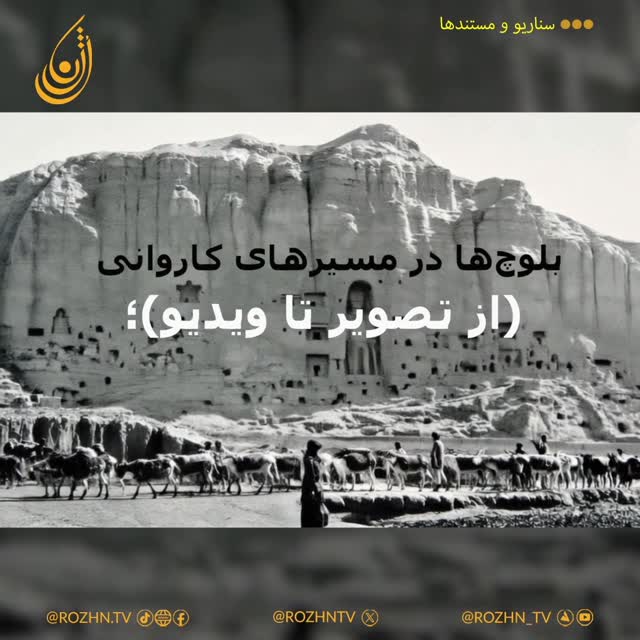
تاجران بلوچ و بوداهای بامیان – تصویری از سال ۱۹۳۳
تلویزیون روژن | دوشنبه ۳۱ شهریور ۱۴۰۴ خورشیدی / ۲۲ سپتامبر ۲۰۲۵ میلادی
عکسی سیاهوسفید از سال ۱۹۳۳ با عنوان «عبور تاجران بلوچ در کنار بودای کوچک بامیان» گروهی از تاجران بلوچ را در حال گذر از کنار مجسمههای بودا در بامیان افغانستان نشان میدهد
لحظهای ثبتشده در بامیان
این عکس حضور تاجران بلوچ را در مسیرهای تجاری منطقه ثبت کرده است بامیان در آن زمان بخشی از راههای کاروانی در آسیای میانه بود
بوداهای بامیان
مجسمههای بودا در بامیان در سده ششم میلادی در دل کوه تراشیده شدند و قرنها بهعنوان یکی از مهمترین آثار تاریخی و مذهبی افغانستان شناخته میشدند این مجسمهها در مارس سال ۲۰۰۱ تخریب شدند
رویکرد تلویزیون روژن
در تلویزیون روژن ما تلاش میکنیم با بازخوانی تصاویر تاریخی و تبدیل آنها به روایتهای تصویری، گذشته را زنده کنیم این کار بخشی از پروژهای است که هدف آن پیوند زدن عکسهای قدیمی با روایتهای تصویری و مستندهای تلویزیونی است
ارزش تاریخی تصویر
این عکس امروز بهعنوان سندی تصویری از گذشته اهمیت دارد زیرا هم مسیرهای تجاری و هم یادمانهای باستانی افغانستان را نشان میدهد
ENBaloch Traders and the Buddhas of Bamiyan: A Photograph from 1933Read in English
Rozhn TV | Monday, September 22, 2025
A black-and-white photograph from 1933, titled “Baloch Traders Passing by the Small Buddha of Bamiyan,” shows a group of Baloch traders passing the Buddha statues of Bamiyan in Afghanistan.
A Moment Captured in Bamiyan
The photograph records the presence of Baloch traders on the region’s trade routes. At that time Bamiyan was part of the caravan routes of Central Asia.
The Buddhas of Bamiyan
The Buddha statues of Bamiyan were carved into the mountainside in the sixth century CE and for centuries were known as one of Afghanistan’s most important historical and religious monuments. The statues were destroyed in March 2001.
Rozhn TV’s Approach
At Rozhn TV we try to bring the past to life by revisiting historical images and turning them into visual narratives. This work is part of a project that aims to link old photographs with visual narratives and television documentaries.
The Historical Value of the Image
Today the photograph is important as a visual record of the past, because it shows both the trade routes and the ancient monuments of Afghanistan.



