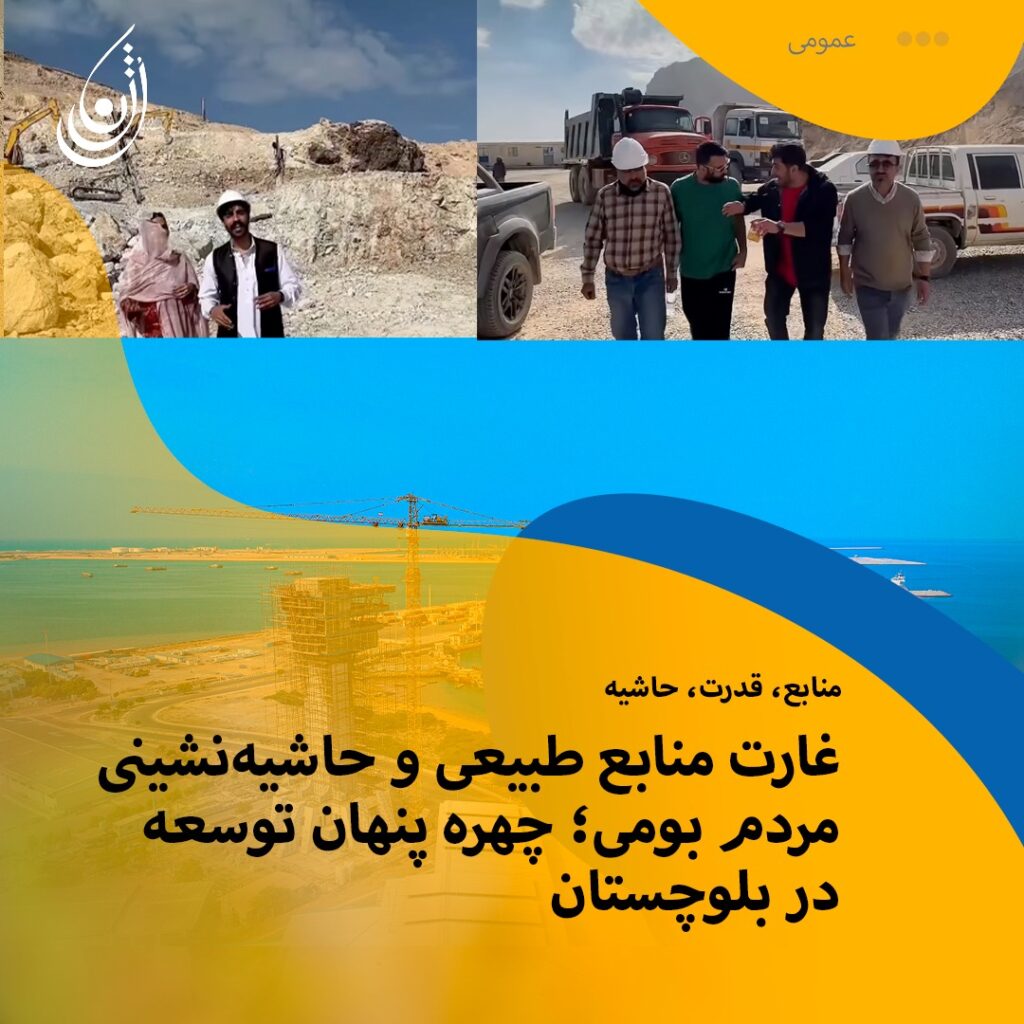
غارت منابع طبیعی و حاشیهنشینی مردم بومی؛ چهره پنهان توسعه در بلوچستان
گزارش تلویزیون رُژن | یکشنبه ۴ آبان ۱۴۰۴ خورشیدی / ۲۶ اکتبر ۲۰۲۵ میلادی
بلوچستان سرزمینی غنی از منابع طبیعی است؛ سرزمینی که در دل خود طلا، گاز، نفت، مس، و خاکهای حاصلخیز دارد، اما سهم مردمش از این ثروتها، جز فقر و مهاجرت چیزی نبوده است. در حالیکه دولتها و شبکههای اقتصادی وابسته به نهادهای قدرت از این منابع بهرهبرداری میکنند، مردم بومی بلوچستان در سایهی توسعهای نابرابر، روزبهروز بیشتر از خانه و زمین خود رانده میشوند.
در سالهای اخیر، بهرهبرداری بیرویه از معادن و پروژههای صنعتی در نقاط مختلف استان سیستان و بلوچستان ـ از معدن طلای تفتان تا میدانهای گازی چابهار و مناطق حاصلخیز دشتیاری و سرباز ـ نشان داده است که تصمیمگیری درباره منابع این سرزمین، بدون حضور و مشارکت واقعی مردم بومی انجام میشود. زمینهایی که نسلها در اختیار خانوادههای بلوچ بوده، امروز به شرکتها و پیمانکارانی واگذار میشود که اغلب هیچ پیوندی با این منطقه ندارند.
فعالان محلی میگویند که در پشت بسیاری از این پروژهها، شبکههای پیچیدهای از منافع اقتصادی و نهادی وجود دارد که در هماهنگی با برخی مقامات دولتی عمل میکنند. نتیجه، شکلگیری ساختارهایی است که نهتنها مردم را از منابع طبیعیشان دور میکند، بلکه آنان را به حاشیه میراند و زمینه مهاجرت و فقر گستردهتری را فراهم میآورد.
در این میان، حتی حوزههایی مانند کشاورزی و باغداری که زمانی مایهی معیشت هزاران خانواده بلوچ بود، به دلیل واگذاری زمینها، کمبود آب، و تغییرات اقلیمی ناشی از پروژههای صنعتی آسیب جدی دیده است. مردمی که روزگاری خود تولیدکنندهی ثروت بودند، اکنون به نیروی کار ارزان یا حاشیهنشین در شهرهای اطراف تبدیل شدهاند.
مسأله فقط طلا یا گاز نیست؛ بلکه الگوی تکرارشوندهای از تصمیمگیری بدون حضور مردم بومی است. تا زمانی که بلوچها در مدیریت منابع سرزمین خود نقشی نداشته باشند، هر پروژهای ـ هرچند با نام توسعه ـ در نهایت به سود غیر بومیان و شبکههای اقتصادی قدرت خواهد بود.
بهگفتهٔ منابع محلی و گزارشهای میدانی، تداوم چنین روندی نهتنها اکوسیستم بلوچستان را در معرض نابودی قرار میدهد، بلکه بحرانهای اجتماعی و بیاعتمادی عمیقتری را به همراه خواهد داشت. توسعهی واقعی، زمانی معنا پیدا میکند که عدالت محیطزیستی، شفافیت اقتصادی، و مشارکت مردم محلی در تصمیمگیریها تضمین شود.
بلوچستان برای رشد و شکوفایی نیازی به تبلیغات ندارد؛ آنچه نیاز دارد، احترام به مردمش، بازگرداندن حق تصمیمگیری درباره منابعشان، و پایان دادن به سیاستهای تبعیضآمیز و انحصاری است.
ENPlunder of Natural Resources and Marginalization of Indigenous People: The Hidden Face of Development in BalochistanRead in English
Rozhn TV | Sunday, October 26, 2025
Balochistan is a land rich in natural resources; a land that holds gold, gas, oil, copper and fertile soil, yet its people’s share of this wealth has been nothing but poverty and migration. While governments and economic networks tied to centers of power exploit these resources, the indigenous people of Balochistan, in the shadow of an unequal development, are driven more and more every day from their homes and land.
In recent years, the reckless exploitation of mines and industrial projects in different parts of Sistan and Baluchestan province — from the Taftan gold mine to the Chabahar gas fields and the fertile areas of Dashtiari and Sarbaz — has shown that decisions about this land’s resources are made without the presence and real participation of the indigenous people. Lands that Baloch families held for generations are today being handed over to companies and contractors that often have no connection to this region.
Local activists say that behind many of these projects lie complex networks of economic and institutional interests that operate in coordination with some government officials. The result is the formation of structures that not only distance people from their natural resources but also push them to the margins and lay the ground for wider migration and poverty.
Meanwhile, even sectors such as agriculture and orchard farming, which were once the livelihood of thousands of Baloch families, have been seriously damaged by the handover of land, water shortages and climate changes caused by industrial projects. People who were once producers of wealth have now become cheap labor or marginalized residents of the surrounding cities.
The issue is not just gold or gas; it is a recurring pattern of decision-making without the presence of indigenous people. As long as the Baloch have no role in managing the resources of their own land, every project — even under the name of development — will ultimately benefit non-natives and the economic networks of power.
According to local sources and field reports, the continuation of this trend not only exposes Balochistan’s ecosystem to destruction but will also bring social crises and deeper distrust. Real development only has meaning when environmental justice, economic transparency and the participation of local people in decision-making are guaranteed.
Balochistan does not need advertising to grow and flourish; what it needs is respect for its people, the restoration of their right to decide about their resources, and an end to discriminatory and monopolistic policies.