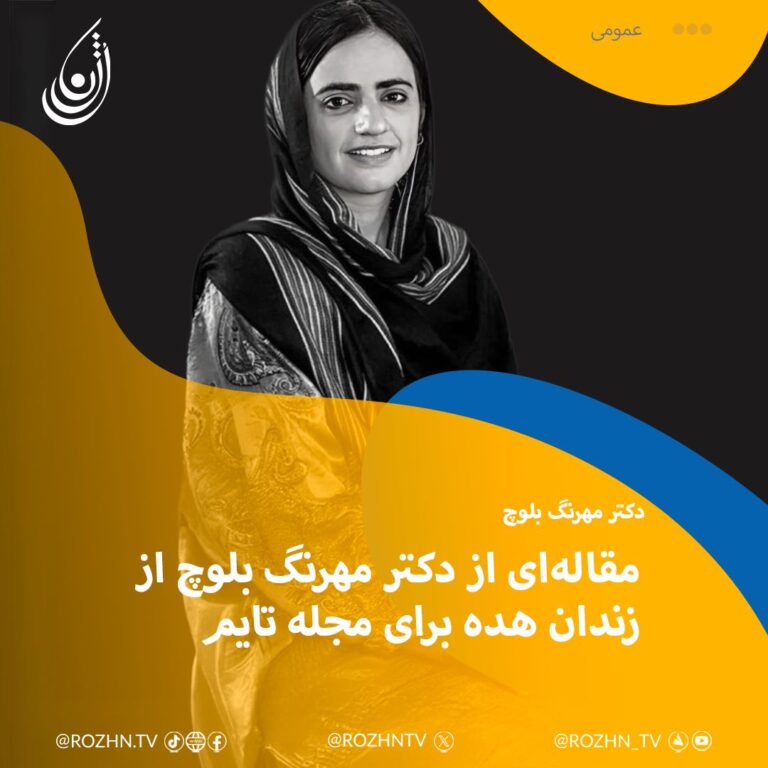
مقاله ای از دکتر مهرنگ بلوچ از زندان هده برای مجله تایم
· بلوچستان
نمایش عکس (≈ ۶۰ کیلوبایت)
این زندان فقط یک ساختمان نیست، بلکه بار خاطرات پدرم است
نوشته: دکتر مهرنگ بلوچ — مطلبی ویژه از زندان برای مجله تایم
این مقاله توسط فعال برجسته بلوچ و رهبر کمیته همبستگی بلوچ، دکتر مهرنگ بلوچ، در دوران حبس خود در زندان هُدّه کویته برای نشریه معتبر جهانی "تایم" نوشته شده است. این نوشته بازتابی پرقدرت از استقامت و ارادهی اوست که نه تنها مبارزات مردم بلوچ را روشن میسازد، بلکه دیدگاه عمیقی نسبت به نقض حقوق بشر و سنگینی زندانی شدن سیاسی در پاکستان ارائه میدهد.
دکتر مهرنگ بلوچ در مقالهای که در تاریخ ۱۰ ژوئن توسط تایم منتشر شد، نوشت:
«بیش از دو ماه است که در زندان هده کویته زندانی هستم. همانجایی که پدرم تقریباً دو دهه پیش زندانی شده بود — تنها "جرم" او این بود که برای حقوق مردم بلوچستان سخن گفت.»
در این مقاله، مهرنگ شرح میدهد که پس از بازداشت، نیروهای امنیتی دولتی از همه ابزارها برای شکستن ارادهاش استفاده کردند. به او پیشنهاد شد که اگر سکوت کند و فعالیتهای سیاسیاش را متوقف نماید، آزاد خواهد شد. اما او این پیشنهاد را رد کرد.
«تا به امروز»، مینویسد، «دولت نتوانسته هیچ مدرکی علیه من ارائه کند — حتی یک مدرک که نشان دهد مرتکب خشونت شدهام یا قانون را شکستهام. تنها چیزی که به آن استناد میکنند، یک کنفرانس خبری است که چند روز قبل از بازداشت برگزار کردم.»
به گفته بلوچ، این کنفرانس خبری پس از آن برگزار شد که افراد مسلح یک قطار در بلوچستان را ربوده و نزدیک به ۳۰۰ مسافر را برای چندین ساعت گروگان گرفتند. یک گروه مسلح بعداً مسئولیت این حمله را بر عهده گرفت.
«هدف من حمایت از مهاجمان نبود. جنبش ما، کمیته همبستگی بلوچ، همواره خشونت را محکوم کرده است. تنها خواستم تفاوتی روشن میان کسانی که سلاح به دست میگیرند و کسانی که بهصورت مسالمتآمیز اعتراض میکنند، بیان کنم.»
او تأکید میکند که این تمایز حیاتی است — اما دولت عمداً آن را نادیده میگیرد. در پاکستان، هر کسی که برای حقوق بلوچها سخن بگوید، "تروریست" خطاب میشود و اغلب ناپدید میگردد. اگر هم دوباره پیدا شود، معمولاً جسد است. پس از حادثه قطار، بیش از ۲۴ جسد به بیمارستان مدنی کویته آورده شد؛ ۱۳ جسد بدون شناسایی شبانه دفن شدند.
«گروه مسلحی که مسئولیت حمله را پذیرفته بود، هویت و عکسهای ۱۲ نفر از اعضای کشتهشدهاش را منتشر کرد. پس چرا اجساد دیگر هرگز شناسایی نشدند؟ ما گمان داشتیم که آنها جزو ناپدیدشدگان اجباری هستند.»
بلوچ ادامه میدهد:
«ما فقط خواستار آزمایش DNA اجساد ناشناس بودیم — چون خانوادههای ناپدیدشدگان میترسیدند عزیزانشان در میان آنها باشند. و فقط به خاطر همین درخواست، به خاطر جرات تمایز قائل شدن بین اعتراض مسالمتآمیز و مقاومت مسلحانه، زندانی شدم.»
او اشاره میکند که پیش از بازداشت نیز توجه بینالمللی به فعالیتهایش جلب شده بود. در ماه می ۲۰۲۴، توسط PEN نروژ و مجمع جهانی آزادی بیان به نروژ دعوت شد. در آنجا توسط افرادی وابسته به سفارت پاکستان تهدید شد — اما امنیت نروژ مداخله کرد.
«وقتی به پاکستان برگشتم، به خیانت متهم شدم — انگار نه از یک همایش حقوق بشری، بلکه از یک اردوگاه تروریستی بازگشتهام.»
در ماه اکتبر، انتخاب او در لیست "تایم ۱۰۰ نکست" موجب خشم بیشتر دولت شد. او را «عامل غرب»، «مالالای دوم»، و «ابزار قدرتهای خارجی» نامیدند. تحت نظارت شدید قرار گرفت و در فهرست چهارم (محدودیتهای قانونی) ثبت شد.
«من یاد گرفتهام بهای واقعی مقاومت مسالمتآمیز چیست. بلوچستان منطقهای منزوی است. خبرنگارانی که درباره ظلمهای اینجا مینویسند، کشته، ربوده یا به تبعید مجبور میشوند. از سال ۲۰۰۰ تاکنون بیش از ۴۰ خبرنگار در بلوچستان کشته شدهاند. رسانههای خارجی نیز اجازه ورود ندارند.»
در چنین شرایطی، او مینویسد، رهبری یک زن در یک جنبش غیرخشونتآمیز برای دولت غیرقابل تحمل است. پس از آنکه در لیست ۱۰۰ زن تاثیرگذار بیبیسی قرار گرفت و برای جایزه صلح نوبل نامزد شد، تهدیدها علیه جانش افزایش یافت. خواهرش در ملاقات زندان به او گفت که داعش خراسان یک جزوه ۱۰۰ صفحهای به زبان اردو منتشر کرده و او را به غربگرایی متهم کرده — فقط به خاطر توجه جهانی و سفر به نروژ.
او اشاره میکند که دیگر رهبران کمیته همبستگی بلوچ نیز در زندان هستند، از جمله صبغتالله شاهجی، بیبرگ زهری (که ناتوانی جسمی دارد)، گلزادی، و بیبو.
«به آنها میگویم ما اولین کسانی نیستیم که به خاطر صلح، عدالت و حقوق زندانی شدهایم. از نلسون ماندلا تا نرگس محمدی، ما در مسیر آنها گام برمیداریم و از شجاعتشان نیرو میگیریم.»
بلوچ بار دیگر بر مسالمتآمیز بودن جنبششان تاکید میکند:
«ما علیه ناپدیدسازیهای اجباری، قتلهای فراقانونی، کوچ اجباری و نقض حقوق ابتدایی بشر صدا بلند میکنیم. ما صاحبان حقیقی پروژههایی مانند ریکودک و ساندک هستیم — ولی هیچ بهرهای نمیبریم. حتی گوادر، دروازه کریدور اقتصادی چین و پاکستان (CPEC)، از ما گرفته شده است. در حالیکه ۷۰ درصد مردم بلوچستان زیر خط فقر زندگی میکنند.»
او میافزاید:
«دولت ما را تروریست مینامد، اما واقعیت این است که ما صلحطلبیم. این دولت است که مسلح و قدرتمند است — با زور ما را خاموش میکند. آنچه در بلوچستان رخ میدهد، اکنون در سایر نقاط پاکستان نیز در حال تکرار است. عمران خان و حزبش هم با همین اتهامات مواجهند، آنها نیز زندانی شدهاند — آیا آنها هم تروریستاند؟»
او میپرسد:
«اگر نهادهای دولتی آنقدر توانمندند که ادعا میکنند، چرا نتوانستهاند حتی یک مدرک معتبر علیه من ارائه دهند؟ چرا نمیتوانند دادگاهی منصفانه و شفاف برگزار کنند؟ چون مسئله قانون نیست — مسئله ترس است. آنها از حقیقت میترسند.»
در پایان، با یادآوری خاطراتش مینویسد:
«این زندان فقط یک ساختمان نیست، بلکه بار خاطرات پدرم را بر دوش دارد. من با اسباببازی بزرگ نشدم، بلکه با پوسترهای پدرم که ربوده و ناپدید شده بود. وقتی بزرگ شدم، جسد گلولهخورده و شکنجهشدهاش را تحویل گرفتم. این فقط داستان من نیست — داستان هر کودک بلوچ است.»
«ما نسلی هستیم که زیر سایه سرکوب دولتی رشد کردهایم. عهد بستهایم که هیچ کودکی پس از ما، اینگونه زندگی نکند. ما میدانیم که دولت قدرتمند است — رسانه، قوه قضائیه، مجلس و قانون در دست اوست. او گروههای نیابتی و شبهنظامی اداره میکند. زندانی شدن ما بخشی از جنگ روایتهاست. ما نماد مقاومت بدون خشونت هستیم.»
و در پایان مینویسد:
«دادخواهی برای عدالت جرم نیست.
سخن گفتن علیه سرکوب، خیانت نیست.
مطالبهی حقوق، تروریسم نیست.»
“This Prison is Not Just a Building, But the Weight of My Father’s Memories”
By Dr. Mahrang Baloch — A Special Piece from Jail for Time Magazine
This article was written by renowned Baloch activist and leader of the Baloch Yakjehti Committee, Dr. Mahrang Baloch, during her imprisonment in Quetta’s Hudda Jail, for the globally recognized publication Time Magazine. The piece is a powerful reflection of her resilience and determination. It not only sheds light on the Baloch people's struggle but also offers a poignant commentary on human rights violations and the gravity of political imprisonment in Pakistan.
Published by Time Magazine on June 10, Dr. Mahrang Baloch writes:
"I have now been imprisoned in Quetta’s Hudda Jail for over two months. This is the same place where my father was imprisoned nearly two decades ago — his only 'crime' was speaking up for the rights of the people of Balochistan."
In her essay, Mahrang Baloch recounts how, following her arrest, state security agencies used every tactic to try to break her spirit. They offered her a deal: if she remained silent and ceased her political activities, she would be released. She refused.
“To this day,” she writes, “the state has failed to produce any evidence against me — not a single shred proving that I committed violence or broke the law. The only thing they point to is a press conference I held days before my arrest.”
According to Baloch, the press conference was held after armed individuals hijacked a train in Balochistan, taking nearly 300 passengers hostage for several hours. A militant group later claimed responsibility.
“My intention was never to support the attackers. Our movement, the Baloch Yakjehti Committee, has always condemned violence. I simply wanted to draw a clear distinction between those who take up arms against the state and those who protest peacefully.”
She emphasizes that this distinction is critical — but the state deliberately erases it. In Pakistan, she explains, anyone who speaks up for Baloch rights is labeled a terrorist, often forcibly disappeared. If they reappear at all, it's usually as corpses. Following the train incident, over 24 bodies were brought to Quetta Civil Hospital; 13 were buried overnight without identification.
“The militant group that claimed responsibility for the attack released the identities and photos of 12 of their members killed in the operation. So why were the other bodies never identified? We suspected they were among the many who had already been forcibly disappeared.”
Baloch continues: “All we asked for was DNA testing of the unidentified bodies — because families of missing persons feared their loved ones were among them. And for making this demand, for daring to differentiate peaceful protest from armed resistance, I was imprisoned.”
She notes that her work had already drawn international attention. In May 2024, she was invited to Norway by PEN Norway and the World Expression Forum. There, she was harassed by individuals associated with the Pakistani embassy — but Norwegian security intervened.
“Upon returning to Pakistan, I was charged with treason — as if I had returned from a terrorist camp instead of a human rights forum.”
In October, her inclusion in Time Magazine's “Time100 Next” list further provoked the state’s anger. She was labeled a “Western agent,” a “second Malala,” and accused of being a tool of foreign powers. Surveillance on her increased. She was placed on the Fourth Schedule — a list restricting travel and other liberties.
“I’ve learned what the true cost of peaceful resistance is,” she writes. “Balochistan is a region cut off from the world. Journalists who speak out about abuses here are killed, abducted, or forced into exile. Since 2000, more than 40 journalists have been killed in Balochistan, according to the Balochistan Union of Journalists. Foreign media have no access.”
In such an environment, she says, a woman leading a nonviolent movement is intolerable to the state. After being named in BBC’s 100 Women and nominated for the Nobel Peace Prize, the threats to her life escalated. Her sister informed her during a prison visit that ISIS-Khorasan had released a 100-page booklet in Urdu accusing her of being a Western agent — just because she received international recognition and traveled to Norway.
She writes that other leaders of the Baloch Yakjehti Committee are also imprisoned, including Sabghatullah Shahji, Bibarg Zehri (who is physically disabled), Gulzadi, and Bebo.
“I tell them we are not the first to be imprisoned for speaking of peace, justice, and rights. From Nelson Mandela to Narges Mohammadi, we walk in their footsteps, drawing strength from their courage.”
Baloch reiterates that their movement is peaceful.
“We raise our voices against enforced disappearances, extrajudicial killings, forced displacements, and the violation of basic human rights. We are the rightful stakeholders of valuable projects like Reko Diq and Saindak — yet we see no benefit. Even Gwadar, the gateway to CPEC, has been taken from us. Still, 70% of Balochistan’s population lives below the poverty line.”
She adds:
“The state calls us terrorists, but the truth is, we are peaceful. It is the state that is armed and powerful — using brute force to silence us. What’s happening in Balochistan is now happening elsewhere in Pakistan too. Imran Khan and his party face the same accusations, they are imprisoned — does that make them terrorists?”
She questions:
“If state institutions are as competent as they claim, why have they failed to produce a single piece of credible evidence against me? Why can’t they conduct a fair and transparent trial? Because this is not about law — it’s about fear. They fear the truth.”
Reflecting on her memories, she writes:
“This prison is not just a building, but the weight of my father’s memories. I didn’t grow up with toys, but with posters of my father, who was abducted and disappeared. When I came of age, I received his bullet-riddled, tortured body. This isn’t just my story — it’s the story of every Baloch child.”
“We are a generation raised under the shadow of state repression. We’ve vowed that no child after us should live this way. We know the state is powerful — it controls the media, the judiciary, parliament, and the law. It runs proxy groups and armed militias. Our imprisonment is part of a war of narratives. We are symbols of nonviolent resistance.”
In conclusion, Dr. Mahrang Baloch writes:
“Raising one’s voice for justice is not a crime.
Speaking against state oppression is not treason.
Demanding rights is not terrorism.”
#Baloch leaders #Hudda prison #بلوچستان #زندانی سیاسی #نقض حقوق بشر #کمیته همبستگی بلوچ