بلوچستان · ویدیو
بحران سلامت در مناطق محروم ایران؛ قصور پزشکی و بیعدالتی ساختاری در سایه سکوت نهادها

ENHealth Crisis in Iran’s Deprived Regions: Medical Negligence and Structural Injustice Amid the Silence of InstitutionsRead in English
Balochistan – Saturday, April 19, 2025
While the responsibility for supervising the performance of medical centers and improving the quality of medical services lies with the treatment deputyships of the country’s medical sciences universities, field evidence from Iran’s deprived, mainly Baloch-populated regions points to widespread ineffectiveness in this oversight.
Based on reports received, in the counties and villages of the southeastern provinces, including Sistan and Baluchestan, medical errors, delays in providing vital services, and a shortage of specialist doctors and basic medical equipment have led to preventable deaths and a worsening public health crisis.
Health activists in Balochistan stress that this crisis is not merely the result of a shortage of resources, but the result of structural injustice, institutionalized discrimination and deliberate neglect in allocating budgets and medical facilities to these areas.
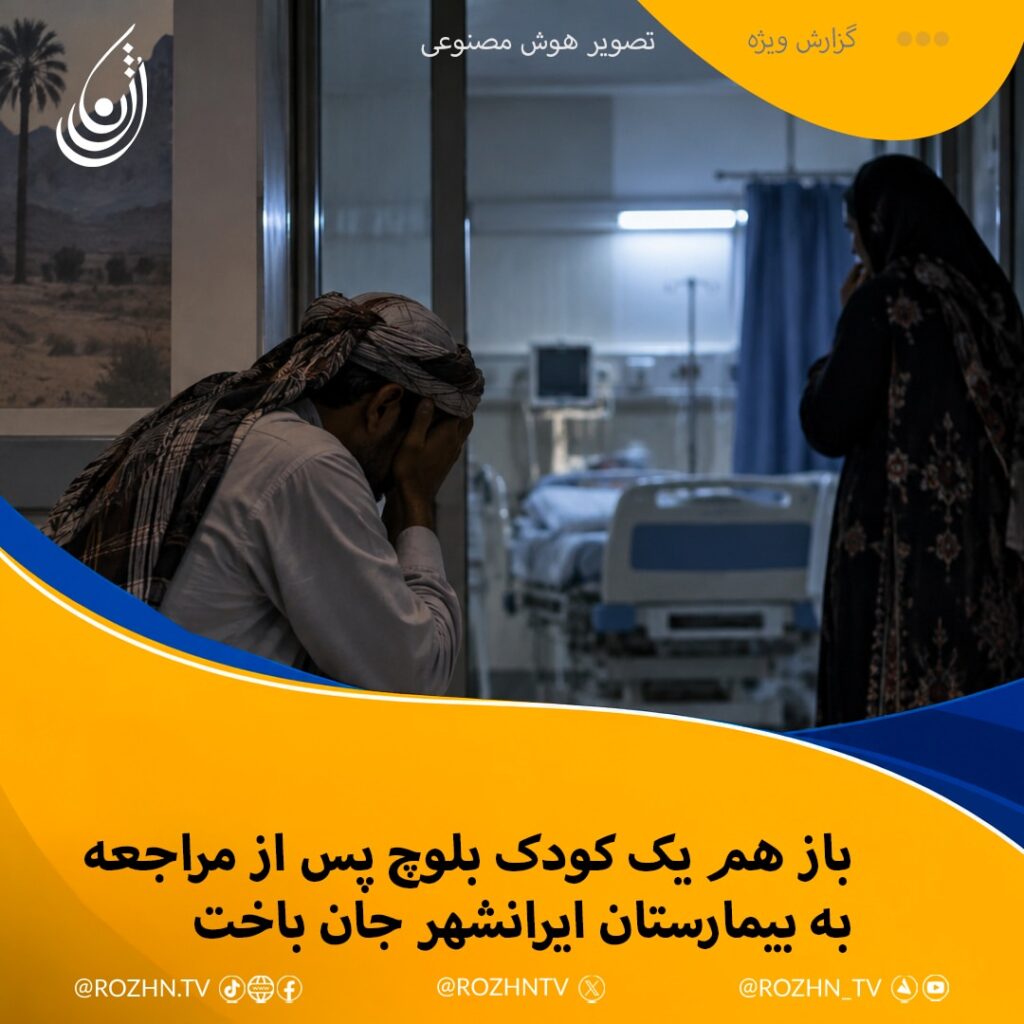
In some cases, the deaths of pregnant mothers, newborns, dialysis patients or people with heart disease in medical centers lacking specialized facilities have become a repeated and normal occurrence: events that neither make the news nor have any specific official answerable for them.
A citizen of Nikshahr says in an interview with Rozhn TV: “For a simple ultrasound we have to travel hundreds of kilometers. There is no ambulance, no resident doctor; they send the patient to Iranshahr or Zahedan in a Nissan pickup. If the patient survives, they were lucky.”
In the absence of real oversight, some non-specialist or inexperienced staff are also working in remote centers, which has increased the likelihood of fatal mistakes. Families’ complaints also often go without serious attention or get lost in administrative bureaucracy.
While under the law equal access to medical services is a universal right, for many citizens in Baloch-populated areas this right has in practice become a luxury and out of reach. The lack of equipped emergency services, the absence of local specialists and the failure to develop health infrastructure deepen the gap between the center and the periphery every day.
In the end, the cry of the people of Balochistan over pain, discrimination and deprivation of medical care has gone unanswered: a cry that, it seems, is not heard in the clamor of centralist decision-making.
A post shared by Rozhn TV (@rozhn_tv)