بلوچستان، سرزمین ثروتهای طبیعی
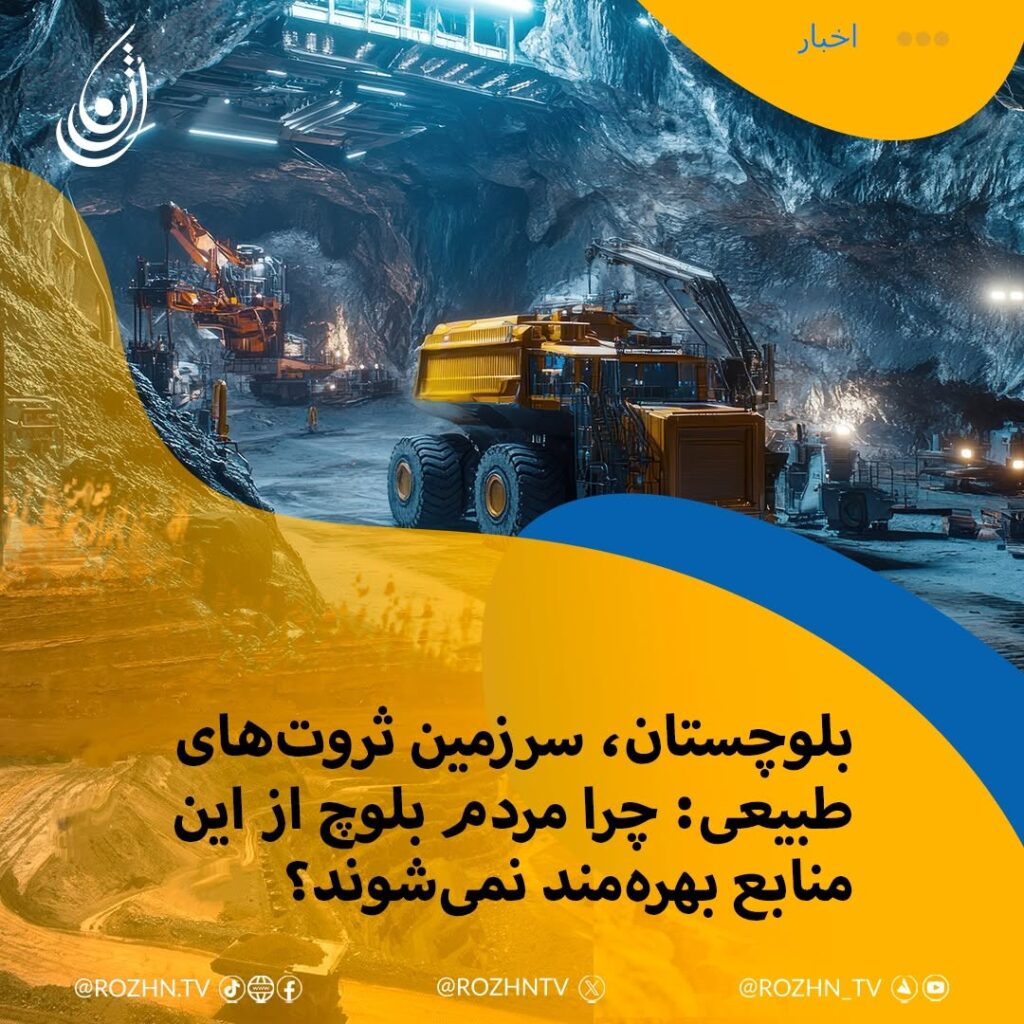
ENBalochistan, Land of Natural Wealth: Why Are the Indigenous People Still Deprived of It?Read in English
Sunday, April 13, 2025
Why are the indigenous people still deprived of it?
Deep in the mountains and plains of Sistan and Baluchestan lies wealth that would have turned any other country into an economic hub: copper, gold, iron, oil and gas. But what we see in Balochistan today is not prosperity and development but poverty, marginalization and structural discrimination.
The bitter reality: these resources are largely extracted by big state-owned and quasi-state companies, and no fair share is set aside for the indigenous people.
The Baloch people, the original owners of this land, not only have no share of these resources but also struggle with problems such as the lack of schools, drinking water, roads and even a stable electricity supply. In many areas, children walk for kilometers to reach a school that may not even have a teacher.
Why does this situation continue?
1. Lack of transparency in exploitation contracts 2. Centralist policies and militarization instead of development 3. Structural mistrust between the state and the Baloch people 4. Lack of real representation of the Baloch people in regional economic decision-making
The people’s clear demand:
“If the resources belong to us, why is our life like this?” “Why are our mines profitable for others while we are left in suffering and poverty?”
The people are calling for a serious review of development policies and genuine participation in decision-making. To achieve sustainable development and economic justice, the people cannot be ignored.
✅ What is the solution?
Redistributing the income from natural resources for the benefit of the indigenous people
Making mining and oil contracts transparent
Investing in education, health and infrastructure
Creating local oversight bodies with the participation of the Baloch people
Ending the security-focused approach and starting fair dialogue